Last Updated: September 09, 2025
This article is reviewed annually to reflect the latest market regulations and trends


TL;DR (Too Long; Didn’t Read)
-
Adopt a CEO Mindset: Shift your focus from chasing short-term commissions to building long-term, valuable assets like your brand, email list, and website authority.
-
Prioritize Ruthless Automation: Systemize your business engine by automating your email welcome sequence, social media scheduling, and using AI to accelerate content research and creation.
-
Diversify Your Income Streams: Mitigate risk by moving beyond a single affiliate program. Create and sell your own digital products, promote complementary software, and offer premium consulting services.
-
Delegate with Systems: Outsource tasks strategically by hiring freelancers, but only after creating detailed brand guidelines and Standard Operating Procedures (SOPs) to ensure quality and consistency.
-
Track What Matters: Measure the health of your business using CEO-level Key Performance Indicators (KPIs) like Visitor Value (VV), Customer Acquisition Cost (CAC), and Audience Lifetime Value (LTV).

“Wealth is not about having a lot of money; it’s about having a lot of options.” – Chris Rock
How Do You Scale Your Forex Affiliate Marketing: Your Affiliate Business Is a Ticking Clock. Are You Building an Asset or Just a Job?
Right now, your affiliate marketing business is likely your greatest asset and your biggest bottleneck. You’re the strategist, the writer, the social media manager, and the technician. But what if you could build something that runs without you? What if you could clone your best efforts, systemize your success, and build a true digital enterprise that generates revenue while you sleep, travel, or focus on the next big thing? This isn’t a pipe dream; it’s a strategic evolution. It’s the transition from being an affiliate marketer to becoming an Affiliate CEO. This guide is your blueprint for that transformation.
What is the Mindset Shift from Being an Forex Affiliate to a Business Owner?

The journey from a six-figure solo affiliate to the leader of a seven-figure automated enterprise isn’t about working more hours, it’s about fundamentally changing the way you think. Scaling an affiliate venture requires a profound psychological shift from being a tactical “hustler” to a strategic “CEO.” This is the most critical step. It’s about moving beyond the frantic chase for the next commission and architecting a business that creates value for the long term.
This means you stop trading your time for money and start building systems that work for you. The assets in your business are not the products you promote; they are the platforms you own. Your core assets include:
-
Your authority website or blog: A digital hub that generates organic traffic and leads.
-
Your curated email list: A direct, unfiltered communication channel to your audience.
-
Your brand’s reputation: The trust you’ve painstakingly built with your followers.
-
Your engaged community: The loyal audience you’ve cultivated across platforms.
An employee or solo hustler is task-oriented, measuring success by a completed to-do list. A business owner is outcome-oriented. Every action is filtered through a strategic lens: “Does this task contribute to my long-term goals and increase the value of my business?” This reframes your entire approach, turning fear of spending money into calculated opportunity analysis. You stop asking, “What does this software cost?” and start asking, “What is the potential return on this investment?” This is the foundational mindset that underpins all scalable growth.
Which Tasks Should You Automate First to Maximize Your Growth?

Once you’ve adopted the CEO mindset, the first practical step is to reclaim your most valuable resource: time. Strategic automation is how you achieve this. The goal isn’t to eliminate work but to delegate repetitive, low-value tasks to technology, freeing you to focus on high-impact activities like strategy, partnerships, and innovation.
To avoid overwhelm, prioritize automation based on impact. Here is your roadmap.
Priority 1: Email Marketing Automation
Your email list is the most valuable asset you control. It’s a direct line to your audience, immune to algorithm changes. Automating it is your top priority.
-
The Welcome Sequence: This is the first and most crucial automation. When someone subscribes, a pre-written series of 5-7 emails should be sent automatically. This sequence should deliver their promised lead magnet, build rapport by sharing your story, provide immense value, and then gently introduce your core affiliate offer.
-
Segmentation and Tagging: Use an affiliate-friendly Email Service Provider (ESP) like ActiveCampaign or GetResponse to tag subscribers based on their interests and actions. This allows you to send hyper-relevant offers and content, dramatically increasing conversions.
Priority 2: Social Media Content Scheduling
A consistent social media presence is vital for traffic and engagement, but it can be a soul-crushing daily grind.
-
Batch and Schedule: Use tools like Buffer or Hootsuite to plan your content calendar a week or even a month in advance. Dedicate one block of time to write and schedule all your posts across multiple platforms. This transforms a reactive daily chore into a proactive strategic activity.
Priority 3: AI-Powered Content Research & First Drafts
Generative AI is the single greatest lever you have for scaling content production.
-
The Human-in-the-Loop Model: Use AI tools like ChatGPT-4o, Gemini, or Jasper to accelerate the initial, time-consuming stages of content creation. AI can conduct research, summarize findings, generate comprehensive outlines, and write the first draft of a blog post or video script. Your job is to then act as the editor-in-chief, refining the tone, fact-checking, and injecting your unique expertise and personal anecdotes. This hybrid model allows you to 10x your content velocity without sacrificing the authenticity that builds trust.
By implementing this automation, you begin to build a true 24/7 operation. To learn more about this approach, explore this detailed guide on how to build a 24/7 forex affiliate business with AI.
How Do You Diversify Your Income Streams Beyond a Single Broker Program?

Relying on a single affiliate program, one traffic source, or one social media platform is not a business model, it’s a gamble. A sudden algorithm update, a change in program terms, or a platform ban can wipe out your income overnight. A true CEO builds a resilient, anti-fragile enterprise by architecting a diverse portfolio of revenue streams.
This is how you build a mature affiliate enterprise with three core pillars.
Pillar 1: Promoting Complementary Products & Software
Once your audience trusts your primary recommendation, they are primed to accept recommendations for related tools. This is the easiest way to increase your average revenue per user (ARPU) without needing more traffic. For example, if you promote a forex broker, you can also promote:
-
Advanced charting platforms (e.g., TradingView, TrendSpider)
-
Trading journals for performance tracking
-
Prop firm challenges that offer funding to traders
Pillar 2: Creating and Selling Proprietary Educational Products
This is the leap from promoter to creator. By packaging your expertise into a digital product, you create a high-margin, infinitely scalable revenue stream that you control completely. Common formats include:
-
Comprehensive e-books
-
Paid newsletters with exclusive analysis
-
Multi-module online video courses
The very process of building a successful affiliate business, building an audience, establishing trust, and demonstrating expertise, gives you the exact ingredients needed to launch a successful digital product.
Pillar 3: Offering Premium Consulting & Services
This is the highest tier of monetization, where you sell direct access to your time and expertise. This can include one-on-one coaching, strategic consulting for firms, or specialized services. While this is an active income stream, it generates substantial revenue and provides invaluable market insights that can fuel your content and product creation.
When and How Should You Outsource Content Creation and Marketing?

You will eventually hit a ceiling where you are the primary bottleneck to your business’s growth. The decision to outsource should be driven by data, not emotion. The tipping point is when the opportunity cost of you performing a task exceeds the monetary cost of delegating it.
If you can generate $250/hour working on high-level strategy, but you’re spending 10 hours a week on a $40/hour writing task, you aren’t saving $400. You’re losing $2,100 in potential value. The goal of outsourcing is to systematically buy back your time to focus exclusively on what only you can do.
Here is a simple playbook for effective outsourcing:
-
Define Needs Meticulously: Create a detailed project brief outlining the exact tasks, deliverables, and success metrics. Vague instructions lead to vague results.
-
Find Talent Through Networks: Instead of large, noisy marketplaces, seek recommendations from trusted colleagues in your niche.
-
Vet with a Paid Test Project: This is non-negotiable. Commission a small, paid test project to assess a freelancer’s skills, communication, and reliability before committing to a long-term contract.
-
Manage with Systems, Not Micromanagement: Use project management tools like Trello or Asana. Set clear goals, but focus on the quality of the final output, not monitoring every step.
However, the biggest risks of outsourcing are a loss of quality and brand voice misalignment. You mitigate these risks by creating two critical documents:
-
Brand Guidelines: A document that codifies your brand’s voice, tone, personality, color palette, and visual identity. It gives creators a rulebook for how to represent your brand.
-
Standard Operating Procedures (SOPs): A detailed, step-by-step instruction manual for a specific task. A good SOP allows someone with no prior knowledge to complete the task to your standard. A modern approach is to record a Loom video of yourself performing the task, then use AI to transcribe it into a written document with screenshots.’
What Key Performance Indicators (KPIs) Do You Need to Track as the CEO of Your Business?

A solo affiliate obsesses over clicks and commissions. A CEO operates from a dashboard of sophisticated KPIs that measure the fundamental health and scalability of the business. These are the three metrics that matter most.
1. Visitor Value (VV)
This metric answers the question: “How much is one visitor to my website worth?”
-
Formula: Visitor Value = Total Revenue / Total Unique Visitors (over the same period)
-
Why it Matters: VV tells you the quality of your traffic. A high VV means you’re attracting the right audience. It also allows you to make data-driven decisions on paid advertising. If you know each visitor is worth $1.50, you know you can afford to pay up to that amount per click and remain profitable.
2. Customer Acquisition Cost (CAC)
This is the total average cost to acquire a single new paying customer.
-
Formula: CAC = (Total Sales & Marketing Costs) / Number of New Customers Acquired
-
Why it Matters: This is the ultimate measure of your marketing efficiency. A “fully-burdened” CAC includes ad spend, software costs, content creation costs, and salaries/freelancer fees. The goal is to constantly work to lower your CAC over time.
3. Audience Lifetime Value (LTV)
This is a predictive metric that estimates the total net profit you will generate from an average customer over their entire relationship with your business.
-
Formula (Simple): LTV = (Average Purchase Value × Purchase Frequency) × Average Customer Lifespan
-
Why it Matters: LTV provides the context to evaluate your CAC. A $100 CAC might seem high, but if your LTV is $800, it’s an incredibly profitable investment. The LTV:CAC ratio is your north star for growth. A healthy, scalable business aims for a ratio of 3:1 or higher, meaning for every $1 you spend acquiring a customer, you generate at least $3 in lifetime profit.
The Gary Vaynerchuk Angle: How Would Gary Vee Scale an Affiliate Business?


Gary Vaynerchuk’s philosophy on business is rooted in two core principles: attention and patience. He would view scaling an affiliate business not as a series of financial transactions, but as a relentless exercise in brand-building and community engagement.
Here’s how the “Gary Vee” approach would apply:
-
Document, Don’t Create: He would advise an affiliate to stop trying to create perfectly polished content and instead document their journey. The struggles, the wins, the research process, this authentic, behind-the-scenes content is what builds a real connection and a loyal community.
-
Go All-In on Underpriced Attention: Vaynerchuk would find the platform where attention is currently cheapest and most potent (like TikTok, LinkedIn, or emerging platforms) and dominate it. He’d advise creating 50-100 pieces of content per day, repurposing a single pillar blog post or video into countless clips, quotes, images, and text posts tailored for each platform.
-
The “$1.80 Strategy”: He would urge the affiliate to find the top 90 relevant hashtags or profiles in their niche and leave their “two cents” (a thoughtful, non-spammy comment) on the top 10 posts for each. This is a manual, non-scalable tactic designed to build genuine relationships and community, which is the ultimate scalable asset.
-
Patience and “Cloud vs. Dirt”: Gary would stress that brand-building (the “cloud”) takes time and isn’t easily measured by short-term affiliate clicks. While you need the “dirt” (the daily sales and marketing tactics), true enterprise value is built in the cloud over 5-10 years, not 5-10 months. He’d see selling your own digital products not just as diversification, but as a core component of building your brand IP.
10 Lessons from “How to Win Friends and Influence People” for the Affiliate CEO
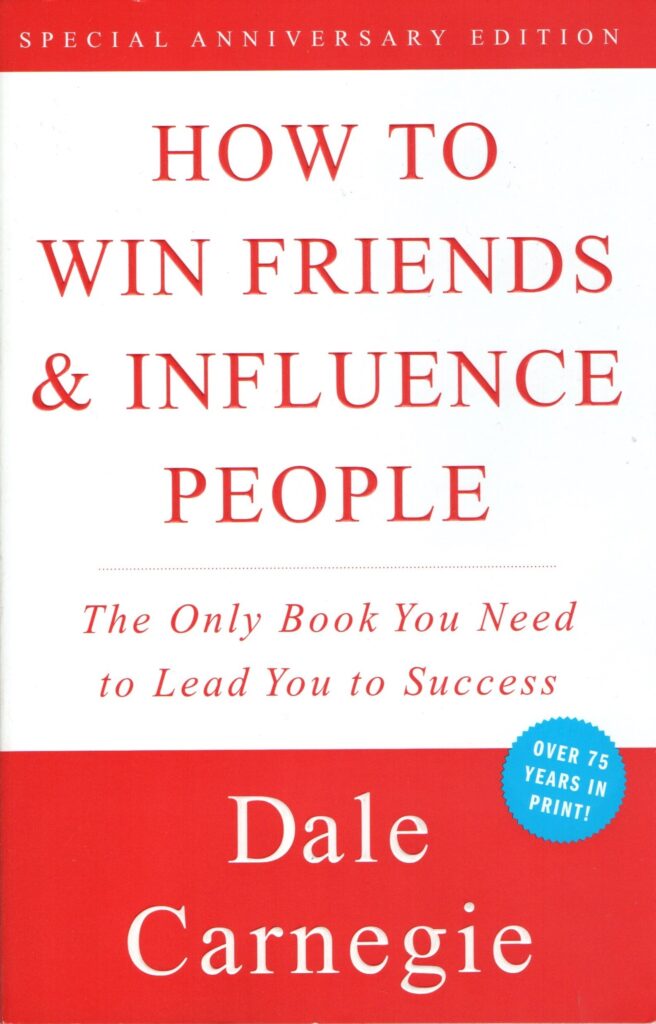

Dale Carnegie’s timeless classic is a masterclass in building relationships, the very core of a successful affiliate business. Here are 10 principles applied to your scaling journey:
-
Become Genuinely Interested in Other People: Your audience isn’t a source of clicks; they are people with problems. Your content and recommendations must be rooted in a genuine desire to help them solve those problems.
-
Smile (Through Your Content): Your brand’s tone matters. A positive, encouraging, and approachable voice will attract and retain an audience far better than a cold, corporate one.
-
Remember That a Person’s Name Is to That Person the Sweetest Sound: Use personalization in your email marketing. Address your subscribers by their first name. It’s a small detail that makes a huge difference.
-
Be a Good Listener. Encourage Others to Talk About Themselves: Run polls, ask questions in your emails and social posts, and read every comment. The more you understand your audience’s pain points (in their own words), the better you can serve them.
-
Talk in Terms of the Other Person’s Interests: Frame your affiliate offers not by their features, but by how they directly benefit your audience and solve their specific problems.
-
Make the Other Person Feel Important, and Do It Sincerely: Highlight case studies and success stories from your community. Feature user-generated content. This builds social proof and makes your audience feel valued.
-
The Only Way to Get the Best of an Argument Is to Avoid It: Don’t engage with trolls or get into public disputes. Maintain a professional and positive demeanor. Your brand’s reputation is paramount.
-
Show Respect for the Other Person’s Opinions. Never Say, “You’re Wrong.”: Even when correcting misinformation, do it respectfully. Position yourself as a helpful guide, not an arrogant know-it-all.
-
If You Are Wrong, Admit It Quickly and Emphatically: If you recommend a product that turns out to be flawed, own it. Your audience will respect your transparency far more than they’ll remember the mistake.
-
Ask Questions Instead of Giving Direct Orders: When managing freelancers, phrase feedback as questions (“Have you considered approaching the intro this way to grab the reader’s attention?”) to foster collaboration and respect.
A Blueprint for Success in the Forex Niche

The forex niche is the ultimate testing ground for the Affiliate CEO approach. It’s highly competitive, the audience is skeptical, and trust is the only currency that matters. This is where a strategic partnership becomes a force multiplier.
To succeed, you must niche down, build a long-term SEO asset with your website, and partner exclusively with top-tier, regulated brokers. This is non-negotiable. A partner like ACY Partners provides what is essentially a “business-in-a-box” for the serious affiliate. They understand that to truly scale, you need more than just a link. You need a framework.
This includes providing done-for-you, high-converting marketing assets and dedicated strategic support. To understand the depth of this partnership, see this breakdown of the best marketing support for serious forex affiliate traders. Their RevShare commission model aligns perfectly with a CEO mindset focused on maximizing Audience Lifetime Value (LTV).
Furthermore, they provide a blueprint that leverages AI and automation, showing affiliates how to build a content ecosystem across multiple platforms. This is a critical strategy for anyone looking to build a resilient business that can be run from anywhere. For a step-by-step walkthrough, this guide on building a forex affiliate business from anywhere is an invaluable resource.
By combining the right mindset with a strategic partner, you de-risk the venture and accelerate your path to building a scalable enterprise.
Your Transformation into the Affiliate CEO
The path from solo affiliate to CEO of an automated digital enterprise is a clear, step-by-step process. It begins with a fundamental shift in mindset, from chasing clicks to building sellable assets. This new thinking is then operationalized through ruthless automation, strategic diversification, and systematic delegation. The entire machine is steered by a dashboard of KPIs that measure what truly matters: the long-term, profitable health of your business.
This is not a theoretical exercise. With the right systems, a commitment to building a brand, and the leverage provided by strategic partners, the goal of building a valuable, automated, and resilient affiliate enterprise is entirely within your reach.
Frequently Asked Questions (FAQ)
Q1: At what income level should I start outsourcing affiliate marketing tasks?
There’s no magic number. The right time to outsource is when the opportunity cost of your time becomes too high. If you’re spending hours on tasks that a freelancer could do for $25/hour, while you could be using those hours to generate $100+/hour in value through strategy or partnerships, it’s time to start delegating. Start small with one specific, well-documented task.
Q2: How can I ensure content quality when outsourcing to freelancers?
Quality control is built on systems. First, always conduct a paid test project before signing a long-term contract. Second, you must create a comprehensive Brand Style Guide (covering voice, tone, and formatting) and detailed Standard Operating Procedures (SOPs) for each content type. These documents are the instruction manual for maintaining your brand’s quality at scale.
Q3: Is it better to focus on one high-paying affiliate offer or promote multiple products?
In the beginning, focus on one core, high-quality affiliate offer to master your messaging and build authority. Once you have a consistent stream of traffic and income, you should strategically diversify. The best approach is to promote complementary products that serve the same audience, which increases your Audience Lifetime Value (LTV) without needing new traffic.
Q4: What is the most important metric to track for a scaling affiliate business?
While Visitor Value and CAC are crucial, the most important “north star” metric is the LTV:CAC ratio. This single number tells you the fundamental profitability of your business model. A healthy ratio (3:1 or higher) proves that you have a scalable system and gives you the confidence to reinvest profits aggressively into growth.
Q5: How can I use AI in affiliate marketing without sounding robotic?
Use AI as an accelerator, not a replacement for your expertise. The best model is “AI-assisted, human-refined.” Use AI for research, outlining, and writing first drafts. Then, your job is to add your unique insights, personal stories, and expert analysis. This combination allows you to scale content production while maintaining the authenticity that builds trust with your audience. To learn more, check out this guide on the forex affiliate with AI side hustle.
Your Path to a Smarter Trading Future Starts Now
The future of trading isn’t about replacing human intelligence but augmenting it. You now have a blueprint to take decades of trading wisdom, forge it into a powerful AI assistant, and use it to build your own trading and affiliate marketing empire.
Stop trading on emotion. Stop paying for inflexible tools. Start building your edge.
Ready to build your business and empower your clients? Join the ACY Partners Program today and start sharing your unique AI trading bot with the world.
Disclaimer:Trading Forex and CFDs involves significant risk and may not be suitable for all investors. The content of this article is for educational purposes only and should not be considered financial advice. The performance of any AI tool or trading strategy is not guaranteed. Always conduct your own research and consider your risk tolerance before trading with real capital. Ensure that when you share your app, you include this disclaimer and your ACY Partners affiliate link for any sign-ups.
For more detailed insights on developing daily trading routines, risk management, and effective position sizing strategies, explore additional articles on ACYPartners. Our experts at ACY and FinLogix are also great resources to guide your journey towards trading excellence.

Discover Our Best Gold Affiliate Program
At ACYPartners, you can browse through a selection of affiliate program and review offerings before you decide to start forex affiliate marketing.
Become An Introducing Broker
Share your expertise and become an introducing broker so you can help other traders about the benefits of joining ACY.
Stay tuned to our blog for more Forex Affiliate Marketing educational resources.
Trading involves risks.
Related Forex Affiliate Marketing blogs:
- Best Forex Affiliate Program 2025 | Top FX Affiliate Network
- Best Gold Affiliate Program: High Paying Affiliate Program for Traders
- How a Forex CPA Affiliate Program Works with a Forex Broker – What You Must Know
- How to Choose the Right Multi Account Manager Software on MetaTrader 4 (MT4)
- 10 Reasons to Use Free Financial Widgets on Your Forex Affiliate Website
- What is a MAM Account – Forex MAM and PAMM Managed Accounts
- Introducing Broker Program (IB) Business Model & How to Be Competitive
- Benefits of the ACY Forex White Label Offering