
Last Updated: December 01, 2025
This article is reviewed annually to reflect the latest market regulations and trends

Real Money vs. Prop Money: Why Serious Traders Choose Regulated Brokers (Forex Affiliate Guide)
It’s the same story every day on social media. You scroll through Twitter (X) or browse the trading subreddits, and you see the screenshots. “I passed the challenge, but they denied my payout.” “I lost my account because of a hidden slippage rule.” “The firm just ceased operations and ghosted everyone.”
The Prop Firm Gold Rush is over, and the hangover has begun.
For the last three years, the forex industry has been dominated by the allure of “instant funding.” It sounded too good to be true because, largely, it was. Traders are waking up to the reality that buying challenges is not a career; it is a hamster wheel designed to keep them running in place. They are realizing that the “evaluation” model is often less about finding talent and more about collecting entry fees.
As a forex affiliate or Introducing Broker (IB), you are standing on the precipice of a massive opportunity. The market sentiment is shifting. The “smart money”, the traders who actually want longevity, is moving back to regulated brokers. They are tired of renting their careers. They want to own them.
This guide is your definitive playbook for the Real Money vs. Prop Money debate. It provides the insider arguments, the psychological levers, and the strategic narrative you need to convert burnt-out prop traders into long-term, high-volume clients on regulated brokers.
TL;DR (Too Long; Didn’t Read)
Short on time? Here are the core pillars of the “Real Money” narrative you need to communicate to your audience:
-
The “Certificate” is Worthless: Passing a prop challenge gives you a PDF certificate that means nothing to the outside world. Trading a real account gives you a verified Myfxbook track record, an asset you own forever.
-
Freedom of Execution: Regulated brokers don’t ban you for trading news, holding positions over the weekend, or scalping quickly. Real trading requires real freedom, not arbitrary handcuffs.
-
The Prop Firm Trap: The business model of most online prop firms relies on churn. They profit primarily from failed challenges, not from successful traders. Their rules are mathematically designed to increase your probability of failure.
-
The Real Career Path: A verified track record on a live account allows you to become a MAM/PAMM manager and attract unlimited investor capital. A prop account is a dead end where you never own the client relationship.
-
The Affiliate Pivot: For you, the affiliate, the math is simple. Promoting prop firms earns you a one-time commission on a churned client. Promoting regulated brokers earns you rebates on real volume for the lifetime of the trader.
The “Prop Firm Trap”: Why Traders Are Waking Up?
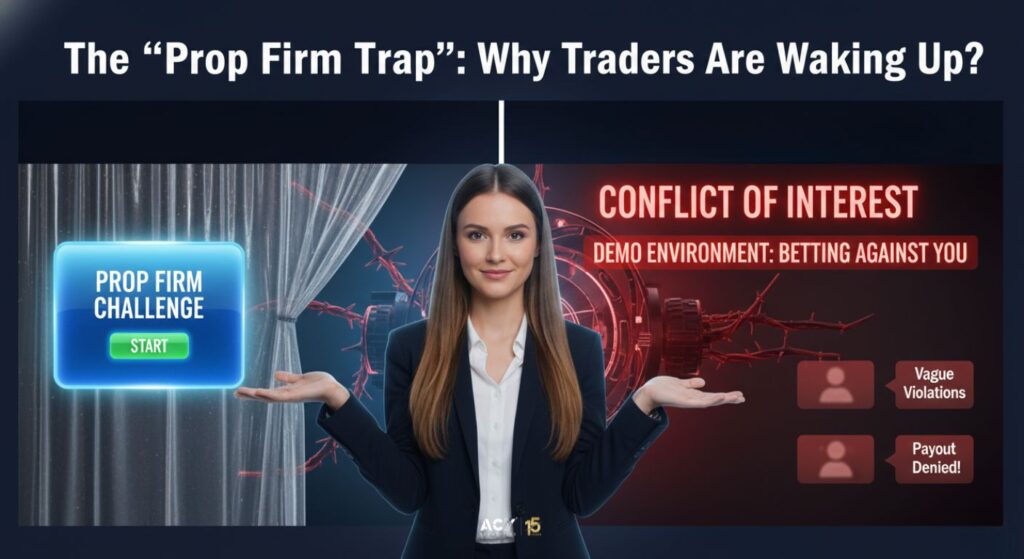
To understand why the shift to real money is inevitable, we have to look at the structural flaws of the prop firm model. This isn’t about bashing every firm; it’s about analyzing the business model objectively.
The vast majority of online prop firms operate on a “demo environment” model. When a trader buys a challenge, they are not accessing a liquidity pool; they are paying an entry fee to play a simulation game. The firm is betting against the trader. They know that statistically, over 90% of traders will fail the evaluation or the verification phase.
This creates a fundamental conflict of interest. When a trader actually succeeds, the firm has to pay out of their own pocket (or the pockets of the failed traders). This leads to the horror stories we see today: payout denials based on technicalities like “IP address conflict,” “gambling behavior,” or vague “risk management” violations.
The Trust Deficit
Furthermore, the lack of regulation is a ticking time bomb. We have seen firms vanish overnight, taking client data and unpaid payouts with them. In this environment, trust is the ultimate currency. This is why you must educate your audience on the 7 signs of a scam forex affiliate program and how to find a trusted partner. Traders need to know how to spot unsustainable business models before they commit their time and money.
As an affiliate, your brand reputation is on the line. If you refer a trader to a firm that collapses, you lose credibility. You become “the guy who recommended that scam.” However, if you learn how to build a forex affiliate brand without looking like another Instagram forex faker scammer, you build trust that converts into long-term revenue. By aligning yourself with regulated entities, you signal to your audience that you value their safety over a quick commission check.
Why a Personal Track Record is Better Than a “Certificate”
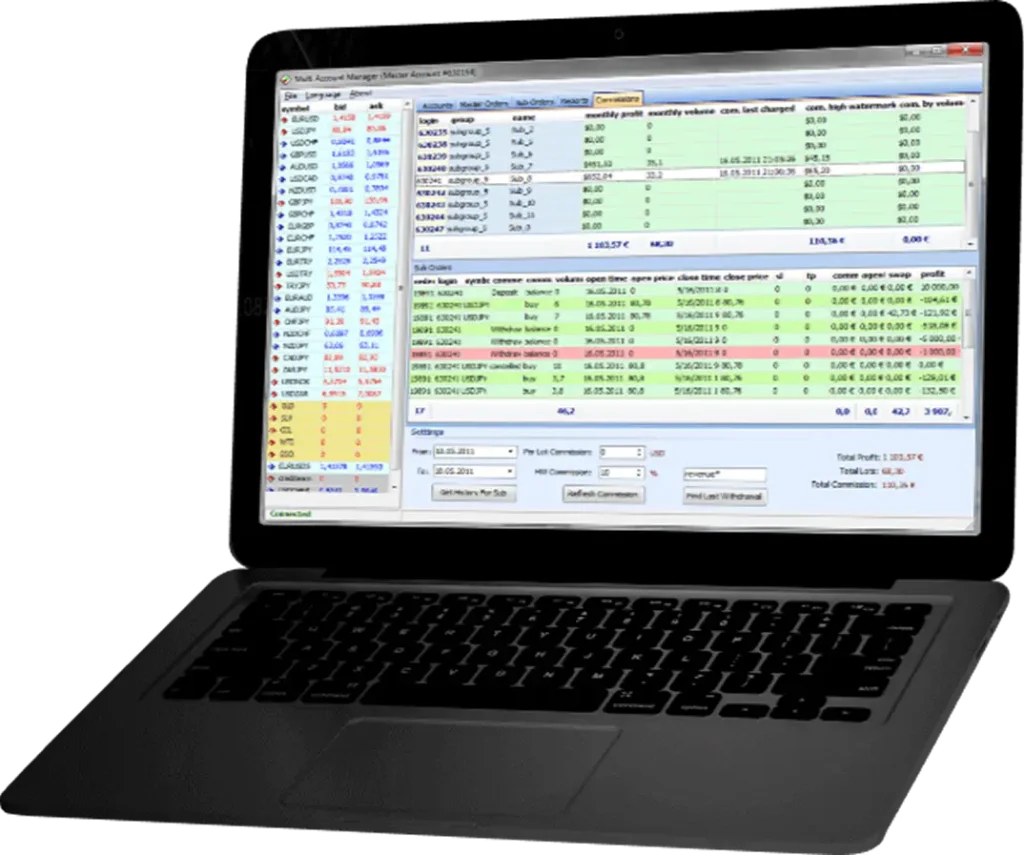
In the world of finance, data is the new gold. But not all data is created equal.
When a trader passes a prop challenge, they get a “Certificate of Completion.” They might post it on Instagram, get a few likes, and feel good for a day. But try taking that PDF to a bank, a hedge fund, or a high-net-worth investor. They will laugh you out of the room. Why? Because it was done in a demo environment with unrealistic parameters and zero real-world risk.
Contrast this with Real Money.
Imagine a trader who deposits $1,000 into a regulated broker account. They trade conservatively, aiming for 3-5% monthly growth with low drawdown. After 12 months, they don’t have a certificate. They have a verified Myfxbook link.
This link is a transferable asset. It proves:
-
They can handle the psychology of losing real money (which triggers different fear receptors than demo money).
-
They understand risk management in a live liquidity environment (dealing with real spreads and slippage).
-
They have consistency over time, not just a lucky streak used to pass a 30-day challenge.
The argument you must make to your audience is simple: Stop building someone else’s castle. When you trade prop, you are a tenant. When you trade real money, you are a property owner.
The “Hidden Rules” That Kill Performance
The most insidious part of the real money vs prop money debate lies in the “Hidden Rules.” Prop firms market themselves as seeking talent, but their rules are often designed to stifle the very volatility that professional traders need to make money.
Let’s compare the environments:
| Feature | Typical Prop Firm Challenge | Regulated Broker (e.g., ACY) |
| News Trading | Banned 2 mins before/after high-impact news. | Allowed. Trade the volatility. |
| Weekend Holding | Banned. Must close Fridays. | Allowed. Swing trade as you please. |
| Stop Loss | Mandatory on every trade. | Flexible. Manage risk your way. |
| Drawdown | Relative/Trailing (The silent killer). | Equity-based. Standard margin calls. |
| Time Limit | Often 30-60 days to hit target. | None. Take 5 years if you want. |
The Impact on Automated Trading
Consider the impact of these rules on automated strategies. Many sophisticated traders use Expert Advisors (EAs) to scalp the market. For example, those utilizing 5 AI gold trading strategies to attract high value clients for introducing broker MAM and PAMM forex managers often require the algorithm to run continuously to capture specific market inefficiencies. If a prop firm forces you to shut down the bot during news or weekends, the strategy breaks. The edge is lost.
The Full-Time Trader Dilemma
Traders who are balancing a job need flexibility. You can ask your audience, “Does anybody trade while working full time and how AI gold trading solves it?“ The answer is yes, but they can’t do it with a prop firm breathing down their neck. They need the freedom of a real account where they can execute trades on their lunch break or let an AI run in the background without worrying about a “consistency rule” violation.
From Retail Trader to Fund Manager
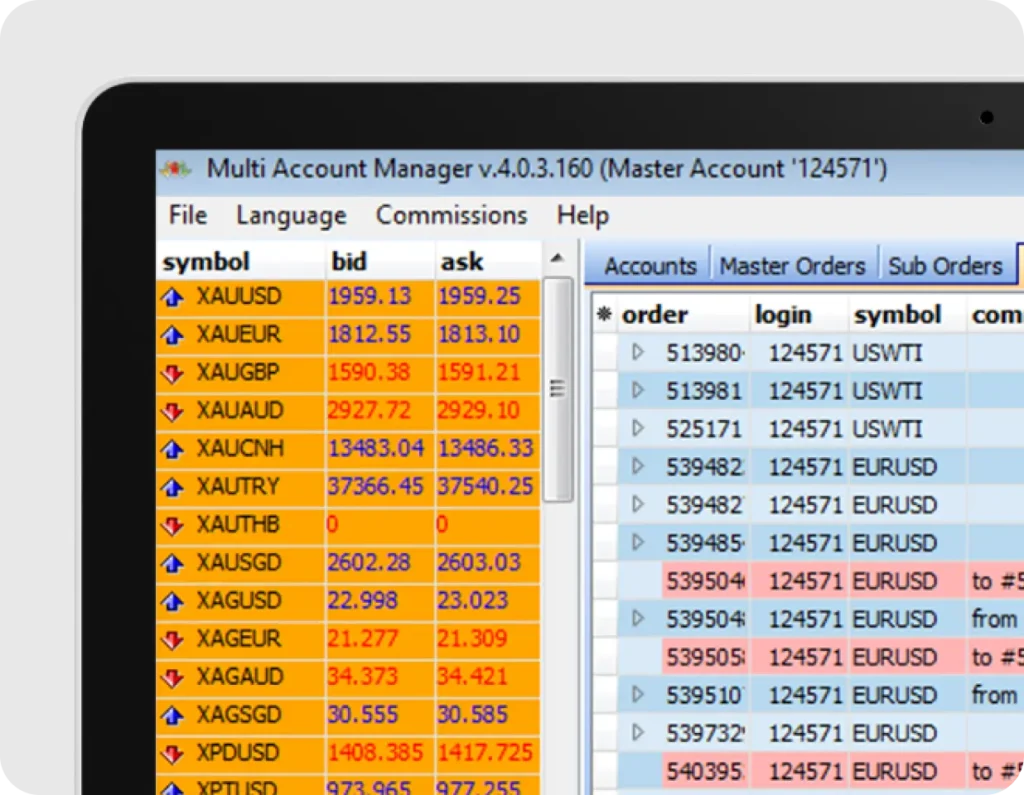
The “Prop Firm Dream” is to manage $100,000 of capital. But the reality is you are managing a demo account with a max drawdown of $10,000 (if you’re lucky). You are effectively trading a $10,000 account with high leverage, but you don’t own the upside.
The Real Money career path is scalable and limitless. It looks like this:
-
The Seed Stage: Open a live account with a regulated broker. Even $500 is enough to start.
-
The Verification Stage: Trade for 6-12 months. Focus purely on the Sharpe ratio and low drawdown. Ignore the dollar amount; focus on the percentage.
-
The Scaling Stage: Use your verified track record to launch a MAM (Multi-Account Manager) or PAMM account.
-
The Professional Stage: Market your MAM to investors. Now, you aren’t getting a 70% split of a demo account. You are charging performance fees and management fees on real capital from real investors.
This is the difference between being a gig worker and a business owner. This transition is critical for those deciding between a forex affiliate or fund manager: an honest guide to your next career. The prop firm model keeps you at the bottom of the food chain. The broker model gives you the tools to climb to the top.
How to Target “Failed” Prop Traders?
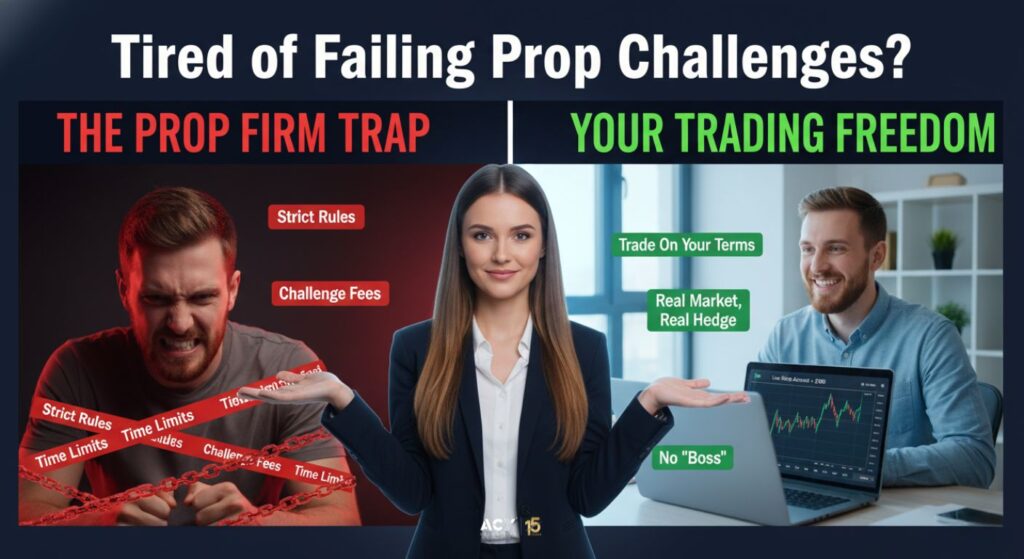
So, how do you, the affiliate, capitalize on this? You don’t mock the prop traders; you empathize with them. You validate their frustration.
Your marketing angle should be: “Tired of jumping through hoops? Trade on your own terms.”
Embracing the Gig Economy
There is a massive demographic of people looking for income streams. We see this in the rise of the gig economy. You can pivot your content to address trading as a side hustle: marketing forex to the gig economy. These people don’t want a “boss”, and a prop firm with strict rules is just another boss. They want autonomy.
Lowering the Barrier to Entry
New traders are often intimidated by the deposit requirements of real brokers. This is where you introduce the concept of “Cent Accounts” or “Micro Lots.” You can guide them to the best forex affiliate programs for beginners: easiest start. These programs offer low barriers to entry without the trap of evaluation fees. It’s better to trade a $100 live account and learn real emotions than to burn $100 on a challenge fee.
Selling the Hedge
By promoting real money accounts, you are also positioning yourself to help traders hedge against real-world economic issues. For instance, teaching them how to market gold as an inflation hedge: forex affiliate guide is a powerful narrative. You can’t hedge inflation with a demo account certificate; you need real assets in a real market.
Ethics First
Finally, remember that this industry is high-risk. To succeed long-term, you must operate with integrity. For a deep dive on this, read the forex affiliate beginner: how to promote ethically in a high risk industry. Ethical promotion is not just about compliance; it’s about building a loyal community that trusts you enough to move from prop firms to real brokers based on your recommendation.
How Jesse Livermore Thinks About Real Money vs. Prop Money

If you’ve read Reminiscences of a Stock Operator, you know Jesse Livermore’s story. He started his career in “Bucket Shops.” These were the prop firms of the 1920s. You bet on the price, but the house rigged the execution, delayed the quotes, and bet against you.
Livermore made money, but he was constantly fighting the house. He eventually realized that to make generational wealth, he had to move to a legitimate brokerage. He had to trade where the orders hit the real market.
If Livermore were alive today, he would look at the online prop firm model and recognize it immediately. He would say: “A bucket shop wants you to be right for a minute; a broker wants you to be right for a lifetime. You cannot build an empire on rented land where the landlord roots for your eviction.”
Use this analogy in your content. It positions you as an expert who understands market history, not just another “guru” selling a course.
10 Lessons from “Jab, Jab, Jab, Right Hook” for Targeting Prop Traders

Applying Gary Vaynerchuk’s social media philosophy to this pivot is essential for modern affiliates. Here is how to execute a “Real Money” campaign:
-
Jab (Give Value – Education): Create content explaining why prop firms have specific drawdown rules. Explain the math of “trailing drawdown” without trying to sell anything. Just reveal the mechanics.
-
Jab (Empathy – Shared Pain): Share stories (anonymous or personal) of traders who lost accounts due to technicalities. “We feel your pain. It hurts to be right on the market but wrong on the rule.”
-
Jab (The Alternative – Case Study): Show a case study of a trader who built a MAM fund starting with just $500. Show the equity curve. Show the freedom.
-
Jab (Context – Market Cycles): Discuss how gold trading AI: part-time trader guide to automated market analysis for forex affiliates is becoming relevant. Explain that real markets allow you to ride long-term trends that prop time limits cut short.
-
Jab (Micro-Content): Create short-form videos (Reels/TikToks) comparing “Prop Rules” vs. “Broker Freedom.” Visuals work best here, chains vs. open fields.
-
Jab (Community Management): Engage in the comments. When someone complains about a prop firm, don’t pitch them immediately. Ask questions. Listen. This builds the trust required for creating content as a forex affiliate that solves trader psychology problems.
-
Jab (Authenticity): Be honest about the difficulty of trading real money. Admit that there is no “free reset” button. Real money hurts when you lose it. This honesty filters for serious traders.
-
Jab (Patience): Preach the long game. “Get rich quick” is the prop firm pitch. “Get rich for sure” is the real money pitch.
-
Right Hook (The Ask): After weeks of value, drop the offer. “Stop renting your career. Own it. Open a live account with [Broker Name] today and start building a track record that actually matters.”
-
Right Hook (The Adaptation): If the pitch doesn’t land, pivot the angle. Maybe they don’t want to trade; maybe they want to invest. Pitch the Copy Trading angle available on regulated brokers.
FAQ: Your Top Questions on Prop Firms vs. Brokers
Is it cheaper to start with a prop firm?
It often seems cheaper. You might pay $100 for a $10,000 challenge, whereas a real account requires your own capital. However, the cost of failed challenges adds up. Many traders spend $2,000+ on failed evaluations. That same $2,000 in a real account is equity you keep and learn with, rather than fees you donate to a firm.
Can I use a prop firm track record to get investors?
Rarely. Serious High Net Worth (HNW) investors know the difference between a demo environment and live liquidity. They want to see a track record on a regulated broker where slippage, commissions, and swap rates are real. A prop certificate is seen as a “simulation,” not a resume.
Why do affiliates promote prop firms so much?
It comes down to the payout structure. Prop firms pay high, one-time CPA (Cost Per Acquisition) commissions because they know the client value is short-term. Smart affiliates prefer broker rebates (revenue share) because they pay forever. They want you to survive and trade for years, not burn out in a month.
What if I don’t have enough capital to trade for a living?
You don’t need to trade for a living immediately. Use a “cent account” or micro lots to build a track record first. Once you have 12 months of profitable history, you can use that record to attract capital via a MAM (Multi-Account Manager), rather than renting capital from a firm.
Are all prop firms scams?
No, not all are scams. There are legitimate firms, particularly the traditional “brick and mortar” prop firms. However, the online “evaluation model” is fraught with conflict of interest. A regulated broker has a legally mandated neutral stance; they want volume, not your failure.
Conclusion
The trading industry moves in cycles. We have just witnessed the peak of the “Prop Firm Era,” a time that taught many people the basics of trading but left many empty-handed. We are now entering the “Broker Era” (or rather, returning to it).
This is the era where careers are actually built. It is the era where a trader owns their data, owns their track record, and owns their destiny.
For affiliates, the most ethical and profitable move is to guide traders back to the safety, freedom, and scalability of regulated brokerage accounts. It’s time to stop selling the lottery ticket and start selling the profession.
If you are ready to pivot your strategy and build a business that lasts, check out a complete guide to building a forex affiliate business from anywhere. The smart money is moving. Make sure you move with it.
Your Path to a Smarter Trading Future Starts Now
The future of trading isn’t about replacing human intelligence but augmenting it. You now have a blueprint to take decades of trading wisdom, forge it into a powerful AI assistant, and use it to build your own trading and affiliate marketing empire.
Stop trading on emotion. Stop paying for inflexible tools. Start building your edge.
Ready to build your business and empower your clients? Join the ACY Partners Program today and start sharing your unique AI trading bot with the world.
Disclaimer:Trading Forex and CFDs involves significant risk and may not be suitable for all investors. The content of this article is for educational purposes only and should not be considered financial advice. The performance of any AI tool or trading strategy is not guaranteed. Always conduct your own research and consider your risk tolerance before trading with real capital. Ensure that when you share your app, you include this disclaimer and your ACY Partners affiliate link for any sign-ups.
For more detailed insights on developing daily trading routines, risk management, and effective position sizing strategies, explore additional articles on ACYPartners. Our experts at ACY and FinLogix are also great resources to guide your journey towards trading excellence.
Discover Our Best Gold Affiliate Program
At ACYPartners, you can browse through a selection of affiliate program and review offerings before you decide to start forex affiliate marketing.
Become An Introducing Broker
Share your expertise and become an introducing broker so you can help other traders about the benefits of joining ACY.
Stay tuned to our blog for more Forex Affiliate Marketing educational resources.
Trading involves risks.
Related Forex Affiliate Marketing blogs:
- Best Forex Affiliate Program 2025 | Top FX Affiliate Network
- Best Gold Affiliate Program: High Paying Affiliate Program for Traders
- How a Forex CPA Affiliate Program Works with a Forex Broker – What You Must Know
- How to Choose the Right Multi Account Manager Software on MetaTrader 4 (MT4)
- 10 Reasons to Use Free Financial Widgets on Your Forex Affiliate Website
- What is a MAM Account – Forex MAM and PAMM Managed Accounts
- Introducing Broker Program (IB) Business Model & How to Be Competitive
- Benefits of the ACY Forex White Label Offering
Leave a Reply