
Last Updated: December 01, 2025
This article is reviewed annually to reflect the latest market regulations and trends

MAM vs. Funded Account: The Career Trader’s Ultimate Choice
Trading for a modern online prop firm is like driving for Uber.
Think about it carefully. When you drive for Uber, you can generate quick cash flow. The barrier to entry is low, the platform provides the customers, and the app handles the logistics. But do you own the business? No. You don’t own the car (in the prop firm analogy, the capital is often simulated), you don’t own the client list, and the platform can deactivate your account at any moment due to a rule change, a “risk violation,” or an algorithm update. You are a gig worker, not a business owner.
Running a MAM (Multi-Account Manager) account is like owning the transportation company. You own the asset, you set the rules, you own the relationship with your clients, and you build equity that lasts for decades.
The “Prop Firm Gold Rush” of the last few years seduced many talented traders with the promise of easy capital and massive allocations. It was a golden era of marketing that obscured the reality of the business model. However, as regulatory crackdowns loom and payout denials increase across the industry, the smart money is moving. Serious traders are realizing that to build a decade-long career, they must stop “renting” their trade and start “owning” it.
This guide is your wake-up call. It is a comprehensive deep dive into why MAM accounts explained: how they work and why fund managers love them represents the superior vehicle for professional wealth building, and why the funded account model is merely a stepping stone, not a destination.
TL;DR (Too Long; Didn’t Read)
If you are short on time, here is the executive summary of why the transition is inevitable for top-tier traders:
-
The Math of Wealth: While prop firms offer high splits, they are capped by maximum allocations and scaling plans. MAMs allow you to earn performance fees on unlimited capital (AUM), offering exponentially higher income potential.
-
You Own the Business: In a prop firm, you are a contractor. With a MAM, you own the client relationships. This “book of business” is a sellable, transferable asset.
-
Safety First: Many online prop firms are unregulated tech companies that can vanish overnight. A MAM with a broker like ACY is backed by top-tier regulation (ASIC), ensuring client funds are segregated and safe.
-
Trade Stress-Free: MAMs generally have no daily drawdown limits or 30-day profit targets. This freedom from artificial “time limits” leads to better psychology and consistent performance.
-
The Exit Strategy: A successful MAM track record on a live broker account attracts institutional investors. A certificate from a prop firm usually attracts no one in the professional world.
The Mathematics of Scaling: Employee vs. Owner

The primary argument for prop firms is usually “leverage.” They promise you access to $100,000 or $200,000 accounts for a small fee. However, when you look at the mathematics of long-term wealth, the prop model pales in comparison to the asset management model.
The Prop Firm Ceiling
In a funded account, your income is linear and capped. You might have a $200,000 account, but strict drawdown rules (often 5-10%) mean you are effectively trading a $10,000 to $20,000 account. Furthermore, scaling is difficult. Most firms cap you at $600k or $1M in total allocation. You cannot simply go out and find more capital; you are at the mercy of the firm’s scaling rules. Once you hit that cap, your income potential hits a wall.
The MAM Scalability
In a MAM structure, your income is exponential. You are not limited by the broker’s capital; you are limited only by your ability to attract investors.
Consider the math of a successful fund manager. If you can trade profitably, the path to scale your MAM fund from 10 to 100 clients is clear and achievable.
-
Scenario: You manage $5 Million in AUM (Assets Under Management).
-
Fee Structure: You charge a 2% Management Fee and a 20% Performance Fee.
-
Result: Even if you only make 10% profit in a year, your performance fees (
100,000)plusmanagementfees(100,000) plus management fees (100,000) create a $200,000 income stream.
-
The Kicker: If you make 20% or 30%, or if you grow your AUM to $10 Million, your income doubles or triples without you having to trade “harder.”
More importantly, the professional structure allows you to diversify your income. You can learn how to become a forex fund manager and build multiple revenue streams. In a MAM, you can earn rebates on volume, management fees for simply holding the capital, and performance fees for winning. In a prop firm, you only get paid if you hit a profit target above the high-water mark. The MAM model turns you from a high-paid employee into a business owner with uncapped potential.
Building an Asset vs. Working a Gig

Ask yourself this: If your prop firm shuts down tomorrow, as several major ones have done recently, what do you have left?
You have no capital. You have no client list. You have no verifiable track record (since many prop firms use demo feeds that aren’t recognized by institutions). You are back to square one. This is the “Gig Economy” trap. You are renting your career, month to month.
When you transition to being a forex money manager and the top three benefits of it, you are building a tangible asset. The investors in your MAM are your clients. You have their email addresses, their phone numbers, and their trust.
The “Rolodex” Value
In the financial world, the “book of business” is everything. If you decide to move from one broker to another, or if you decide to launch a hedge fund down the line, those clients move with you. By treating your investors well and generating returns, you create residual income.
Investors in a MAM account are “sticky.” Unlike a prop firm that looks for reasons to breach your account, a MAM client wants you to succeed. As long as you communicate well and manage risk, they will often add more funds to your management over time. You are building a brand, not just hunting for a payout.
Regulatory Safety: The “Bucket Shop” Risk
The most critical distinction between a prop firm and a MAM is the underlying infrastructure and safety. This is where the “Insider Truth” becomes uncomfortable for the prop industry.
The Prop Firm Reality
Many modern prop firms operate as unregulated entities. They are not brokers; they are education or tech companies. They often provide you with a demo account and pay you out of the subscription fees of losing traders. This creates a conflict of interest. If you win too much, you become a liability to the firm. This is why we see “hidden rules,” slippage injection, and sudden account terminations.
The Regulated Broker Advantage
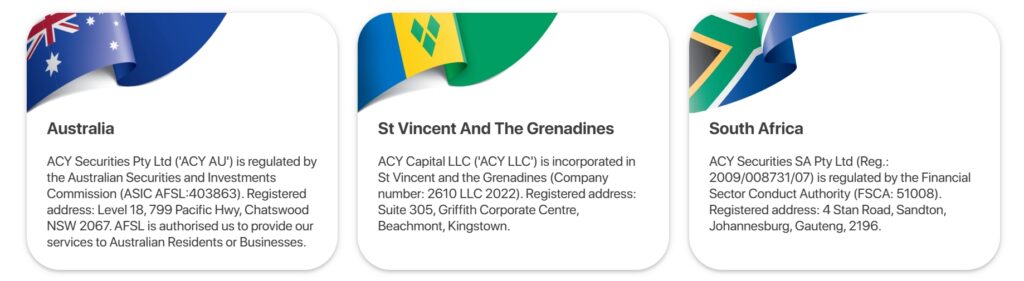
When you operate a MAM, you do so through a regulated broker like ACY Securities (ASIC Regulated).
-
Segregated Funds: Your clients’ money is held in segregated trust accounts, not the broker’s operating account.
-
Live Liquidity: You are trading on real market liquidity, not a simulated feed.
-
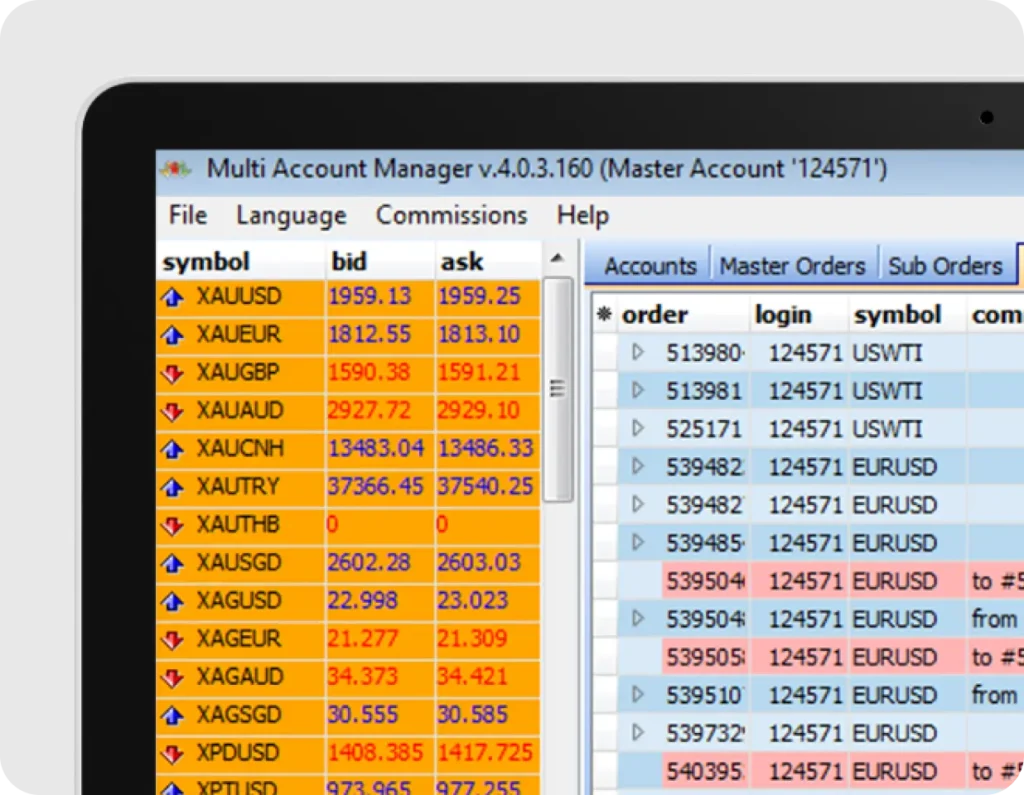
Technology: You have access to the best multi-account manager software, ensuring that trade execution is fair, transparent, and instant across all client accounts.
For traders looking to leverage technology, using a Forex fund manager with AI technical guide can help automate allocation and risk management, giving you an edge that manual prop traders simply don’t have. Furthermore, understanding the technical differences is vital; reviewing MAM vs PAMM accounts: which is best for fund managers allows you to choose the exact setup that protects both you and your investors. In a MAM, safety isn’t a perk; it’s a requirement.
The Psychology of Performance: The “No Time Limit” Advantage

Perhaps the biggest killer of trader profitability in the prop firm space is the “Time Limit” or the “Minimum Trading Days” rule.
Prop firms are designed to gamify trading. They force you to hit 10% in 30 days. This forces you to over-leverage and take setups that aren’t there. It induces a gambling mindset. Even firms that have removed time limits often have “inactivity rules” or “consistency rules” that force your hand.
The MAM Freedom
In a MAM account, there are no 30-day targets. Your goal is consistent, long-term growth.
-
Drawdown: If you have a bad month and lose 2%, you aren’t “fired.” You simply work to recover the drawdown in the following months.
-
Patience: You can wait for the A+ setups. If the market is choppy, you don’t trade. Your investors pay you for risk management, not just aggressive growth.
This shift in psychology is profound. When you remove the ticking clock, your decision-making improves. You stop forcing trades to “pass a challenge” and start trading to “build wealth.” This is how professional fund managers operate.
How to Transition from Prop Trading to Launching Your Own Fund?
You don’t have to quit your prop firm gigs today. You can use them to fund your transition. Here is the strategic roadmap for those deciding between a Forex affiliate or fund manager: an honest guide to your next career.
Step 1: The Seed Capital
Continue trading your prop accounts. Take your payouts and, instead of spending them on lifestyle, deposit them into a live, regulated brokerage account. This is your “Seed Account.”
Step 2: The Track Record
Trade your Seed Account with the exact risk parameters you intend to offer investors. Connect this account to Myfxbook or a similar verification service. You need 6 to 12 months of live, verified data. This is your resume. For a detailed breakdown, read the complete guide to becoming a forex fund manager.
Step 3: The Structure
Once you have the history, open a MAM account with a trusted broker. This sets up the technological framework where investors can attach their accounts to yours.
Step 4: The Pitch
With your live track record in hand, you are ready to raise capital. You can now approach family, friends, and eventually high-net-worth individuals. This is a skill in itself. You will need to learn how to pitch your Gold MAM fund to high-net-worth investors, focusing on risk-adjusted returns (Sharpe Ratio) rather than “get rich quick” percentages.
How Jesse Livermore Thinks About Prop Firms vs. MAMs?

If you read Reminiscences of a Stock Operator, you know Jesse Livermore started in “Bucket Shops.” These were the 1920s equivalent of modern online prop firms. You bet on price, but you didn’t own the asset.
Livermore made a fortune in bucket shops, but he was eventually banned from all of them because he won too much. He realized that the “house” was betting against him. To manage real size and build a fortune that couldn’t be taken away, he had to move to a legitimate brokerage.
He would tell modern traders: “The bucket shop wants you to lose so they can keep your fee. The broker wants you to win so you can manage more volume. Always align yourself with the partner who wants you to survive.” A MAM aligns your interests with the broker and the client.
10 Lessons from “Jab, Jab, Jab, Right Hook” for Fund Managers?

Gary Vaynerchuk’s branding philosophy applies perfectly to raising capital (AUM).
-
“The Right Hook is the Ask.” Your MAM fund is the Right Hook. You cannot ask a stranger for $50,000 until you have provided value first. Don’t pitch on day one.
-
“The Jab is Value.” Your Jabs are your daily market analysis, your transparency about losses, and your educational content. Give this away for free to build trust.
-
“Content is King, Context is God.” Pitching a MAM requires a different context than a prop firm certificate. Stop posting “passed challenge” screenshots on Instagram. Start posting risk analysis articles on LinkedIn.
-
“Micro-Content Matters.” Don’t just post a monthly report. Post a 30-second clip of a trade entry. Show the “behind the scenes” of your risk management desk.
-
“Effort is Underrated.” Raising capital is a sales job. You must reach out to potential investors, network, and provide value. It is harder than passing a challenge, but the reward is ownership.
-
“Native Content.” When sharing your results, use native links to verified auditors (Myfxbook). Do not use screenshots that can be photoshopped. Native, verifiable data builds trust.
-
“Human Connection.” Investors invest in people, not just algorithms. Get on Zoom calls. Show your face. Explain your philosophy.
-
“Patience.” The “Jab” phase takes time. You might need to provide value for 6 months before you land your first big investor. This is the long game.
-
“Authenticity.” If you have a losing month, own it. Explain why it happened and how you managed the risk. Investors trust managers who are honest about drawdowns more than those who claim to never lose.
-
“Adaptation.” Platforms change. Strategies change. As a fund manager, you must adapt your communication style to where the attention is. Currently, that attention is shifting from “hype” to “sustainability.”
Your Top Questions on MAMs vs. Funded Accounts (FAQ)
Q: Do I need a lot of money to start a MAM?
A: No. You generally need enough to fund a master account (often $1k – $5k) to build a track record. The “AUM” comes from investors, not you.
Q: Is it harder to get investors than to pass a prop challenge?
A: It requires a different skillset (sales/marketing), but it is more sustainable. Passing a challenge is a game; raising capital is a business. To make this process easier, you should utilize a forex fund manager program launch guide to streamline your setup.
Q: Can I use my prop firm track record to attract investors?
A: Generally, no. Sophisticated investors know prop firms use demo feeds. They want to see a Myfxbook from a live, regulated broker account.
Q: What happens if I lose money in a MAM?
A: Unlike a prop firm where you lose the account instantly, in a MAM you simply go into drawdown. You can continue trading to recover, provided you stay within your agreed risk parameters with clients.
Q: Do I need a license for a MAM?
A: Managing other people’s money is a regulated activity. However, many traders start by operating under a broker’s license via an LPOA (Limited Power of Attorney) or copy trading structure. It is vital that you read do you need a license to be a forex fund manager: simple guide to understand the regulations in your specific jurisdiction.
Conclusion
The prop firm model is an excellent training ground. It teaches you how to handle leverage and follow rules. But for the career trader, it is not the destination. It is a rental car.
If you want to build generational wealth, you must own the vehicle. You must own the client relationships, the track record, and the business structure. The MAM account offers the ownership, scalability, and safety required to turn trading from a gig into an empire.
Stop renting your career. Start owning it.
Ready to take the next step?
Discover how to become a professional Money Manager with ACY Securities and start building your legacy today.
Your Path to a Smarter Trading Future Starts Now
The future of trading isn’t about replacing human intelligence but augmenting it. You now have a blueprint to take decades of trading wisdom, forge it into a powerful AI assistant, and use it to build your own trading and affiliate marketing empire.
Stop trading on emotion. Stop paying for inflexible tools. Start building your edge.
Ready to build your business and empower your clients? Join the ACY Partners Program today and start sharing your unique AI trading bot with the world.
Disclaimer:Trading Forex and CFDs involves significant risk and may not be suitable for all investors. The content of this article is for educational purposes only and should not be considered financial advice. The performance of any AI tool or trading strategy is not guaranteed. Always conduct your own research and consider your risk tolerance before trading with real capital. Ensure that when you share your app, you include this disclaimer and your ACY Partners affiliate link for any sign-ups.
For more detailed insights on developing daily trading routines, risk management, and effective position sizing strategies, explore additional articles on ACYPartners. Our experts at ACY and FinLogix are also great resources to guide your journey towards trading excellence.
Discover Our Best Gold Affiliate Program
At ACYPartners, you can browse through a selection of affiliate program and review offerings before you decide to start forex affiliate marketing.
Become An Introducing Broker
Share your expertise and become an introducing broker so you can help other traders about the benefits of joining ACY.
Stay tuned to our blog for more Forex Affiliate Marketing educational resources.
Trading involves risks.
Related Forex Affiliate Marketing blogs:
- Best Forex Affiliate Program 2025 | Top FX Affiliate Network
- Best Gold Affiliate Program: High Paying Affiliate Program for Traders
- How a Forex CPA Affiliate Program Works with a Forex Broker – What You Must Know
- How to Choose the Right Multi Account Manager Software on MetaTrader 4 (MT4)
- 10 Reasons to Use Free Financial Widgets on Your Forex Affiliate Website
- What is a MAM Account – Forex MAM and PAMM Managed Accounts
- Introducing Broker Program (IB) Business Model & How to Be Competitive
- Benefits of the ACY Forex White Label Offering
Leave a Reply