Last Updated: September 18, 2026
This article is reviewed annually to reflect the latest market regulations and trends

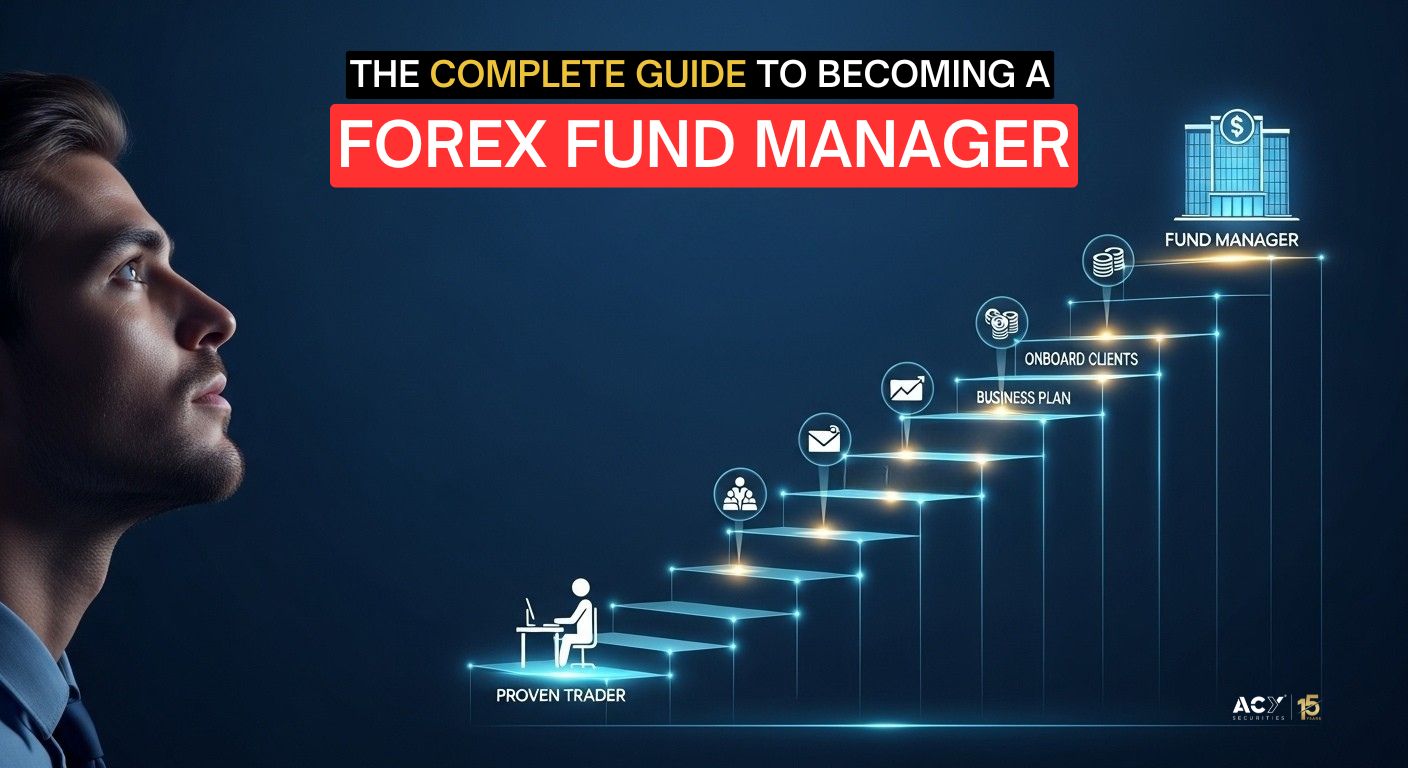
How to Become a Forex Fund Manager: The Complete 2026 Blueprint
You have achieved trading consistency.
You have mastered your technical edge.
Now, you face the ultimate question of scale: how do you leverage your skills beyond your personal retail trading account?
For an elite class of traders, the answer is to transition from a retail operator into a professional forex fund manager. This career leap represents the pinnacle of capital market execution, moving from isolated accounts to institutional forex fund management. This path demands exceptional market acumen, strict risk mitigation frameworks, and cutting-edge allocation technology.
This master guide serves as your operational blueprint.
We will demystify how modern fund managers utilize advanced TradingCup PAMM (Percentage Allocation Management Module) technologies, build auditable track records, and structure legal agreements through a Limited Power of Attorney (LPOA) to attract high-net-worth investors.
Whether you want to establish a boutique forex fund or scale your retail strategy to manage millions in capital, this walkthrough provides the actionable steps required to dominate the asset management landscape.
TL;DR (Too Long; Didn’t Read)
- The Role Defined: A forex fund manager trades on behalf of clients, utilizing pooled capital to capture market opportunities and earning performance fees based on positive results.
- PAMM Technology over Manual Allocation: The TradingCup PAMM platform automates share-based profit-and-loss splits, eliminating the need for manual accounting and allowing you to seamlessly trade one master pooled account.
- Audit Trail & High Water Mark (HWM): Safeguard your business reputation. The system automatically applies strict High Water Mark calculations so investors only pay performance fees on new net profits.
- Opt-in Terms for Capital Stability: Secure your trading strategy with customized Opt-in Terms (e.g., 30, 90, 180, or 365 days) that lock in principal to prevent sudden liquidity outflows.
- Strategic Scaling: Transitioning from a trader to an asset manager requires shifting from a pure execution focus to a compliance, marketing, and business-building framework.
What is a Forex Fund Manager & How Does it Differ from an Affiliate?

A forex fund manager is a professional market operator who manages third-party investment capital in the foreign exchange market. This process involves pooling client assets into a single cohesive trading structure or managing individual segregated sub-accounts under a Limited Power of Attorney (LPOA).
This is a major step up from trading personal funds.
It introduces a fiduciary duty to act in the best interest of your investors.
Professional forex fund management combines disciplined market execution with institutional operational transparency.
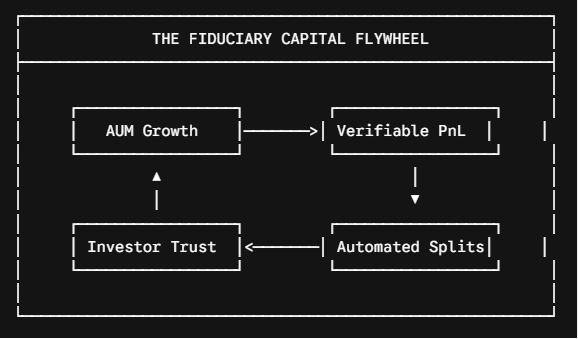
While both roles leverage broker platforms, the differences between a forex affiliate and a forex fund manager are fundamental:
| Core Operational Dimension | Forex Affiliate | Forex Fund Manager |
| Primary Skillset | Traffic generation, digital marketing, content creation | Quantitative analysis, risk management, portfolio design |
| Core Responsibility | Onboarding new retail traders to a partner broker | Managing client capital to generate absolute performance |
| Income Architecture | CPA (Cost Per Acquisition) or volume-based rebates | Monthly management fees and high-water mark performance fees |
| Client Relationship | Short-term transactional referral loop | Fiduciary, long-term trust and portfolio stewardship |
| Fulfillment Systems | Marketing links, widgets, educational media | MAM/PAMM platforms, LPOA documentation, execution networks |
| Barrier to Entry | Minimal; requires audience or marketing channels | High; requires a multi-month audited performance track record |
Strategic Investor Onboarding: How PAMM Automation Streamlines Growth

Traditional managed accounts often struggle with operational inefficiencies, manual accounting errors, and complex profit splits. To scale effectively, modern fund managers use automated, share-based PAMM (Percentage Allocation Management Module) pools.
Investor Deposit Flow:
Regular Account -> Central Wallet (Pending) -> PAMM Pool (Allocated)
Settlement Flow:
PAMM Pool -> Manager’s Own Investment Position (Performance Fee credited as Principal) -> Regular Account (Client Withdrawal)
In a PAMM model, investor funds are combined into a single master account. The platform tracks ownership shares on an automated ledger. This eliminates the need for manual calculations, keeping all operations fully audited.
SME Telemetry Insights (2026 CRM Analytics):
Automated Splits: Individual Share % is calculated as:
$$ \text{Investor Share %} = \frac{\text{Individual Investor Equity}}{\text{Total Pool Equity}} $$
This metric updates in real-time, preventing manual accounting errors.
Month-End Settlement Engine: On the final day of each calendar month at UTC+0 24:00, the system automatically processes performance fees using a High Water Mark (HWM) calculation, credits net profits to the client’s wallet, and resets unrealized figures.
Zero Split Error: Automated ledger checks keep allocation errors below $\$0.01$ per account, ensuring high operational accuracy.
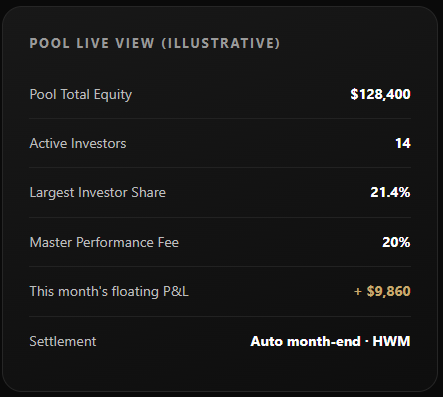
Typical Live PAMM Pool View (Illustrative Metrics)
| Metric | Value |
| Total Pool Equity | $128,400.00 |
| Active Onboarded Investors | 14 |
| Largest Investor Share % | 21.4% |
| Master Performance Fee | 20.0% |
| Floating Current PnL | +$9,860.00 |
| Minimum Account Deposit | $500.00 USD |
Secure Capital Deployment: Protecting Master Strategies and Investor Wallets
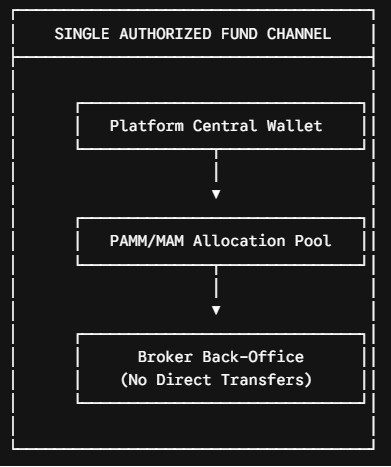
Security and trade privacy are essential when scaling a forex fund. Professional fund managers must protect their proprietary trade logic while offering complete transparency to investors. Modern MAM and PAMM systems address these needs through secure fund channels and custom trade allocation rules.
-
The Single Authorized Fund Channel: To build investor trust, modern architectures ensure that neither the Master nor the investor can directly transfer pool funds through the broker back-office. All deposits and withdrawals must process through automated platform wallets.
-
Strategy Privacy Controls: Managers can hide their live execution layouts from sub-accounts using profit-and-loss allocation methods. This prevents clients or competitors from reverse-engineering proprietary expert advisors (EAs) or high-frequency trading (HFT) algorithms.
-
Execution Integrity: Because PAMM platforms trade a single master account rather than copying individual orders, there is no latency or retail slippage. Investors receive proportional P&L updates down to the penny, without partial-fill order errors.
Controlled Growth Execution: The Automated Rollover & Exit Engine
To maintain structural balance during incoming deposits and outgoing withdrawals, the platform utilizes strict automated execution rules when a client requests an exit after their Opt-in Term.
- Step 1: Submission Window: Withdrawals are securely queued and processed during the active market window (Monday 00:00 to Friday 19:00 UTC).
- Step 2: Proportional Position Closing: To fulfill a partial withdrawal, the system irrevocably closes each tradable position in the Fund pro rata to the ratio that the withdrawal amount bears to the Fund’s Equity.
- Step 3: Safe Margin Thresholds: The platform protects the pool by capping the payout logic. The amount paid out is floored to preserve the required margin (e.g., Fund Equity – 155% × used margin).
- Step 4: Recalculation: On each movement of funds in or out, the system allocates the prior period’s profit or loss, applies the funds, recalculates all clients’ Shares, and updates the Fund equity snapshot.
Selecting the Best Asset Engine: MAM vs. PAMM vs. Copy Trading
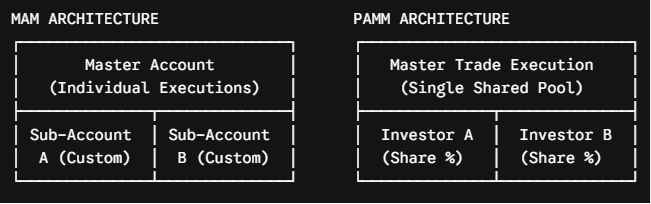
Choosing the right technology infrastructure is a critical decision for your business. MAM, PAMM, and Copy Trading operate on different balance sheet architectures, allocation methods, and user access rules. Understanding these structural differences helps you align the platform with your risk profiles and trading strategies.
| Structural Dimension | MAM (Multi-Account Manager) | PAMM (Percentage Allocation) | Copy Trading |
| Capital Structure | Segregated sub-accounts with custom risk settings | Combined single master pool with share-based splits | Independent client accounts copying master orders |
| Trade Allocation | Supports 10 methods (Lot, Proportional, Equity) | Proportional allocation based on share % | Proportional trade size replication |
| Small-Lot Rounding | Highly precise; managed via custom lot rules | No rounding issues; P&L uses share decimals | Round-down errors on small accounts |
| Order Execution | Immediate group execution across sub-accounts | Single order executed on the master account | Copied orders are sent to individual accounts |
| Performance Fees | Automated or manual billing cycles | Managed via automated monthly HWM rules | Subscription-based or per-trade fees |
| Best Suited For | Customized risk accounts and family offices | Pooled retail assets and algorithmic systems | Retail signal providers and social trading |
A Deep Dive Into MAM: The Professional’s Choice for Tailored Trading
For fund managers who require granular control over their portfolio risk, MAM (Multi-Account Manager) accounts are often the preferred option. While PAMM combines investor capital into a single pool, MAM systems manage each sub-account individually. This allows you to tailor leverage and risk levels for different clients.
Multi-Account Manager Allocation Methods
The MetaFX MAM platform supports 10 advanced allocation methods, including:
-
Lot Allocation: Assigns specific lot sizes to each sub-account.
-
Proportional Allocation: Allocates trade volume based on the equity balance of each account.
-
Equity Percentage: Automatically calculates allocation based on each account’s share of total assets.
MAM Custom Allocation in Practice (10-Lot XAU/USD Position)
| Investor Account | Risk Profile Selected | Volume Assigned |
| Client A | Aggressive (High) | 5.0 Lots |
| Client B | Balanced (Medium) | 3.0 Lots |
| Client C | Conservative (Low) | 2.0 Lots |
This flexibility allows you to manage defensive and growth strategies simultaneously from a single master login, without needing multiple execution terminals.
Get Started with Our Managed Services: Structural PAMM Simulator
To understand how profit sharing, High Water Marks, and automated ledger adjustments work in real time, use the structural model below to simulate a live portfolio.
-
Master Performance Fee: 20%
-
Active Total Pool Equity: $100,000.00
Simulation Step 1: Initial Investor Balance
-
Investor Alice: Deposit $10,000.00 (Share: 10%)
-
Investor Bob: Deposit $90,000.00 (Share: 90%)
Simulation Step 2: Positive Market Cycle (+10% PnL)
-
Total Pool Equity rises to: $110,000.00
-
Alice Ledger: Equity $11,000.00 (Unrealized Profit: $1,000)
-
Bob Ledger: Equity $99,000.00 (Unrealized Profit: $9,000)
Simulation Step 3: Month-End Settlement Execution
-
System calculates Performance Fee on profits above HWM:
-
Alice Performance Fee (20% of $1,000): $200.00
-
Bob Performance Fee (20% of $9,000): $1,800.00
-
-
Total Master Fees Credited: $2,000.00
-
Alice Net Wallet Return: $10,800.00 (New HWM established)
-
Bob Net Wallet Return: $97,200.00 (New HWM established)
The High Water Mark (HWM) Protection Rule
The High Water Mark is an essential tool for building trust with investors. It ensures that performance fees are only paid on new net profits.
HWM Recovery Cycle:
Month 1: Peak Equity $100k (Fee Paid) ? Month 2: Drawdown to $90k (No Fee) ? Month 3: Recovery to $105k (Fee Paid only on the $5k net gain)
If the fund experiences a drawdown, the manager must recover those losses before they can charge performance fees again. This aligns the manager’s incentives with the long-term success of their investors.
The Step-by-Step Blueprint to Launching Your Forex Fund

Setting up a professional forex fund manager business on TradingCup requires structured execution across compliance, technology, and risk management.
Step 1: Establish Your Manager Creation Threshold
Before a Fund is created, your designated trading account must have no open positions or pending orders, and its cash balance must meet the fixed Creation Threshold for that account currency (e.g., USD 2,000, AUD 2,900, EUR 1,800, GBP 1,600, CAD 2,600, NZD 3,200, or JPY 282,000). On creation, this entire balance becomes your initial Fund contribution.
Step 2: Define Your Commercial Terms
You must set your Commercial Terms before establishing a Fund. These cannot be varied for existing Clients once accepted.
- Performance Fee: Up to 50% max. (Note: The TradingCup PAMM model utilizes a 0% fixed Management Fee to strictly incentivize performance).
- Opt-in Term: Choose 30, 90, 180, or 365 calendar days.
- Minimum Investment: Define the minimum deposit amount required for a client to enter your pool.
Step 3: Execute the LPOA and Establish the Fund
By explicitly checking the Fund-creation box on the platform, you make a standing offer to each eligible Client via the standard form of the Manager–Client Limited Power of Attorney (LPOA). This provides legal clarity that you are trading as their limited attorney.
Step 4: Onboard Investors and Automate Allocations
Once clients review and electronically accept your LPOA terms, their funds are transferred to a central wallet. You can manually allocate them to your pool, or the TradingCup system will auto-allocate them within 24 hours so they can instantly start participating in the Fund’s profit and loss.
Sample Monthly Performance Report (Audit Ready)
| Active HWM | Fee % | Open Equity | Net Deposits | Monthly PnL | End Bal |
| $10,004.86 | 20.0% | $8,577.62 | $0.00 | +$1,427.24 | $10,004.86 |
| $15,932.58 | 20.0% | $12,897.33 | $1,500.00 | +$1,535.25 | $15,932.58 |
| $40,337.70 | 20.0% | $39,659.20 | $0.00 | -$678.50 | $38,980.70 |
Step 5: Prepare Your Investor Pitch Materials
Use your TradingCup Fund profile to showcase your trading statistics. Ensure your marketing and reporting tools are clear, transparent, and compliant. Provide accurate metrics on your maximum drawdown, absolute gain, and strategy overview.
How to Attract Your First Investors

Securing your initial capital as a new forex fund manager requires building trust through transparency and professional presentation. Here are three practical strategies to help you scale your assets under management (AUM):
-
Provide Read-Only Access to Your Strategy: Build credibility by offering prospects view-only access to a live, funded account. Letting potential clients monitor your execution and risk management in real time is a powerful way to demonstrate consistency.
-
Commit Your Own Capital: Show alignment with your investors by putting your own funds into the PAMM pool. This demonstrates that you share the same risks and rewards as your clients.
-
Automate Your Performance Reports: Use platforms like MetaFX MAM to automatically generate and distribute monthly performance summaries. Transparent reporting on profits, fees, and drawdowns helps reinforce client trust and long-term retention.
Advanced Mindsets for Market Mastery
How Jesse Livermore Would Approach Fund Management
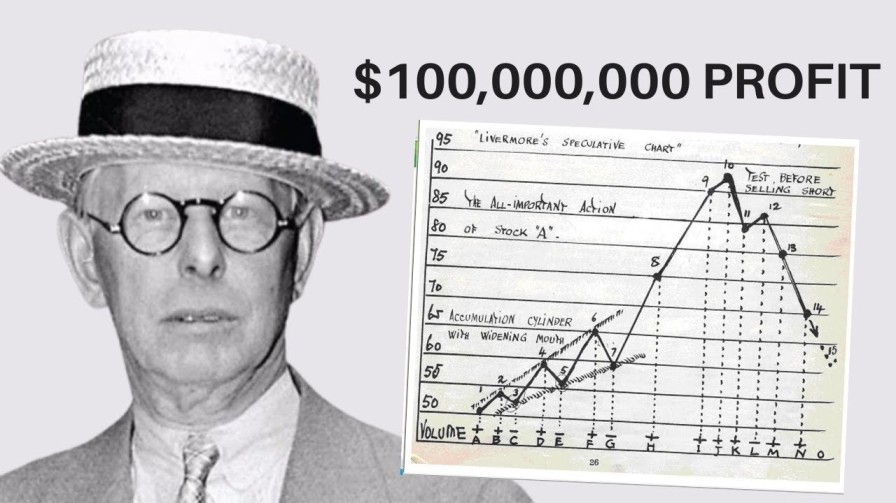
The legendary speculator Jesse Livermore was a lone wolf, but he understood the power of managing large pools of capital. He would have approached fund management with an obsessive focus on market timing and capital preservation. For Livermore, being a fund manager would be the ultimate test of his trading rules. He would demand absolute control over execution, making a flexible system like MAM his tool of choice. He would only take on clients who understood and accepted his high-risk, high-reward speculative style. Livermore’s philosophy of “buy right, sit tight” would translate into a patient, trend-following approach, waiting for the perfect “pivotal points” before committing client capital.
10 Lessons from “Start with Why” for Aspiring Fund Managers

Simon Sinek’s “Start with Why” provides a powerful framework for building a purpose-driven business. For a forex fund manager, this means articulating a clear and compelling “Why” that goes beyond simply making money.
-
Your “Why” is Your Trading Philosophy: Your “Why” is the core belief that underpins your trading strategy. It’s your unique edge and your conviction in your approach to the markets.
-
The “How” is Your Methodology: The “How” encompasses your disciplined trading methodology and your rigorous risk management rules. It’s the practical application of your “Why.”
-
The “What” is Your Performance: The “What” is the tangible result of your “Why” and “How”, the profitable returns you generate for your clients.
-
People Don’t Buy What You Do, They Buy Why You Do It: Clients who are aligned with your “Why” will be more likely to stick with you through the inevitable periods of drawdown.
-
The Golden Circle: Your “Why” should be at the center of everything you do, from your trading decisions to your client communications.
-
Clarity, Discipline, and Consistency: A clear “Why” provides the clarity you need to be disciplined and consistent in your trading, even when the market is volatile.
-
Trust Begins with “Why”: When you can articulate your “Why,” you build an emotional connection with your clients that goes beyond mere performance numbers.
-
The Power of a Just Cause: Your “Why” can be a powerful motivator, not just for your clients, but for yourself as well. It’s the “just cause” that keeps you going when things get tough.
-
Your “Why” is Your Competitive Advantage: In a crowded market, a compelling “Why” can be a powerful differentiator that sets you apart from the competition.
-
Lead with Your “Why”: When you meet with potential clients, start with your “Why.” Share your passion, your purpose, and your belief in your trading philosophy. This will attract clients who are not just looking for a fund manager, but for a trusted partner.
Forex Fund Management: Frequently Asked Questions
What is the minimum deposit required to start a TradingCup PAMM Fund?
To launch a Fund, the manager must meet the fixed Creation Threshold for their account currency (e.g., $2,000 USD, $2,900 AUD). For incoming investors, the Manager dictates the minimum investment per deposit in the Commercial Terms (e.g., $500).
How do clients withdraw funds?
Investors can request a withdrawal once their specific Opt-in Term has matured. The request must be submitted during the withdrawal window (Monday 00:00 to Friday 19:00 UTC). The system’s automated engine irrevocably closes tradable positions pro rata to release the necessary funds back to the client’s trading account.
What is the fee structure?
TradingCup PAMM utilizes a strictly performance-based structure. Managers can set a Performance Fee (up to 50%). There is NO management fee, subscription fee, or other periodic fee payable to the Manager. Performance fees are settled automatically using a strict High Water Mark calculation.
Do I need a license to offer forex fund management services?
Licensing requirements vary deeply by jurisdiction. You must hold and maintain every license, authorization, consent, or registration required in your jurisdiction. Note that the TradingCup PAMM service restricts soliciting or accepting any person in a Restricted Jurisdiction (such as Australia).
Can I run automated expert advisors (EAs)?
Yes. Since you are executing orders on a single master MT5 fund account, you can fully deploy automated strategies and high-frequency trading (HFT) models with zero latency discrepancies among your pooled clients.
Conclusion: Launch Your Professional Forex Fund Manager Business
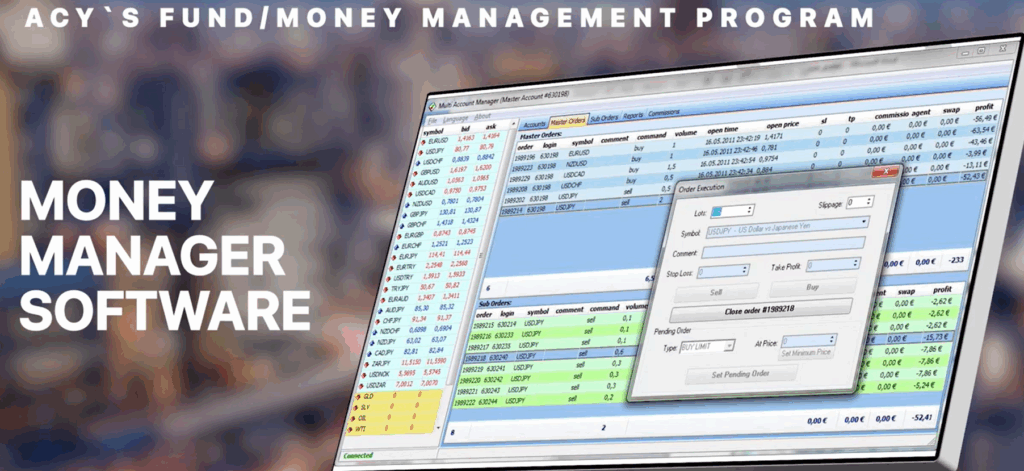
Transitioning into professional forex fund management is a proven way to scale your trading business. By combining consistent performance with robust MAM/PAMM technology and clear reporting, you can build a reputable, scalable investment business.
Using professional systems like MetaFX on MT4 allows you to automate your trade allocations and client billing, freeing you to focus on strategy execution and risk management.
Partner with ACY Partners to Scale Your Fund Take your trading business to the next level. Get free access to MetaFX MAM software, complimentary LPOA frameworks, and dedicated technical setup support from our institutional service team.
-
Trade manually or run automated Expert Advisors (EAs).
-
Use 10 different allocation models, including Lot, Percentage, and Proportional splits.
-
Automate your monthly fee billing with built-in High Water Mark protection.
Your Path to a Smarter Trading Future Starts Now
The future of trading isn’t about replacing human intelligence but augmenting it. You now have a blueprint to take decades of trading wisdom, forge it into a powerful AI assistant, and use it to build your own trading and affiliate marketing empire.
Stop trading on emotion. Stop paying for inflexible tools. Start building your edge.
Ready to build your business and empower your clients? Join the ACY Partners Program today and start sharing your unique AI trading bot with the world.
Disclaimer:Trading Forex and CFDs involves significant risk and may not be suitable for all investors. The content of this article is for educational purposes only and should not be considered financial advice. The performance of any AI tool or trading strategy is not guaranteed. Always conduct your own research and consider your risk tolerance before trading with real capital. Ensure that when you share your app, you include this disclaimer and your ACY Partners affiliate link for any sign-ups.
For more detailed insights on developing daily trading routines, risk management, and effective position sizing strategies, explore additional articles on ACYPartners. Our experts at ACY and FinLogix are also great resources to guide your journey towards trading excellence.

Discover Our Best Gold Affiliate Program
At ACYPartners, you can browse through a selection of affiliate program and review offerings before you decide to start forex affiliate marketing.
Become An Introducing Broker
Share your expertise and become an introducing broker so you can help other traders about the benefits of joining ACY.
Stay tuned to our blog for more Forex Affiliate Marketing educational resources.
Trading involves risks.
Related Forex Affiliate Marketing blogs:
- Best Forex Affiliate Program 2026 | Top FX Affiliate Network
- Best Gold Affiliate Program: High Paying Affiliate Program for Traders
- How a Forex CPA Affiliate Program Works with a Forex Broker – What You Must Know
- How to Choose the Right Multi Account Manager Software on MetaTrader 4 (MT4)
- 10 Reasons to Use Free Financial Widgets on Your Forex Affiliate Website
- What is a MAM Account – Forex MAM and PAMM Managed Accounts
- Introducing Broker Program (IB) Business Model & How to Be Competitive
- Benefits of the ACY Forex White Label Offering
Leave a Reply