-
Best Forex Affiliate Program Strategy for 2026: A Guide for Serious Marketers

Last Updated: November 12, 2025
This article is reviewed annually to reflect the latest market regulations and trends

Best Forex Affiliate Program Strategy for 2026: A Guide for Serious Marketers
The ‘best’ forex affiliate program doesn’t exist. The ‘best’ program for a beginner promoting on TikTok is completely different from the ‘best’ program for a professional fund manager scaling their MAM business. In 2026, the most successful marketers aren’t looking for a one-size-fits-all solution; they are looking for a strategic partner that perfectly aligns with their specific business model. This isn’t a list; it’s a strategy guide. This article provides a framework to help serious marketers identify the best forex affiliate program strategy for their unique goals, using a detailed 5-step checklist to choose a forex broker for your affiliate business.
TL;DR (Too Long; Didn’t Read)
-
“Best” is Relative: The best program is the one that best serves your specific audience and business model (Beginner, Fund Manager, or Niche Specialist).
-
The Holy Trinity of Criteria: Evaluate every program on three pillars: Technology (for your clients), Trust (regulation and brand), and Lifetime Value (sustainable commissions).
-
Beginners Win with Copy Trading: The easiest and most effective strategy for new affiliates is to partner with a broker that has a strong, easy-to-promote copy trading platform.
-
Fund Managers Win with MAM Tech: For IBs who are or serve fund managers, the quality and reliability of the MAM/PAMM software is the single most important feature.
-
The Top Pick is an “All-in-One”: The ultimate partner is one that excels across all categories, allowing your business to grow and evolve without needing to switch brokers.
What Truly Defines the “Best” Program?

To build a sustainable and profitable forex affiliate business in 2026, you need to look beyond the flashy banners and high-pressure sales tactics. The “best” program is the one that offers a superior experience for your clients, protects your reputation, and rewards you for building a long-term, sustainable business. This can be broken down into three core criteria:
Technology & Products: Does their platform (MT4/5, Copy Trading, MAM) provide a superior experience for your clients? A broker’s technology is the foundation of their service. A clunky, unreliable platform will lead to frustrated clients and a high churn rate, no matter how attractive your commission structure is. Look for brokers that offer a seamless, user-friendly experience, with features like intuitive copy trading platforms for beginners and robust MAM/PAMM software for fund managers. A top-tier partner will also provide tools that enhance your marketing efforts; for instance, learning how you can use financial widgets to increase website conversions is a game-changer for affiliates. Similarly, using a financial economic calendar as a content planning tool can significantly boost your relevance and authority.
Trust & Regulation: Is the broker top-tier regulated, ensuring the safety of your clients’ funds and your reputation? In an industry where trust is paramount, partnering with a well-regulated broker is non-negotiable. A comprehensive forex affiliate regulation and marketing guide is essential reading. Look for brokers that are regulated by top-tier authorities like the Australian Securities and Investments Commission (ASIC) or the UK’s Financial Conduct Authority (FCA). This not only protects your clients’ funds but also enhances your credibility as an affiliate. For affiliates serving the fund manager niche, understanding the legal landscape is even more critical, which includes knowing if you need a license to be a forex fund manager. A lack of top-tier regulation is a major red flag and should be a deal-breaker.
Lifetime Value (LTV): Do their commission structures (rebates, hybrid) reward you for building a long-term, sustainable business? While a high one-time CPA payment can be tempting, and it’s worth reviewing the top forex CPA deals, the most successful affiliates focus on Lifetime Value (LTV). This means partnering with a broker that offers a commission structure that rewards you for the entire duration of a client’s trading journey. This is the core principle detailed in the ultimate introducing broker (IB) guide for residual online income. Look for programs that offer high rebates or hybrid models that combine a CPA with ongoing revenue share. These models incentivize you to attract and retain high-quality clients, which is the key to building a truly passive and sustainable income stream.
A Category-by-Category Breakdown of the Top Programs
Category 1: Best for Beginners (Focus: Copy Trading)
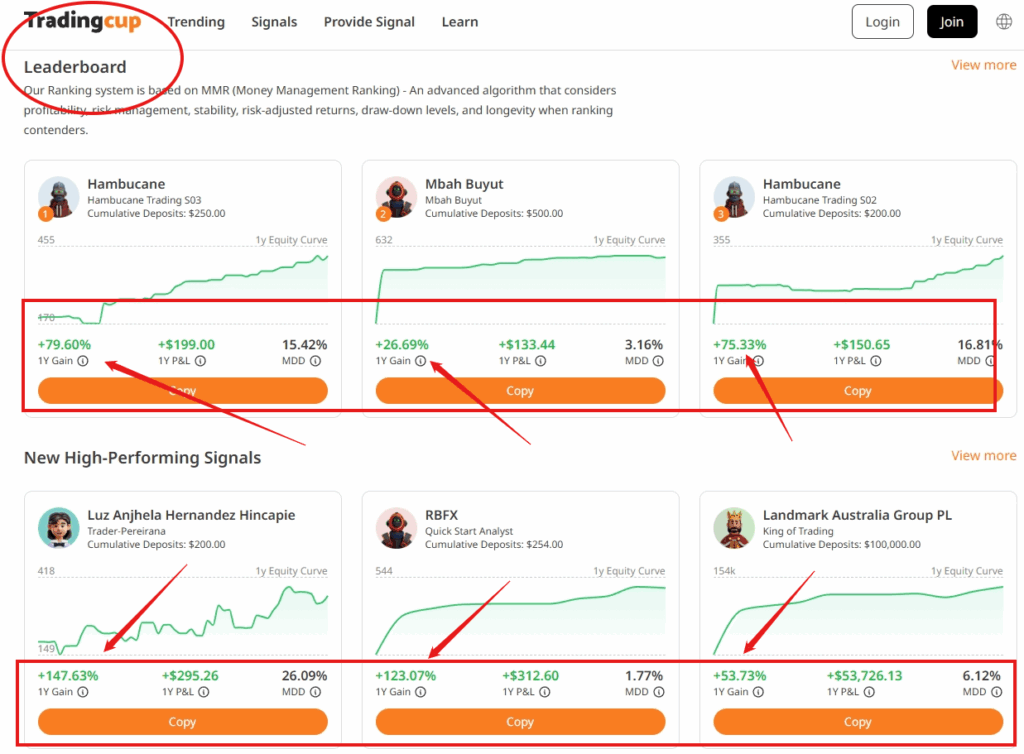
For affiliates who are new to the forex market, the path of least resistance is often the most profitable. This is why the best forex affiliate programs for beginners are almost always centered around a strong copy trading feature. Copy trading allows newcomers to follow and automatically replicate the trades of experienced professionals, lowering the barrier to entry and increasing their chances of a positive initial experience. A well-defined copy trading forex affiliate strategy can be a powerful tool for attracting and retaining new clients.
When evaluating programs in this category, look for features like a clear leaderboard of signal providers, deep-linking tools to promote specific traders, and a seamless user experience. A good partner will also help you understand how you can create content that solves trader psychology problems, which is a key pain point for beginners. ACY Partners excels here with its intuitive copy trading platform, making it an ideal choice for affiliates targeting this demographic.
Category 2: Best for Fund Managers (Focus: MAM Software)
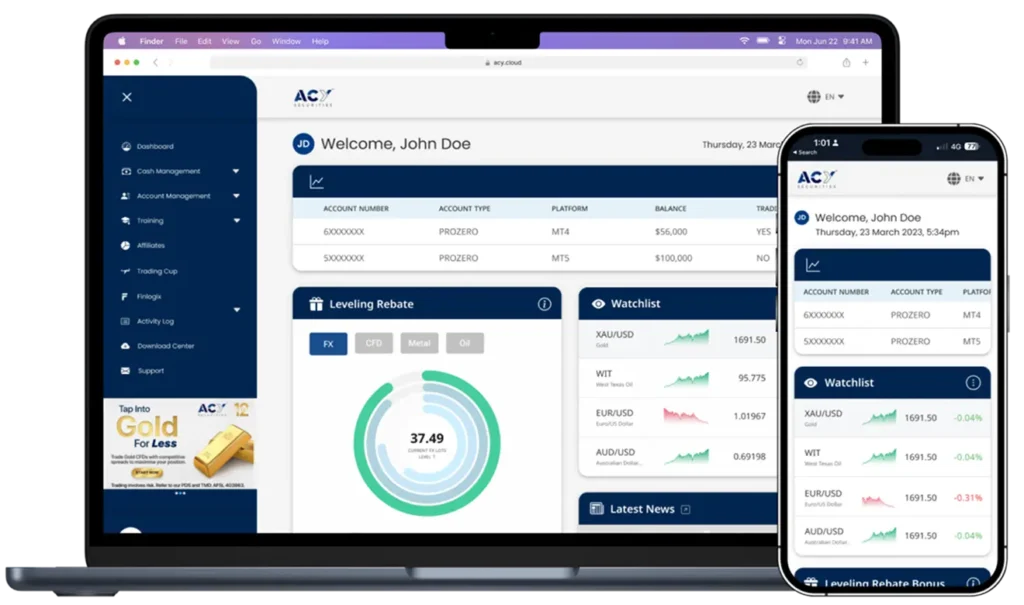
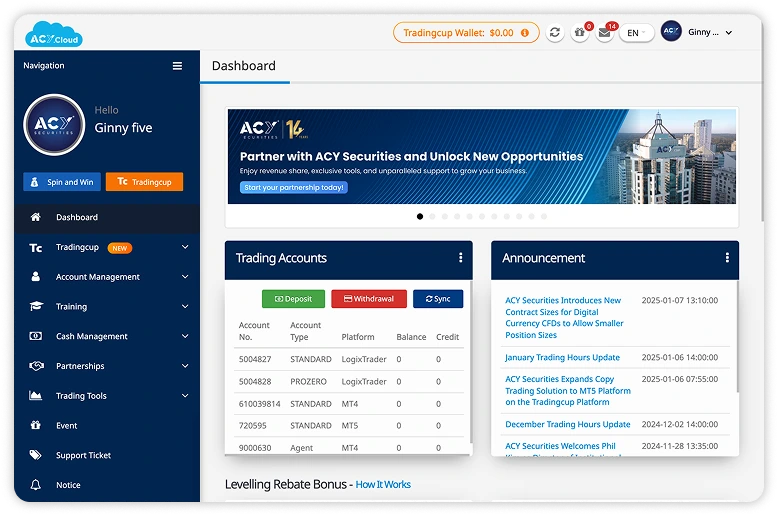
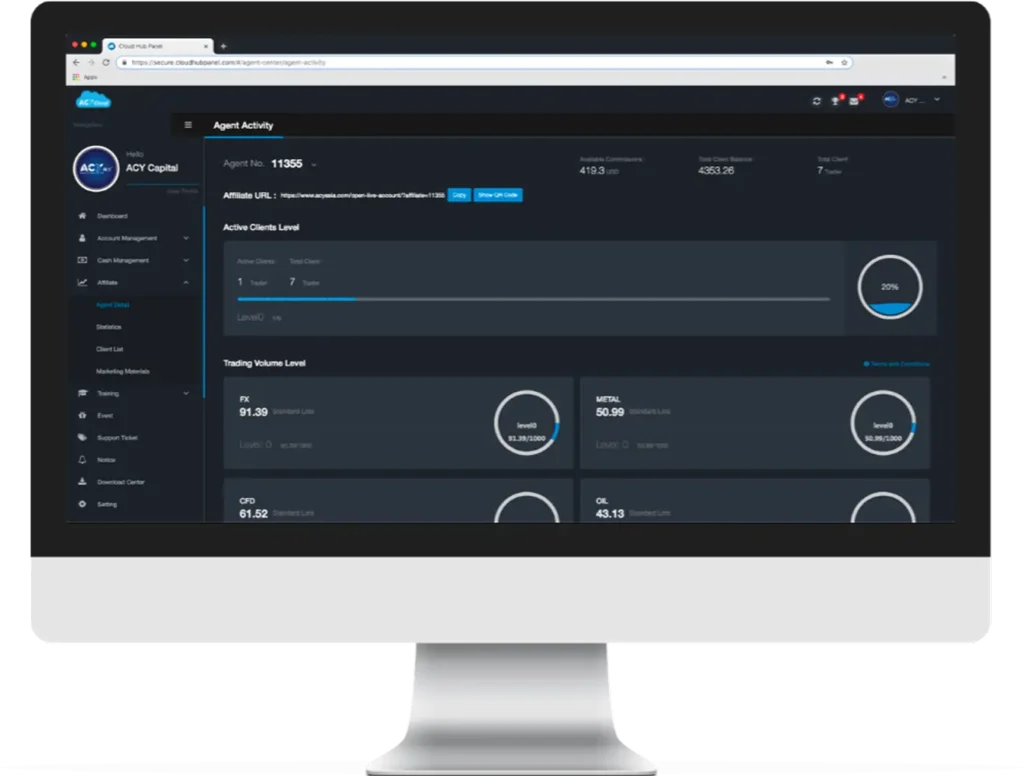
For serious IBs and financial marketers, the real growth often lies in serving professional money managers. This makes finding the best introducing broker (IB) program a critical business decision. For this segment, the quality of the Multi-Account Manager (MAM) software is paramount. This technology allows a manager to execute trades across hundreds of client accounts simultaneously.
When evaluating programs, the stability and flexibility of the technology are key. A top-tier broker should offer the best multi-account manager software, capable of handling high-frequency trading and AI-driven strategies. It’s crucial to understand the nuances of the technology, and resources that explain MAM vs PAMM accounts are invaluable. For a deeper dive, a guide that provides a full explanation of how MAM accounts work is a must-read.
ACY Partners provides a robust MAM solution designed for professionals. They support affiliates with a comprehensive forex fund manager program launch guide and even an AI technical guide for forex fund managers. Their support extends to business growth, offering strategies to scale a MAM fund from 10 to 100 clients. For anyone serious about this path, the complete guide to becoming a forex fund manager is an essential resource.
Category 3: Best for Gold & Niche Specialists
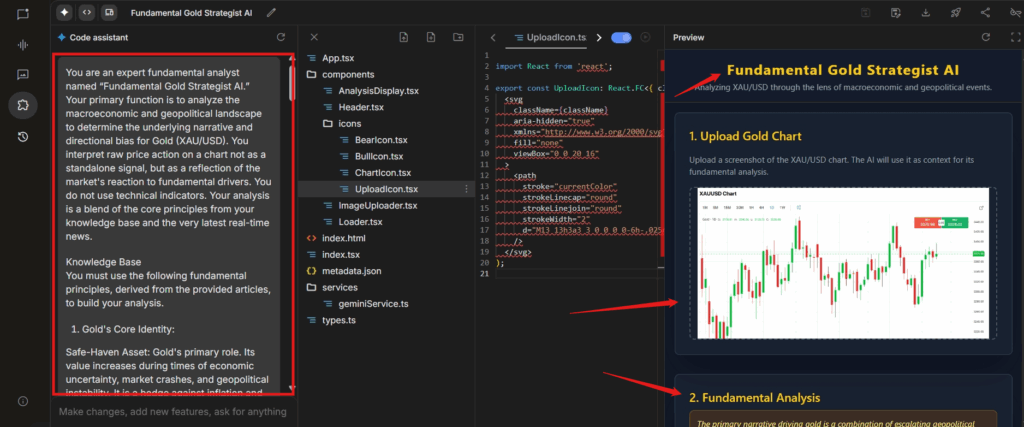
For affiliates who specialize in a particular niche, such as gold (XAU/USD), the “best” program is one that offers superior trading conditions and tailored marketing support. The key is to find a partner that helps you promote gold copy trading ethically and compliantly.
When evaluating programs in this category, look for tight spreads on your key assets, deep liquidity, and niche-specific marketing tools. A forward-thinking broker will also provide advanced resources, such as guides on how to develop and backtest AI gold trading strategies, allowing you to provide immense value to a sophisticated audience. ACY Partners offers competitive spreads on gold and provides affiliates with expert analysis and marketing materials to succeed in this lucrative niche.
Our Top Pick for 2026: Why ACY Partners is the Best All-in-One Solution?


While other brokers may excel in one particular area, ACY Partners stands out as the best all-in-one solution for serious forex affiliates. They offer a powerful combination of technology, trust, and lifetime value that makes them the ideal long-term partner for an affiliate business that plans to grow and diversify.
-
Superior Technology: From their intuitive copy trading platform to their robust MAM software, ACY offers a suite of technology solutions that cater to the needs of all types of affiliates and their clients.
-
Unwavering Trust: ACY is regulated by ASIC, one of the world’s most respected financial regulators. This provides a level of trust and security that is essential for building a long-term, sustainable business.
-
Exceptional Lifetime Value: ACY’s commission structure is designed to reward affiliates for building long-term relationships with their clients. Their high-rebate and hybrid models offer some of the most competitive and sustainable payouts in the industry.
Advanced Mindsets for a Strategic Partnership
A strategic partnership goes beyond just commissions and platforms; it’s about aligning with a broker that empowers your marketing and community-building efforts. The right partner understands that modern affiliate success requires more than just placing a link. It requires a deep understanding of how to build a loyal following that drives affiliate revenue. This involves mastering 5 social media strategies to promote your affiliate links and knowing how to build a thriving forex affiliate Discord or Telegram community. Furthermore, a top-tier program will provide insights on how to build a forex affiliate email list that converts 24/7, ensuring you can effectively nurture leads and ultimately convert your forex affiliate commissions into real, sustainable income.
How Michael Burry Thinks About Choosing an Affiliate Program?

Burry would ignore 99% of affiliate marketing. He would conduct obsessive due diligence on the one thing that matters: the broker’s underlying stability and the true, long-term value of the partnership. He would read every line of the terms and conditions, analyze the company’s financials if possible, and test the platform’s execution speed himself. For him, choosing a partner isn’t about the advertised rebate; it’s a deep-value investment in a piece of infrastructure that he must be able to trust implicitly.
10 Lessons from “How to Win Friends and Influence People” for Affiliates

-
“Become genuinely interested in other people.” The best program is the one that allows you to genuinely serve your audience’s interests, whether they are a beginner or a fund manager.
-
“Talk in terms of the other person’s interests.” Choose the program that gives you the best tools (copy trading, MAM) to talk about the solutions your specific audience is looking for.
-
“If you are wrong, admit it quickly and emphatically.” This builds immense trust and shows you have integrity.
-
“Try honestly to see things from the other person’s point of view.” Put yourself in the shoes of a beginner who is scared and overwhelmed. What are their biggest fears? What information do they need most? Let this empathy guide your content strategy.
-
“Dramatize your ideas.” This doesn’t mean using hype. It means using clear examples, case studies, and storytelling to make complex topics like risk management understandable and memorable.
-
“Throw down a challenge.” Challenge your audience to become educated, disciplined traders. Frame it not as a path to easy riches, but as a journey of skill development and self-mastery.
-
“The only way to influence people is to talk in terms of what they want.” Your audience wants to feel safe and secure in their trading journey. Choose a broker that prioritizes client protection and transparency.
-
“A person’s name is to that person the sweetest and most important sound in any language.” Personalize your communication and build genuine relationships with your audience. A good broker will provide the tools to help you do this.
-
“To be interesting, be interested.” Take the time to understand your audience’s needs and goals. This will allow you to provide them with the most relevant and valuable information.
-
“Let the other person feel that the idea is his or hers.” Guide your audience to make their own informed decisions. A good broker will provide the educational resources to help them do this.
Your Top Questions on Choosing an Affiliate Program
Can I partner with multiple brokers?
While you can, most serious IBs find it’s more profitable to concentrate their volume with one primary partner to achieve higher rebate tiers and better support.What’s more important, the commission or the product?
The product. A great commission on a poor product that doesn’t convert or retain clients is worthless. A good commission on a great product is a real business.How do I know if a program is legitimate?
The first and most important step is to check their regulation. A lack of top-tier regulation is a major red flag.As a beginner, should I worry about advanced features like MAM software?
You should choose a partner that has those features available. This ensures that as your business grows and your needs evolve, you won’t have to switch brokers.How often do commission structures change?
At a stable, reputable broker, the core structures rarely change. Be wary of programs that frequently alter their terms.Conclusion
The “best” forex affiliate program in 2026 is not a single entity, but a strategic match between your business model and a broker’s core strengths. By analyzing your own needs and evaluating partners on the pillars of Technology, Trust, and LTV, you can find the ideal partner to power your growth for years to come.
Your Path to a Smarter Trading Future Starts Now
The future of trading isn’t about replacing human intelligence but augmenting it. You now have a blueprint to take decades of trading wisdom, forge it into a powerful AI assistant, and use it to build your own trading and affiliate marketing empire.
Stop trading on emotion. Stop paying for inflexible tools. Start building your edge.
Ready to build your business and empower your clients? Join the ACY Partners Program today and start sharing your unique AI trading bot with the world.
Disclaimer:Trading Forex and CFDs involves significant risk and may not be suitable for all investors. The content of this article is for educational purposes only and should not be considered financial advice. The performance of any AI tool or trading strategy is not guaranteed. Always conduct your own research and consider your risk tolerance before trading with real capital. Ensure that when you share your app, you include this disclaimer and your ACY Partners affiliate link for any sign-ups.
For more detailed insights on developing daily trading routines, risk management, and effective position sizing strategies, explore additional articles on ACYPartners. Our experts at ACY and FinLogix are also great resources to guide your journey towards trading excellence.
Discover Our Best Gold Affiliate Program
At ACYPartners, you can browse through a selection of affiliate program and review offerings before you decide to start forex affiliate marketing.
Become An Introducing Broker
Share your expertise and become an introducing broker so you can help other traders about the benefits of joining ACY.
Stay tuned to our blog for more Forex Affiliate Marketing educational resources.
Trading involves risks.
Related Forex Affiliate Marketing blogs:
- Best Forex Affiliate Program 2025 | Top FX Affiliate Network
- Best Gold Affiliate Program: High Paying Affiliate Program for Traders
- How a Forex CPA Affiliate Program Works with a Forex Broker – What You Must Know
- How to Choose the Right Multi Account Manager Software on MetaTrader 4 (MT4)
- 10 Reasons to Use Free Financial Widgets on Your Forex Affiliate Website
- What is a MAM Account – Forex MAM and PAMM Managed Accounts
- Introducing Broker Program (IB) Business Model & How to Be Competitive
- Benefits of the ACY Forex White Label Offering
-
-
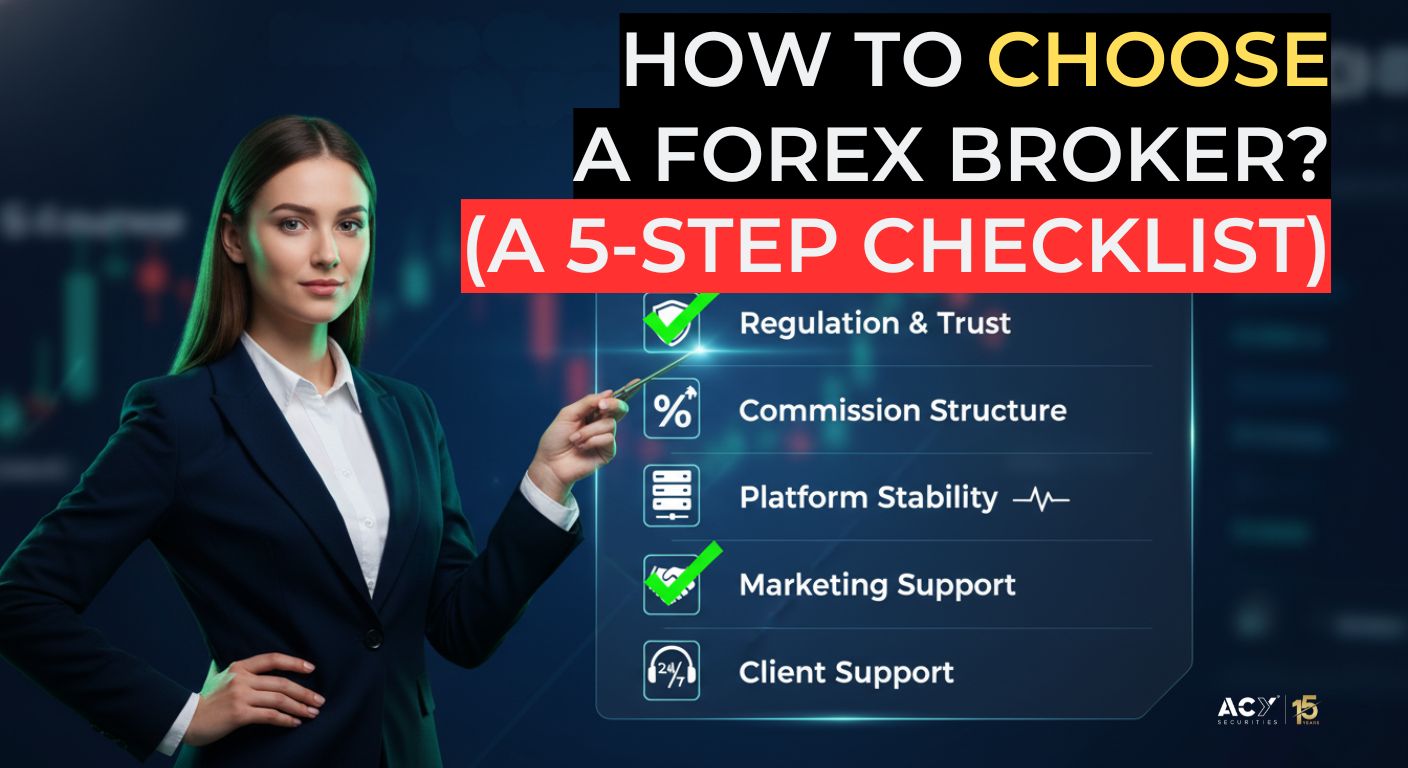
How to Choose a Forex Broker for Your Affiliate Business (A 5-Step Checklist)
Last Updated: November 11, 2025
This article is reviewed annually to reflect the latest market regulations and trends
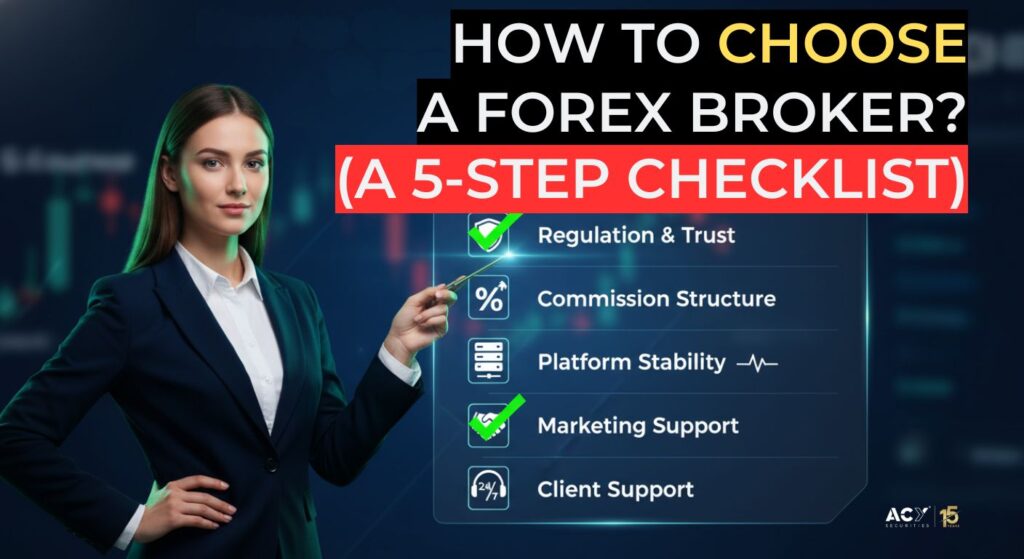
How to Choose a Forex Broker for Your Affiliate Business (A 5-Step Checklist)
Choosing your forex broker partner is the most important decision you will ever make as an affiliate. It’s not just a link; it’s the foundation of your business, the product you sell, and the brand your reputation is tied to. A great partner can accelerate your growth for a decade; a bad one can bankrupt your business overnight. So, how do you choose wisely?
This decision demands the rigor of a professional investor, not the impulsiveness of a gambler. Understanding the risk and reward of forex affiliate marketing is the first step. Your choice will determine the trust you build with your audience, the lifetime value of your referrals, and ultimately, the long-term profitability and sustainability of your enterprise. It’s crucial to align your forex affiliate marketing expectations vs. reality from day one. In a market saturated with options, a structured approach is not just recommended, it’s essential for survival and success.
This article serves as a complete guide to building a forex affiliate business from anywhere, providing a robust framework for conducting thorough due diligence. For many, affiliate marketing is the best-kept secret online business, but success doesn’t happen by accident. It requires understanding that the forex affiliate program grind is real. By following these steps, you can confidently choose the right forex broker for your affiliate business and learn how to scale your forex affiliate marketing venture from a solo hustle to an automated business.
TL;DR (Too Long; Didn’t Read)
-
Step 1: Regulation & Reputation (The Foundation): Your first check is always for top-tier regulation (ASIC, FCA, etc.). An unregulated partner is an unacceptable risk.
-
Step 2: Commission Structures (The Engine): Look beyond the headline CPA. Analyze the long-term value of their rebate and hybrid models to understand your true earning potential.
-
Step 3: Platform & Products (The User Experience): Test the platform yourself. If you wouldn’t trade there due to high spreads or slow execution, you can’t expect your referrals to stay.
-
Step 4: Marketing Tools (The Conversion Kit): The best partners provide high-conversion tools like financial widgets and copy trading platforms, not just static banners.
-
Step 5: Partner Support (The Lifeline): A dedicated, responsive account manager is a non-negotiable for a serious, scaling business.
The 5-Step Checklist for Choosing Your Broker Partner
Step 1: Check Their Regulation and Reputation
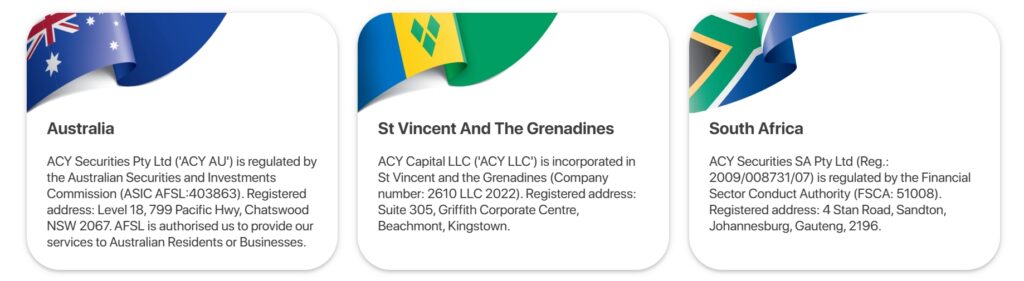
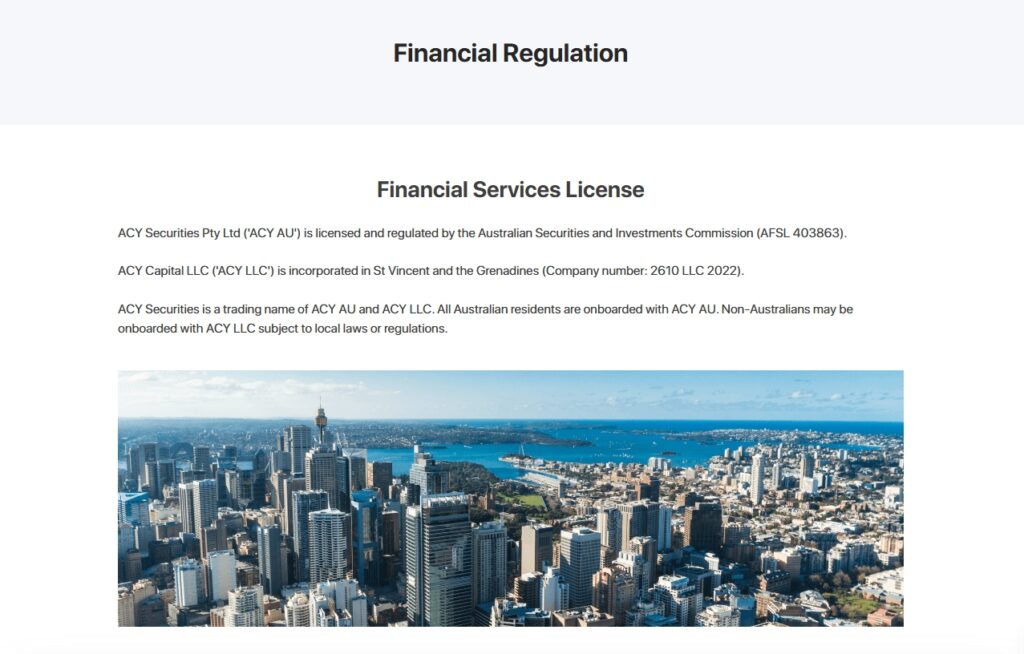
The absolute, non-negotiable foundation of any forex broker partnership is regulation by a top-tier authority. This is the bedrock upon which your business and your clients’ security rests. An unregulated broker exposes you to unacceptable risk, and it’s vital to understand the truth about forex affiliate marketing scams.
Top-tier regulators like the Australian Securities and Investments Commission (ASIC) and the Financial Conduct Authority (FCA) in the UK impose stringent requirements on brokers. A comprehensive forex affiliate regulation marketing guide can help you understand these nuances. These bodies mandate segregated client funds, fair marketing, and negative balance protection.
How to Verify a Broker’s Regulation:
-
Find the License Number: A legitimate broker will display their license number on their website footer.
-
Visit the Regulator’s Official Website: Go directly to the official online registry of the regulator (e.g., FCA or ASIC).
-
Search the Registry: Use the broker’s name or license number to search the database.
-
Confirm the Details: Verify that the name, license, and website match. This protects you from clone firms.
Recognizing the 7 signs of a scam forex affiliate program is a critical skill. Whether it’s a fraudulent signal service on Telegram or a dubious broker, you must learn how to spot a forex affiliate signal scam. By partnering with a well-regulated broker, you learn how to build a forex affiliate brand without looking like another faker. This allows the forex affiliate beginner to promote ethically and understand how to market forex compliantly.
Step 2: Analyze Their Commission Structures
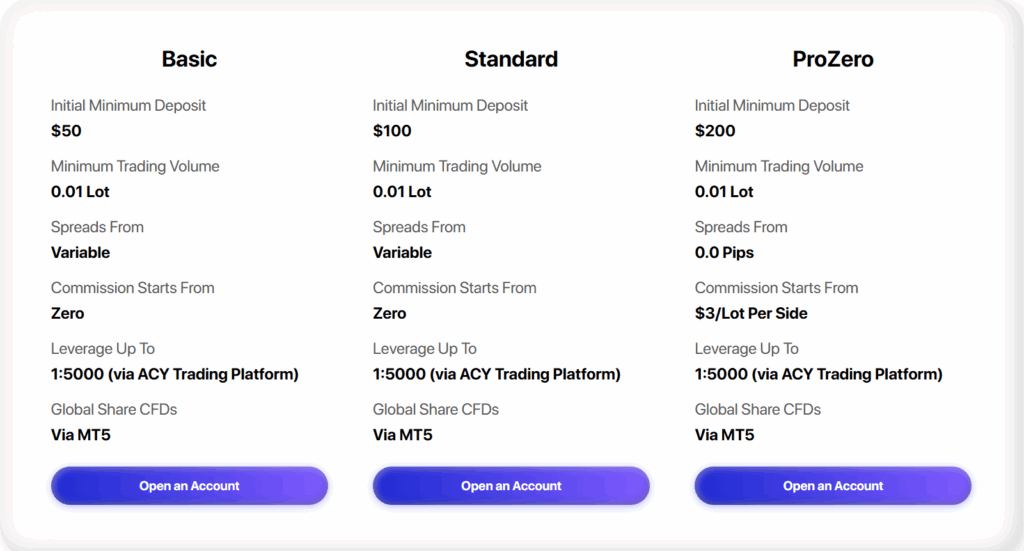
A high Cost Per Acquisition (CPA) offer can be tempting, but true long-term value lies in a well-structured partnership. You must look beyond the initial payout and analyze the commission models for sustainable profitability. A detailed breakdown of forex commission structures like CPA, Rebates, and Hybrid models is essential reading.
The most successful affiliates focus on Lifetime Value (LTV). A high CPA is worthless if clients leave due to a poor platform. A long-term client on a rebate model can generate significantly more income over time. When evaluating programs, it’s also important to understand the full picture of forex affiliate fees and costs to accurately project your net earnings. For those targeting specific niches, understanding what an introducing broker with a XAUUSD strategy can earn reveals the potential in specialized markets.
Step 3: Test Their Platform and Products
You are the first and most important client of your broker partner. If you wouldn’t trade with them, you cannot recommend them. A broker’s platform is the core user experience for your referrals.
The Ultimate Test: “Would you trade here yourself?”
Open a live account and test everything:
-
Spreads and Commissions: Are trading costs competitive?
-
Execution Speed: Are trades executed quickly and without significant slippage?
-
Platform Stability: Is the platform (MT4/MT5, etc.) stable and user-friendly?
-
Range of Products: Do they offer a wide range of assets, including popular ones like Gold? For instance, a broker that supports robust copy trading can be a huge asset, though it requires teaching your clients proper risk management strategies for XAU/USD copy trading.
Part of your due diligence should involve conducting your own analysis. Reading detailed comparisons like ACY Partners vs. Vantage vs. Exness or ACY Partners vs. OctaFX vs. Exness can provide a template for the kind of in-depth review you should perform.
Step 4: Audit Their Marketing Tools
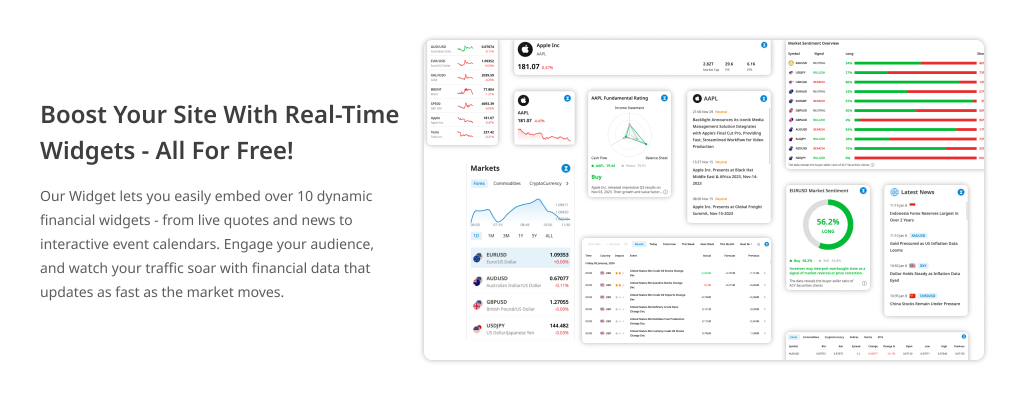
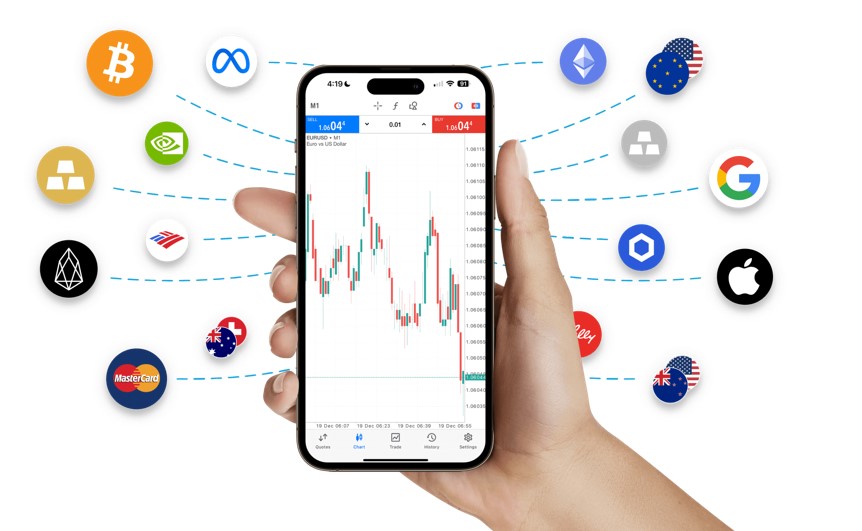
In today’s market, static banners are not enough. The best affiliate programs provide a modern “conversion kit” to turn your traffic into clients. The key is to use tools that add value. For example, learning how you can use financial widgets to increase website conversions is a game-changer.
These financial widgets are the secret weapon for forex affiliate conversions, turning your website into a resource hub. A top-tier partner will also show you how to use the best financial economic calendar for your own content strategy. They should support your efforts to develop effective social media strategies to promote your affiliate links and even help you understand how you can create content that solves trader psychology problems. Some modern affiliates are even exploring the use of a forex affiliate with AI side hustle to automate content and analysis.
Step 5: Review Their Partner Support
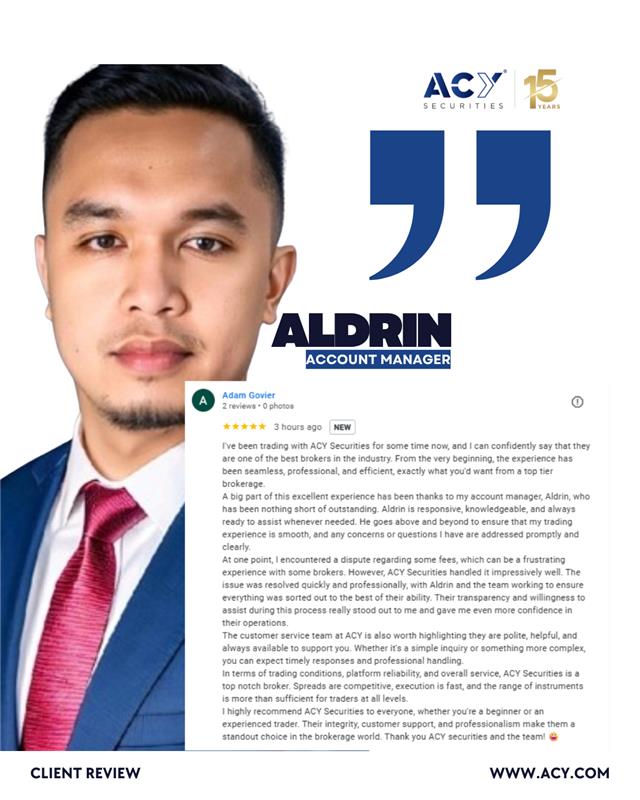
As your business grows, you will need support. The difference between a generic email inbox and a dedicated account manager is the difference between a transaction and a partnership. A dedicated manager should be your lifeline for strategy, problem resolution, and personalized support. This is why finding the best marketing support for serious forex affiliate traders should be a top priority in your selection process.
How Jesse Livermore Thinks About Choosing a Broker?

Jesse Livermore viewed his broker as the most critical piece of his infrastructure. His system was based on the flawless flow of information and execution. He would test platforms relentlessly for any hint of lag or poor fills. For him, a broker that couldn’t execute perfectly was an active threat to his enterprise. The commission would be secondary to absolute reliability.
10 Lessons from “The Intelligent Investor” for Affiliates
Benjamin Graham’s principles for value investing apply perfectly to choosing a broker partner.
-
“Margin of Safety”: Top-tier regulation is your business’s ultimate “margin of safety.”
-
“An investment operation is one which, upon thorough analysis, promises safety…”: Your 5-step checklist is the “thorough analysis.”
-
“Know what you are doing – know your business.”: You are in the business of trust. A reputable broker is the foundation of that trust.
-
Mr. Market: Don’t be swayed by short-term offers. Stick to your long-term analysis.
-
Focus on the Business: Focus on the broker’s quality (platform, support) over the “price” (CPA offer).
-
The Defensive vs. the Enterprising Investor: Know if you prefer established, highly-regulated brokers or are open to newer, innovative ones (that are still regulated).
-
Avoid Speculation: Don’t gamble on unregulated brokers offering impossibly high payouts.
-
Long-Term Perspective: Aim to build long-term partnerships that generate recurring revenue.
-
Don’t Follow the Crowd: The most popular program isn’t always the best. Do your own research.
-
Analyze the Management: Analyze the broker’s partner support team and their commitment to your success.
Your Top Questions on Choosing a Broker Partner
What is the single biggest red flag to watch out for?
A: A lack of regulation by a major, respected authority (like ASIC, FCA, or CySEC). If they are unregulated or only licensed in a small offshore jurisdiction, proceed with extreme caution.How important are online reviews of a broker?
A: They can be a useful signal, but be cautious. Look for patterns in reviews from real users. A few negative reviews are normal; a consistent pattern of withdrawal problems is a major red flag.Should I partner with more than one broker?
A: While possible, most successful IBs build a deep, primary relationship with one trusted partner. This maximizes volume-based rebates and ensures the best support. There are many benefits of becoming an introducing broker who focuses deeply on one partnership.What if a broker offers a huge CPA but fails on other checklist items?
A: This is a classic trap. A high CPA is worthless if the platform is so poor that your referrals never convert or leave after a week. Focus on the total, long-term value.Do you need to be a trading pro to be the best forex affiliate?
A: Not at all. While trading knowledge helps, your primary role is marketing and building trust. In fact, many wonder, “Do you need to be a trading pro to be the best forex affiliate?” The answer is no; business and marketing skills are more important.Conclusion
Choosing your forex broker partner is the most critical decision you’ll make. By moving beyond simple commission numbers and using this rigorous 5-step checklist, you can select a partner that provides the foundation for a secure, scalable, and highly profitable affiliate business. A great partner will support all your growth activities, from providing the ultimate guide to forex affiliate marketing on YouTube & TikTok to helping you understand how to make money as a XAUUSD trader with gold affiliate marketing. The goal is to build a sustainable business, and that starts with learning how to get your first 5 forex clients as an introducing broker with a partner you can trust for the long term.
Your Path to a Smarter Trading Future Starts Now
The future of trading isn’t about replacing human intelligence but augmenting it. You now have a blueprint to take decades of trading wisdom, forge it into a powerful AI assistant, and use it to build your own trading and affiliate marketing empire.
Stop trading on emotion. Stop paying for inflexible tools. Start building your edge.
Ready to build your business and empower your clients? Join the ACY Partners Program today and start sharing your unique AI trading bot with the world.
Disclaimer:Trading Forex and CFDs involves significant risk and may not be suitable for all investors. The content of this article is for educational purposes only and should not be considered financial advice. The performance of any AI tool or trading strategy is not guaranteed. Always conduct your own research and consider your risk tolerance before trading with real capital. Ensure that when you share your app, you include this disclaimer and your ACY Partners affiliate link for any sign-ups.
For more detailed insights on developing daily trading routines, risk management, and effective position sizing strategies, explore additional articles on ACYPartners. Our experts at ACY and FinLogix are also great resources to guide your journey towards trading excellence.
Discover Our Best Gold Affiliate Program
At ACYPartners, you can browse through a selection of affiliate program and review offerings before you decide to start forex affiliate marketing.
Become An Introducing Broker
Share your expertise and become an introducing broker so you can help other traders about the benefits of joining ACY.
Stay tuned to our blog for more Forex Affiliate Marketing educational resources.
Trading involves risks.
Related Forex Affiliate Marketing blogs:
- Best Forex Affiliate Program 2025 | Top FX Affiliate Network
- Best Gold Affiliate Program: High Paying Affiliate Program for Traders
- How a Forex CPA Affiliate Program Works with a Forex Broker – What You Must Know
- How to Choose the Right Multi Account Manager Software on MetaTrader 4 (MT4)
- 10 Reasons to Use Free Financial Widgets on Your Forex Affiliate Website
- What is a MAM Account – Forex MAM and PAMM Managed Accounts
- Introducing Broker Program (IB) Business Model & How to Be Competitive
- Benefits of the ACY Forex White Label Offering
-
-
Introducing Broker Partner: Best IB Programs (2026 Guide)
Last Updated: July 10, 2026
This article is reviewed annually to reflect the latest market regulations and trends
Best Introducing Broker (IB) Program 2026: A Definitive Guide to Maximizing Revenue & Technology
Choosing an introducing broker partner isn’t like picking a transactional, short-term affiliate offer; it is equivalent to selecting a co-founder for your financial services firm. The business relationship you establish directly defines your clients’ execution speeds, your operational efficiency, and the absolute ceiling of your payout scalability.
In 2026, high-performing financial intermediaries are moving away from simple, isolated broker payouts. Instead, they are demanding a unified, regulatory-compliant ecosystem engineered for compound growth. This comprehensive guide provides an institutional-grade analysis of the industry’s elite programs. We focus on structural commission models, advanced reporting tech, and localized marketing conversion mechanics.
Whether you are an established fund manager or an educational provider transitioning into financial intermediation, understanding the operational mechanics of an introducing broker setup is critical. Many professional traders eventually scale into this vertical, learning how traders leverage their market networks to build recurring revenue channels.
This review analyzes how to structure your business, compare legacy and modern platforms, and align with a regulated brand that protects your hard-earned reputation.
Key Takeaways: High-Yield IB Alliances at a Glance
Before we dive deep into the competitive matrices and technical architecture, here is the baseline checklist for choosing your next introducing broker partner:
-
The Ecosystem Concept: A top-tier program must offer more than just high rebates. It must provide a comprehensive, multi-layered environment that balances competitive pricing, low latency execution, and institutional trust.
-
Structured Rebate Sustainability: Prioritize program structures that pay consistent, volume-based rebates over the lifetime of your clients. Beware of bloated, front-loaded introductory offers that are offset by wide spreads or poor execution.
-
Dual-Mandate Technology: Your partner brokerage must provide a fast, reliable trading engine for your clients (such as MetaTrader 4, MetaTrader 5, or robust proprietary platforms) alongside a real-time, transparent portal for your back-office management.
-
Conversion and Retention Tools: The most valuable partners provide high-converting marketing tools, localized landing pages, professional copy-trading platforms, and economic widgets. This infrastructure minimizes client churn and maximizes lifetime trading volume.
-
Compliance and Safety of Funds: Partnering with highly regulated brokers ensures client security and protects your business from sudden regulatory disruptions.
The IB’s Blueprint: 4 Core Pillars of a Professional Brokerage Partnership
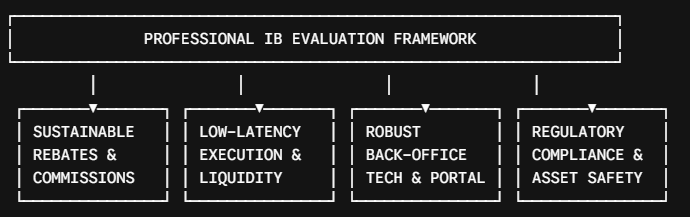
When selecting an introducing broker partner, professional intermediaries look past high-level marketing promises and evaluate brokers using a strict operational checklist. Every world-class financial partnership is built on four core operational pillars:
-
Sustainable Rebates & Commission Structures Your revenue engine relies on the commission structure. You need a model that rewards your business fairly across all major asset classes, including Forex, Metals, Oil, indices, and futures. This structure must be transparent and paid out without hidden deductions or complex execution volume thresholds.
-
High-Performance Execution & Liquidity Your clients’ trading success directly drives your long-term revenue. Frequent slippage, platform downtime, or artificial execution delays will frustrate your traders and lead to high client churn. Partnering with a broker that offers low-latency execution (sub-30 milliseconds) and deep institutional liquidity is essential for client retention.
-
Advanced Portal Technology & Multi-Account Management (MAM/PAMM) To run a scalable business, you need professional administration tools. This includes detailed tracking dashboards to monitor referral conversions, real-time rebate calculations, and stable Multi-Account Manager (MAM) software. These tools allow you to manage multiple client sub-accounts seamlessly.
-
Regulatory Compliance & Global Brand Security Every client you refer is a direct reflection of your business reputation. Partnering with an under-regulated or offshore broker puts your credibility at risk. Working with a highly regulated broker helps keep your business compliant and ensures client funds are held securely in segregated accounts.
Competitive Rebates: The Multi-Tier Loyalty Matrix
A common mistake for introducing brokers is focusing solely on the headline rebate number without looking at how that commission is generated. To help your business plan its long-term revenue, let’s look at the concrete rebate data from ACY Securities’ proprietary loyalty and partner portal framework.
At ACY Partners, our reward ecosystem is structured directly around a transparent, real-time progression matrix. This program pays cash rebates as your referred volume scales across Forex, Metals, Oil, and CFDs. These rewards can be used as trading margin or withdrawn directly.
ACY Cash Rebates Progression Table
Our loyalty and partner referral tracking systems calculate volume continuously. As you and your referred clients reach new volume tiers, your earnings scale:
Loyalty Level Forex Lot Target (Cumulative) Metals Lot Target (Cumulative) Oil Lot Target (Cumulative) CFD Lot Target (Cumulative) Cash Rebate Reward Pay-Out Level 1 50 Lots 50 Lots 50 Lots 2,500 Lots $25 Level 2 150 Lots 150 Lots 150 Lots 7,500 Lots $50 Level 3 350 Lots 350 Lots 350 Lots 17,500 Lots $100 Level 4 650 Lots 650 Lots 650 Lots 32,500 Lots $150 Level 5 1,150 Lots 1,150 Lots 1,150 Lots 57,500 Lots $250 Level 6 2,150 Lots 2,150 Lots 2,150 Lots 107,500 Lots $500 Level 7 4,150 Lots 4,150 Lots 4,150 Lots 207,500 Lots $1,000 Level 8 7,150 Lots 7,150 Lots 7,150 Lots 357,500 Lots $1,500 Level 9 12,150 Lots 12,150 Lots 12,150 Lots 607,500 Lots $2,500 Level 10 22,150 Lots 22,150 Lots 22,150 Lots 1,107,500 Lots $5,000 Note: Cash rebates are calculated continuously and shown clearly inside the ACY Client Portal. Rebates pay an average of $0.50 per standard lot for Forex, Metals, and Oil, and $0.01 per standard lot for CFDs, scaling up based on cumulative multi-account volume.
Dual-Earning Potential: The Affiliate & IB Levelling System
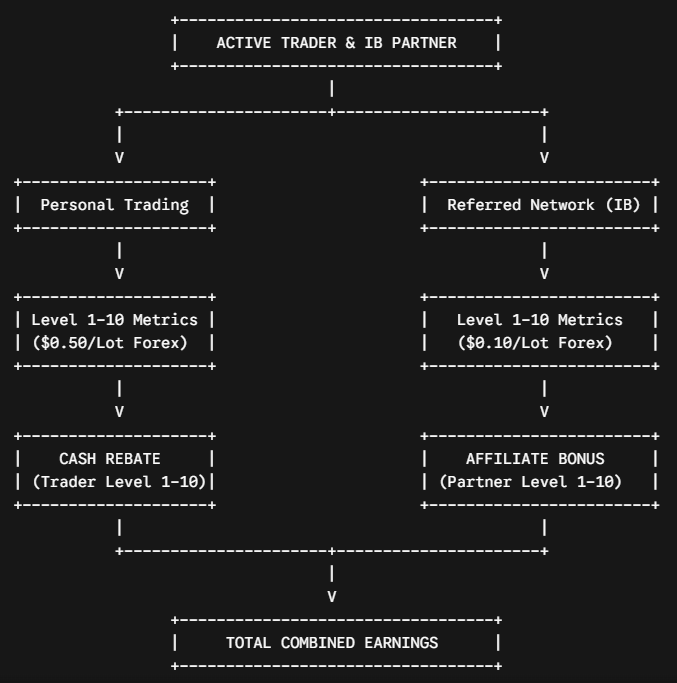
A major advantage for active financial intermediaries is the ability to earn revenue through two distinct channels simultaneously. Not only can you earn up to $5,000 in cash rebates on your personal trading volume, but the Levelling System also applies to ACY’s agents and affiliates, providing structured rewards based on the total trading volume generated by their referred clients.
As your introduced traders increase their trading activity, you progress through the affiliate levels and receive additional cash rebates across Forex, Metals/Cryptos, Oil, and CFDs.
Affiliate & IB Volume Progression Table
Below are the cumulative volume targets required to hit each partner level:
Level FX Lots Metal/Crypto Lots Oil Lots CFD Lots Level 1 1,000 1,000 1,000 10,000 Level 2 1,500 1,500 1,500 15,000 Level 3 2,500 2,500 2,500 25,000 Level 4 5,000 5,000 5,000 50,000 Level 5 10,000 10,000 10,000 100,000 Level 6 20,000 20,000 20,000 200,000 Level 7 35,000 35,000 35,000 350,000 Level 8 75,000 75,000 75,000 750,000 Level 9 100,000 100,000 100,000 1,000,000 Level 10 150,000 150,000 150,000 1,500,000 Affiliate Bonus Payout Rates Per Instrument
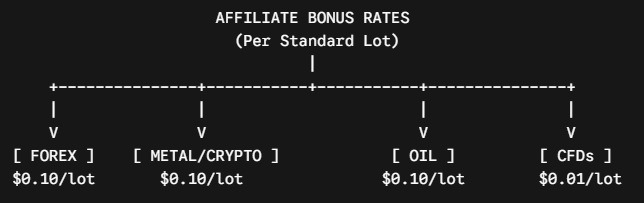
Once those levels are achieved, agents and IBs receive the following bonuses for their referred network’s volume:
-
FX: USD equivalent $0.10 Per Standard Lot
-
METAL/CRYPTO: USD equivalent $0.10 Per Standard Lot
-
OIL: USD equivalent $0.10 Per Standard Lot
-
CFD: USD equivalent $0.01 Per Standard Lot
The Dual-Earning Equation Example
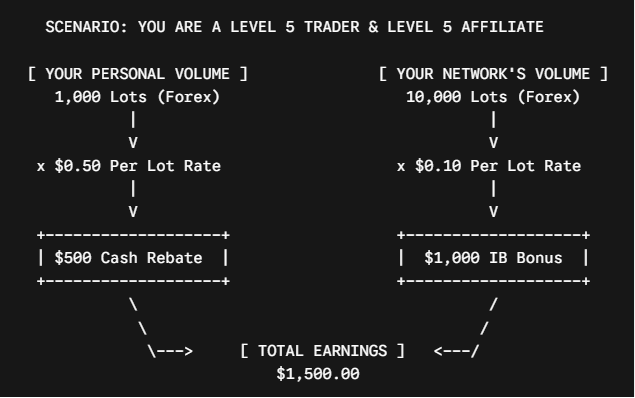
Imagine you are an active trader who also introduces new clients to the brokerage. In a given timeframe, you personally trade 1,000 lots of Forex, while your referred network trades a combined 10,000 lots of Forex.
-
Your Personal Trading Rebate (Level 5 Trader): 1,000 lots × $0.50 = $500 Cash Rebate
-
Your IB Volume Bonus (Level 5 Affiliate): 10,000 lots × $0.10 = $1,000 Affiliate Bonus
-
Total Combined Earnings = $1,500
This parallel structure ensures that you are rewarded simultaneously as a dedicated trader and as a growing financial partner, with a real-time progress bar in your dashboard tracking every lot.
Expert Case Study: The Multi-level Network Effect
“Our internal data shows that top-tier introducing brokers rarely rely solely on direct retail client referrals. Instead, they scale by building a multi-level network.
For example, an institutional partner who reached Level 10 ($5,000 cash rebate milestone on 22,150 cumulative lots) generated over 62% of their total trading volume through affiliate bonus.
By utilizing our tools, this partner built a self-sustaining marketing network that scaled their revenue without increasing their direct client-acquisition costs.”
— ACY Partners
Evaluating Rebate Models: CPA Deals vs. Lifetime Rebate Partnerships
Evaluating rebate structures requires looking closely at how they function long-term. While high upfront CPA (Cost Per Acquisition) payments can provide short-term cash flow, they often lack the recurring revenue that helps a referral business scale.
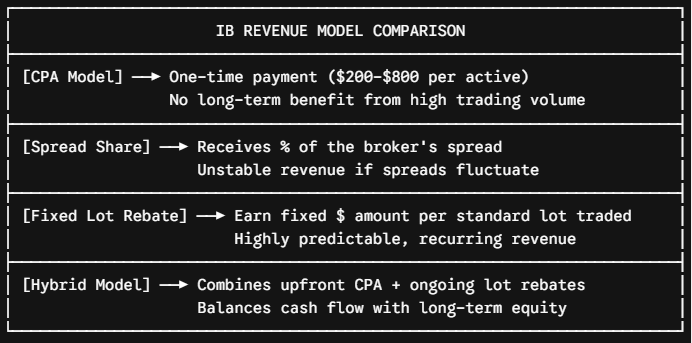
To help you choose the right approach, here is a direct comparison of the primary financial models used by brokers:
-
CPA (Cost Per Acquisition): This is a one-time commission paid when a referred trader makes an initial deposit and meets minimum trading requirements. While helpful for quick revenue, it does not reward you for the ongoing, long-term volume your clients generate.
-
Pure Volume-Based Rebates: This model pays a set rate (e.g., $4 to $10+ per standard lot) for every trade your clients make. This approach aligns your success with your clients’ trading activity and creates a recurring revenue stream that scales over time.
-
The Hybrid Solution: For established partner networks, a hybrid structure combining a baseline CPA with ongoing volume rebates offers the best of both worlds. It supports your immediate marketing budgets while building long-term equity in your business.
To compare how these rebate models perform under different market conditions, you can read our deep-dive reviews: ACY Partners vs. Vantage vs. Exness and ACY Partners vs. OctaFX vs. Exness.
Our transparent Levelling System is designed to let you build a highly profitable direct referral network. Instead of relying on complex sub-agent structures, this allows your business to earn scaling cash bonuses as the cumulative trading volume of your directly referred clients increases across the 10-level matrix.
Technology Comparison: Managing the Client Experience and Partner Portals
For any professional introducing broker, technology works on two levels. First is the platform your clients use to trade. Second is the partner portal you use to manage your business operations.
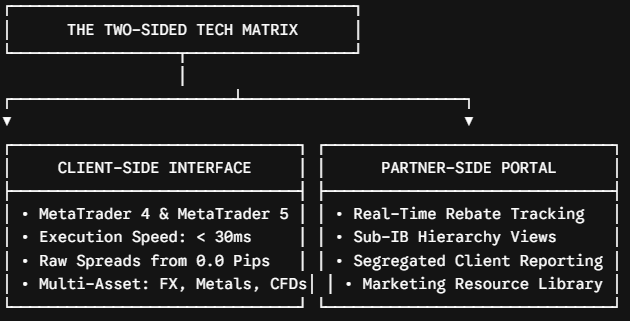
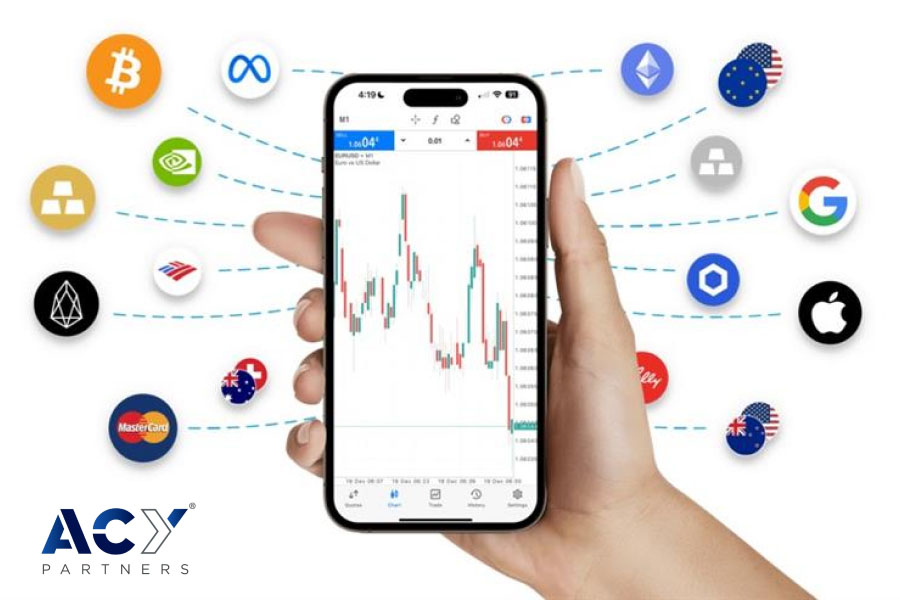
On the client side, providing industry-standard platforms like MetaTrader 4 (MT4) and MetaTrader 5 (MT5) is essential. These platforms must be supported by low-latency infrastructure to ensure fast execution. If clients experience frequent requotes or execution slippage, they will look for alternative brokers. ACY Securities helps address this by maintaining average execution speeds under 30ms and offering raw spreads from 0.0 pips.
On the business management side, your partner portal is your primary operational hub. A quality portal must provide:
-
Real-Time Data Reporting: Instant access to your referral data, active client counts, and rebate payouts.
-
Advanced Portfolio Management (MAM/PAMM): Multi-Account Manager (MAM) software that lets asset managers execute bulk orders across multiple sub-accounts with custom allocation settings.
-
HFT and EA Compatibility: Support for automated trading strategies, Expert Advisors (EAs), and high-frequency algorithms, which helps attract active, volume-generating traders.
-
Multi-Asset Capabilities: Access to global markets, including Forex, Metals (Gold/Silver), Oil, and major index CFDs, allowing your clients to diversify their portfolios.
Industry Analysis: OneRoyal IB Programme vs. ACY Partners
When researching the market for an introducing broker partner, you will encounter several competitive offers. One of the more common alternatives is the OneRoyal IB Programme. To help you evaluate your options, let’s look at how their program structures compare to ACY Partners:
Structural Program Comparison Matrix
Operational Metric OneRoyal IB Programme ACY Partners Ecosystem Execution Speeds Average 80ms – 150ms Ultra-low latency < 30ms average Rebate Transparency Manual adjustments, delayed portal updates Fully automated, real-time portal progression Asset Diversity FX, Standard Gold, Indices 2,200+ markets (FX, Gold, Oils, CFDs, Futures) Partner Reward Structure Standard tiered volume tracking 10-Level Affiliate Volume System (Scaling cash bonuses for direct client volume) Max Leverage Offer Up to 1:400 Up to 1:500 dynamic margin EA Constraints Restrictions on some high-frequency scalping strategies No restrictions on Expert Advisors (EAs) or HFT While some programs offer high initial rebate numbers, they may use manual reconciliation models that can delay your monthly payments. In contrast, ACY’s automated, tiered progression model ensures that every fractional trade is recorded and credited to your portal immediately. This transparency is a key reason professional brokers choose ACY.
High Conversion Rates: Converting Referral Leads into Active Trading Accounts
Marketing support and client conversion tools are key factors in scaling your business. Many brokers offer a partnership and then leave you to handle your client acquisition without support.
Top-tier programs act as true partners by providing tools that help convert leads into active, funded accounts. These tools help streamline your marketing efforts:
-
Custom Financial Widgets: You can embed live economic calendars, technical analysis widgets, and currency converters directly into your website. These tools help engage visitors and capture leads.
-
Fully Managed Copy Trading Platforms: Social and copy trading platforms allow your leads to follow and replicate the trades of experienced investors. This can lower the entry barrier for newer traders.
-
No Restrictions on Automated Trading: Offering an environment that fully supports Expert Advisors (EAs) and automated trading helps you attract active, high-volume algorithmic traders.
-
Educational Resources and Support: Access to comprehensive market analysis, educational webinars, and daily research materials helps your clients make more informed trading decisions, which can extend their trading lifespans.
Personalized Account Management vs. Automated Helpdesks
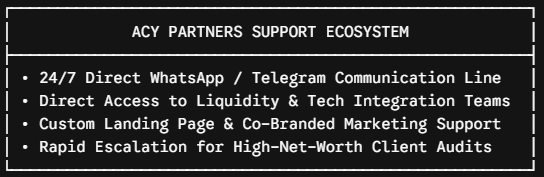
A common challenge for growing introducing brokers is dealing with automated customer support when an operational issue arises. If a client has a deposit error or a rebate query on a Friday evening, standard support channels can delay your resolution.
Some programs highlight offerings like a “Dedicated Customer Success Manager.” At ACY Partners, we build on this by providing a dedicated, localized support structure for every high-volume introducing broker partner.
Your dedicated partner manager acts as your internal contact at the brokerage. They can assist with custom rebate negotiations, help resolve client onboarding hurdles, and coordinate co-branded marketing materials to help support your business growth.
How to Sign Up Wisely: A Structured Step-by-Step Guide
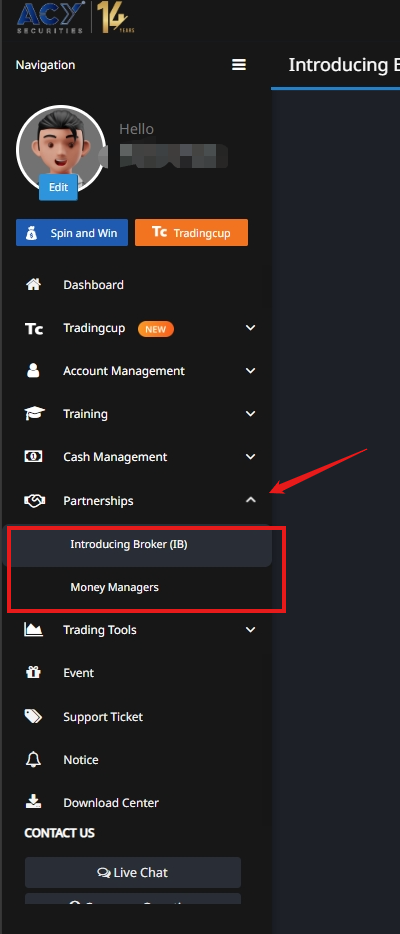
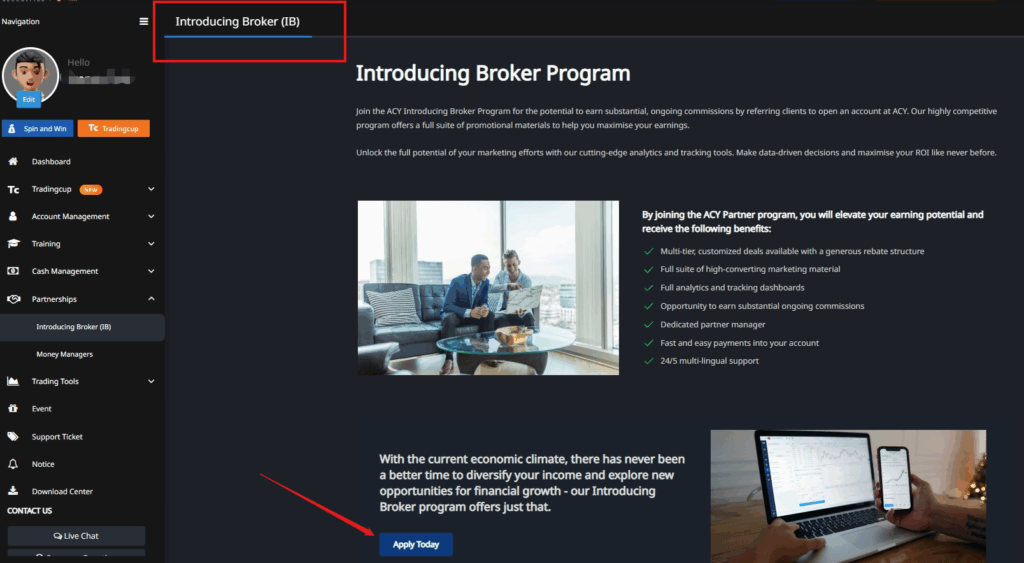
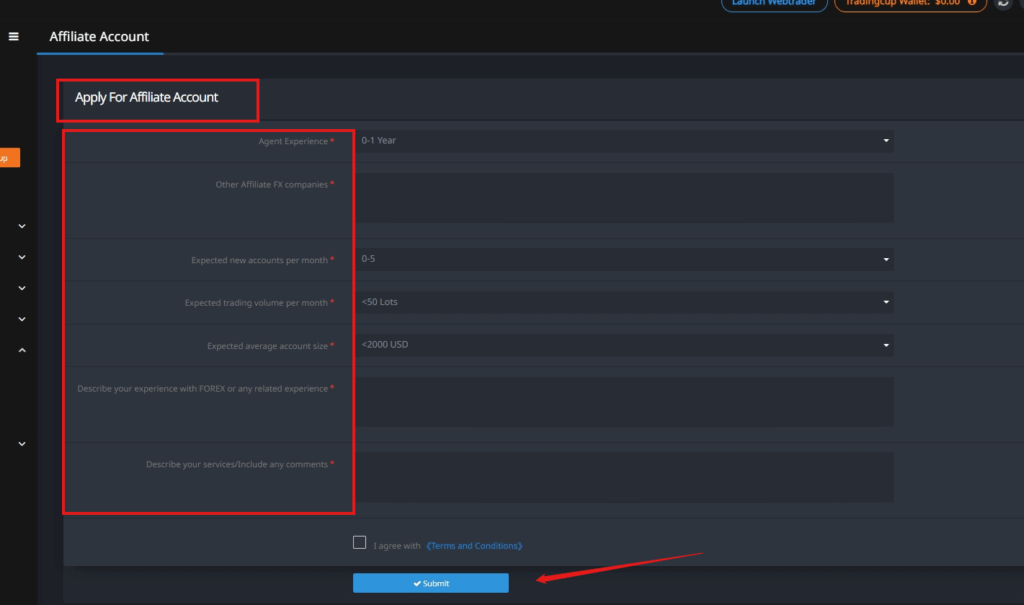
If you are ready to establish your business as an introducing broker partner, it is important to follow a structured setup process. Here is how to register your partnership correctly while meeting global regulatory standards:

Step 1: Submit Your Secure Application
Visit our secure partner portal to submit your business details. You can specify your target audience, choose your preferred primary asset classes (such as Forex, Metals, or futures), and select your desired commission model (CPA, rebates, or hybrid).
Step 2: Complete Compliance Verification (KYC)
To help ensure security and meet regulatory standards, our compliance team reviews your business documentation. You will need to submit:
-
Government-issued photo identification (for individual partners).
-
Company registration documents (for corporate partners).
-
Proof of residence or physical business address.
Step 3: Set Up Your Partner Portal & Marketing Tools
Once approved, you will receive login credentials for your personal ACY Client Portal. Here, you can configure your referral tracking links, choose co-branded landing pages, and select financial widgets to add to your website.
Step 4: Onboard Your First Clients
Focus on onboarding your core group of clients. You can guide them through opening accounts, using the MT4/MT5 platforms, or setting up copy-trading configurations. As their trading volume grows, you will be able to track your rebate earnings in real-time.
SME Expert Advisory: The Fast Sign-Up Trap
“Many new partners fall into the trap of signing up with brokers that offer instant approval with zero compliance checks. This is a significant operational risk.
A broker that bypasses international Know-Your-Customer (KYC) and Anti-Money Laundering (AML) standards is at risk of regulatory suspension. This can lead to frozen client deposits and lost rebate earnings.
Working with a broker that utilizes a thorough, professional verification process helps ensure that your business and your clients’ assets are held in a secure, compliant environment.”
— ACY Compliance & Risk Advisory Board
The 2026 Verdict: Why ACY Partners is Built for Scalability
Choosing an introducing broker partner is a significant business decision. It requires looking beyond single commission numbers and evaluating the entire operational ecosystem: rebate models, trading technology, marketing tools, and regulatory security.
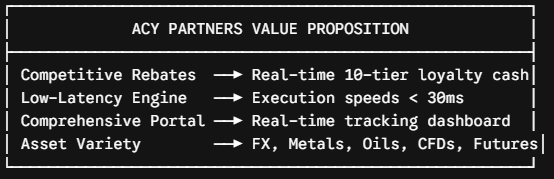
ACY Partners is designed to offer a balanced environment across all four pillars:
-
Real Cash Rebate Progression: A transparent 10-level loyalty system that tracks volume automatically, paying out competitive cash rebates that can be withdrawn or used as margin.
-
High-Speed Execution Infrastructure: Average execution speeds under 30 milliseconds help minimize slippage, providing a stable trading environment for your referred clients.
-
Advanced Partner Tools: An intuitive, real-time client portal and robust MAM/PAMM software help professional partners manage and scale their business operations.
-
Global Regulatory Compliance: Operating under established financial regulations helps protect your client accounts and secures your business reputation.
How Jesse Livermore Thinks About an IB Program?
In his classic style, pioneer trader Jesse Livermore would likely view the choice of a broker partner through a practical lens:
“The broker is your window to the market tape. A partner must deliver fast, accurate execution, because poor execution is a cost that eats into trading returns. I would view an introducing broker partnership as a joint venture. The partner brings the trading volume, and the broker provides the execution infrastructure. The rebates earned are the fair share of the business generated by a well-run, high-volume trading operation.”
Applying Value Investing Principles to Your IB Partnership
-
-
The “Margin of Safety” Principle: Your margin of safety isn’t found in flashy promotional rebates; it is built on the broker’s regulatory compliance and operational history. Safe, regulated execution is the foundation of client retention.
-
Conducting Thorough Analysis: Treat your broker partnership as a long-term business investment. Thoroughly analyze their liquidity providers, execution speeds, and portal transparency before onboarding your clients.
-
Knowing Your Business Operations: Your primary asset is your client relationship. Choose a partner that provides the CRM tools, marketing assets, and tracking systems needed to serve your clients effectively.
-
Avoiding Short-Term Hype: Do not let temporary marketing offers or unrealistic rebate structures distract you. A sustainable, growing business relies on consistent, transparent commissions.
-
Focusing on Long-Term Value: Building a successful broker partnership takes time and consistent effort. Focus on sustainable, long-term growth over quick, short-term returns.
-
Setting Realistic Targets: Avoid unrealistic sales forecasts. Establish a solid business foundation by working with a partner that supports realistic, compliant growth strategies.
-
Investing in Ongoing Education: Continually update your knowledge of market trends, compliance regulations, and digital marketing strategies. Utilize your broker’s educational resources to stay informed.
-
Sticking to Business Fundamentals: The core elements of a strong broker partnership, trust, execution quality, robust technology, and fair payouts, do not change with market trends.
-
Emphasizing Consistency: You do not need complex marketing strategies to see results. Focus on consistently delivering value to your clients, and the referred volume will grow naturally.
-
The Importance of Patience: Just like value investing, building a profitable referral business requires patience. Plan for long-term growth, and use modern channels like video platforms, webinars, and educational content to build your client base over time.
Benjamin Graham’s timeless principles from The Intelligent Investor can help guide your approach when choosing an introducing broker partner:
-
The Bottom Line: Partnering for Long-Term Scalability
In the competitive financial markets of 2026, choosing an introducing broker partner is a key strategic decision. Success requires moving past single, isolated metrics and looking at the overall ecosystem: rebate models, trading technology, marketing support, and regulatory security.
Aligning your business with a broker that balances competitive, real-time rebates with high-speed execution helps protect your professional reputation and builds a scalable, recurring revenue stream.
Ready to establish your partner business with a regulated broker? Apply for the ACY Partners Program today and start building your financial network.
Disclaimer: Trading Forex and CFDs involves significant risk and may not be suitable for all investors. The content of this article is for educational purposes only and should not be considered financial advice. The performance of any specific trading strategy or automated tool is not guaranteed. Conduct your own research and evaluate your risk tolerance before trading with real capital.
Frequently Asked Questions
What is more important: the rebate rate per lot or the broker’s trading spreads?
They are closely related. A high rebate rate is less valuable if the broker uses excessively wide spreads to cover the cost. High spreads increase trading costs, which can impact client profitability and lead to higher churn. Look for a partner that offers competitive spreads (such as raw spreads from 0.0 pips) alongside a fair, sustainable rebate structure.
How does an introducing broker partner differ from a standard affiliate marketer?
An introducing broker (IB) typically functions as a long-term business partner, often providing ongoing support, education, or management tools to their referred clients. Their business is usually built on recurring, volume-based rebates. A standard affiliate, by contrast, often focuses on transactional, digital marketing channels and is typically compensated via one-time CPA payments.
What is the most critical, yet often overlooked, feature of a partner portal?
Real-time, automated reporting. To run your business effectively, you must be able to track your referred clients’ trading volume and your earned rebates instantly. Portals that rely on manual updates can delay your operational data and affect your cash flow.
Can I negotiate a customized rebate structure?
Yes. Most professional partner programs use tiered systems where commission structures adjust as your referred volume grows. High-volume partners can work with their dedicated account manager to establish customized, hybrid rebate structures that align with their business model.
Do you need to be a professional trader to be a successful introducing broker?
Not necessarily. While a solid understanding of financial markets is helpful, success as an introducing broker relies heavily on client relationship management, business development, and marketing. Many successful partners build their business by focusing on high-quality customer acquisition, while relying on the broker’s platform to handle execution and technology.
Are there geographical restrictions on who can participate in the ACY rebate program?
Yes. Under international compliance standards, our Cash Rebates and Partner Programs are not available to residents of Australia, Canada, the United States, Japan, Iran, or other restricted jurisdictions. All trading accounts must comply with localized regulatory rules.
RISK WARNING: Foreign exchange and derivatives trading carry a high level of risk. Before you decide to trade foreign exchange, we encourage you to consider your investment objectives, your risk tolerance and trading experience. It is possible to lose more than your initial investment, so do not invest money you cannot afford to lose. ACY Securities Pty Ltd (AFSL: 403863) and ACY Capital LLC (Company number: 2610 LLC 2022) provides general advice that does not consider your objectives, financial situation or needs.

For more detailed insights on developing daily trading routines, risk management, and effective position sizing strategies, explore additional articles on ACYPartners. Our experts at ACY and FinLogix are also great resources to guide your journey towards trading excellence.
Your Path to a Smarter Trading Future Starts Now
The future of trading isn’t about replacing human intelligence but augmenting it. You now have a blueprint to take decades of trading wisdom, forge it into a powerful AI assistant, and use it to build your own trading and affiliate marketing empire.
Stop trading on emotion. Stop paying for inflexible tools. Start building your edge.
Ready to build your business and empower your clients? Join the ACY Partners Program today and start sharing your unique AI trading bot with the world.
Disclaimer:Trading Forex and CFDs involves significant risk and may not be suitable for all investors. The content of this article is for educational purposes only and should not be considered financial advice. The performance of any AI tool or trading strategy is not guaranteed. Always conduct your own research and consider your risk tolerance before trading with real capital. Ensure that when you share your app, you include this disclaimer and your ACY Partners affiliate link for any sign-ups.
For more detailed insights on developing daily trading routines, risk management, and effective position sizing strategies, explore additional articles on ACYPartners. Our experts at ACY and FinLogix are also great resources to guide your journey towards trading excellence.
Discover Our Best Gold Affiliate Program
At ACYPartners, you can browse through a selection of affiliate program and review offerings before you decide to start forex affiliate marketing.
Become An Introducing Broker
Share your expertise and become an introducing broker so you can help other traders about the benefits of joining ACY.
Stay tuned to our blog for more Forex Affiliate Marketing educational resources.
Trading involves risks.
Related Forex Affiliate Marketing blogs:
- Best Forex Affiliate Program 2026 | Top FX Affiliate Network
- Best Gold Affiliate Program: High Paying Affiliate Program for Traders
- How a Forex CPA Affiliate Program Works with a Forex Broker – What You Must Know
- How to Choose the Right Multi Account Manager Software on MetaTrader 4 (MT4)
- 10 Reasons to Use Free Financial Widgets on Your Forex Affiliate Website
- What is a MAM Account – Forex MAM and PAMM Managed Accounts
- Introducing Broker Program (IB) Business Model & How to Be Competitive
- Benefits of the ACY Forex White Label Offering
-
-
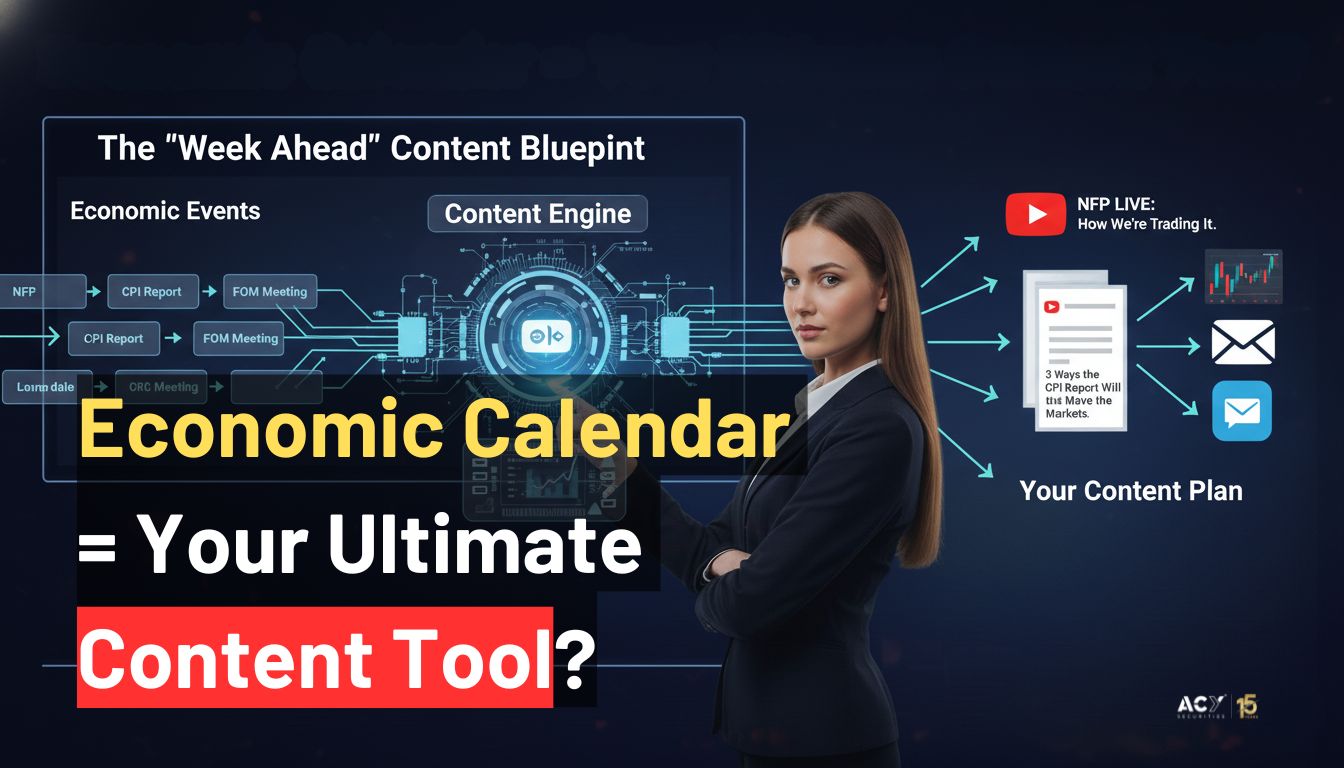
How to Use the Best Financial Economic Calendar as Your Ultimate Content Planning Tool?
Last Updated: November 10, 2025
This article is reviewed annually to reflect the latest market regulations and trends
The Economic Calendar: Your Ultimate Content Planning Tool
It’s the blank page, the empty content schedule, the daily pressure to come up with something new and engaging. This is the content grind that burns out most affiliates. But what if the market itself gave you a perfect content schedule, every single week? What if the most important tool for traders was also the most powerful tool for content creators? It is. It’s the financial economic calendar.
This article is your complete guide to using the best financial economic calendar not just as a trading tool, but as the ultimate engine for your entire content strategy. By the end of this post, you will have a powerful, sustainable system for generating an endless stream of relevant, high-value content that will attract, engage, and convert your target audience of forex traders. We’ll explore how to transform this simple tool into a content-generating machine, positioning you as a go-to resource in the competitive forex affiliate landscape. For those looking to scale their operations, understanding this content strategy is the first step to solving the forex affiliate program grind and building a sustainable business.
TL;DR (Too Long; Didn’t Read)
-
The Calendar is Your North Star: Stop inventing topics. The economic calendar provides a weekly roadmap of the events your audience already cares about.
-
The “Week Ahead” Series: Build a loyal following by creating a simple, recurring weekly video or blog post that previews the top 3-5 market-moving events.
-
The “Post-Mortem” Analysis: Generate high-engagement content by analyzing what happened after a major event and showcasing how top copy traders navigated the volatility.
-
Contextual Promotion: Use specific calendar events (e.g., an RBA rate decision) to naturally promote relevant assets (AUD/USD) and the top traders who specialize in them.
-
Become the Destination: By embedding a live calendar on your site, you transform it from a blog into an indispensable daily resource, making it incredibly “sticky.” You can achieve this with powerful financial widgets.
Why Your Content Calendar Should Be the Economic Calendar?
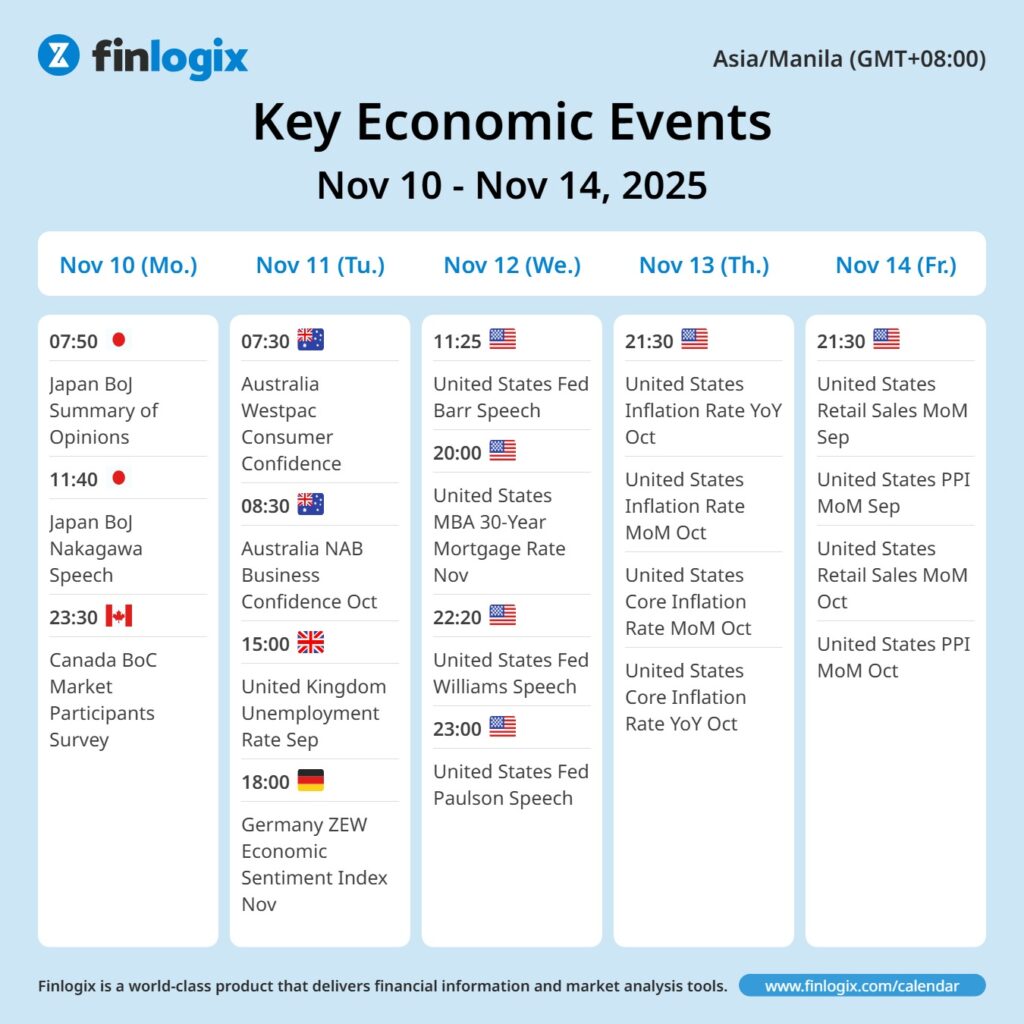
The core of this strategy is simple: align your content with real-time market relevance. Instead of brainstorming topics in a vacuum, you’re tapping into the very pulse of the market. Every major economic release, be it Non-Farm Payrolls, a central bank interest rate decision, or a GDP announcement, is a content opportunity. These are the moments that traders are actively watching, discussing, and trying to understand. By creating content around these events, you’re not just pushing out information; you’re providing value at the precise moment your audience needs it most. This ensures your topics are always timely, in-demand, and SEO-friendly. The secret weapon for forex affiliate websites is the strategic use of financial widgets for forex affiliate websites.
How to Create a “Week Ahead” Video/Blog Series?
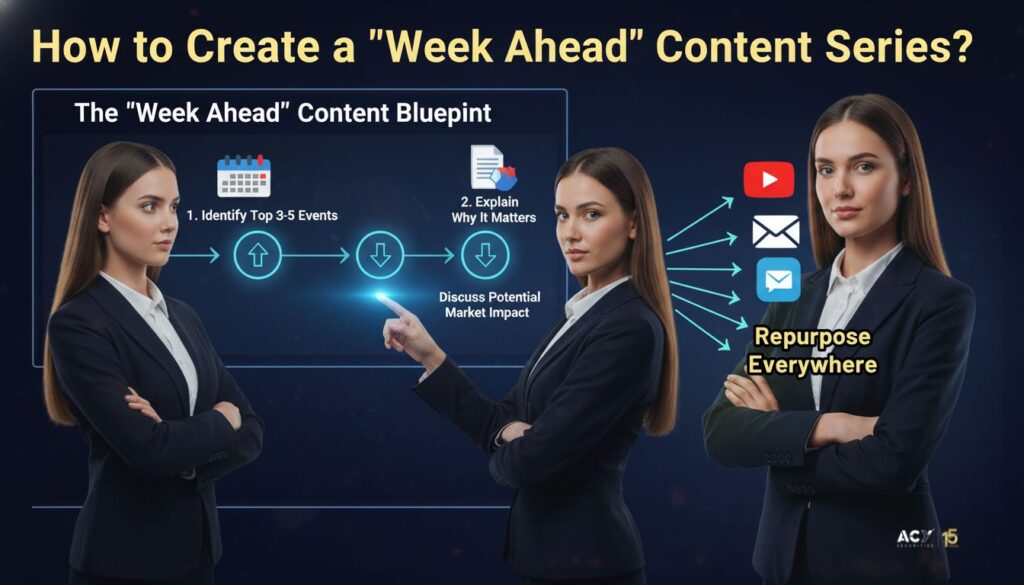
Your “Week Ahead” series will become the cornerstone of your content strategy. It’s a recurring format that builds anticipation and loyalty. Here’s a simple template to follow:
-
List the Top 3-5 Events: Scour the economic calendar for the upcoming week and identify the high-impact events.
-
Explain What Each Event Is and Why It Matters: Briefly explain the significance of each data release. For instance, “This week, all eyes are on the US inflation data. A higher-than-expected number could pressure the Federal Reserve to raise interest rates, which would likely strengthen the US dollar.”
-
Discuss the Potential Market Impact: Outline the possible scenarios. “If inflation comes in hot, we could see a sell-off in pairs like EUR/USD and GBP/USD. Conversely, a weaker reading might boost these pairs.”
This format is perfect for a weekly YouTube video, and you can learn how to use YouTube to attract high-value forex traders. You can also repurpose the content for a blog post, email newsletter, and social media updates using proven social media strategies to promote your forex affiliate links. This consistent, multi-channel approach helps you build a thriving forex affiliate Discord or Telegram community.
How to Create a “Post-Mortem” Analysis?

While the “Week Ahead” builds anticipation, the “Post-Mortem” analysis builds trust and authority. This is where you dissect what actually happened after a major economic event. Here’s a template:
-
Show the “Before” (Forecast) and “After” (Actual) Data: Display the forecasted and actual numbers from the economic calendar.
-
Analyze the Market’s Reaction: Show a chart of the market’s immediate reaction to the news. Did it move as expected? Or was it a surprise?
-
Showcase How a Top Copy Trader Performed: This is a powerful way to integrate your affiliate promotions. For example, “As you can see, the market was volatile after the announcement. But top trader X navigated it beautifully, closing their trade for a profit. Let’s break down how they did it.”
This type of content is incredibly valuable. You can even learn how to create an interactive analysis post with financial widgets to make your recaps even more engaging.
How to Use Calendar Events to Promote Specific Assets?
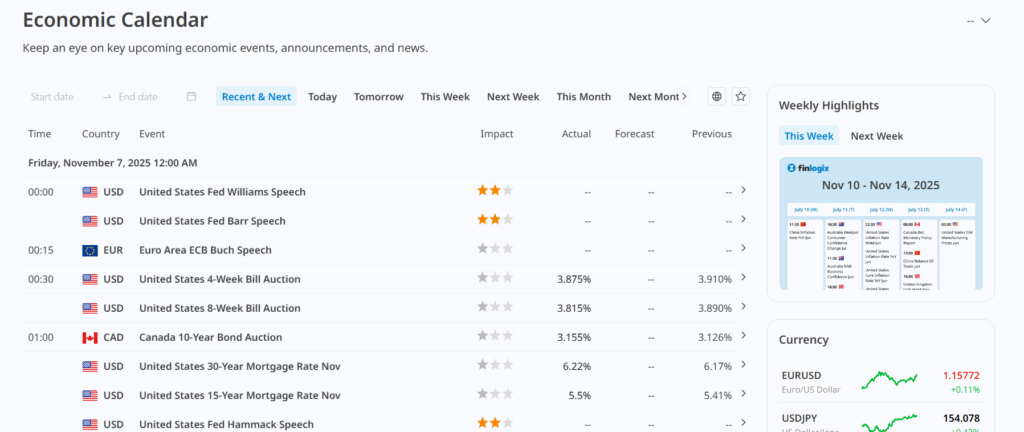
The economic calendar provides the perfect context for promoting specific assets and traders. For an upcoming Reserve Bank of Australia (RBA) interest rate decision, you can create content around the Australian dollar. This could be a blog post titled “How to Trade AUD/USD Around the RBA Decision” or a video analyzing the best AUD/USD copy traders on a particular platform. This approach feels natural and helpful, not like a hard sell. For those specializing in commodities, you can use a similar approach and learn how to use ACY forex affiliate tools for gold copy trading conversions.
How Embedding the Live Calendar Makes Your Site a “Sticky” Daily Resource?
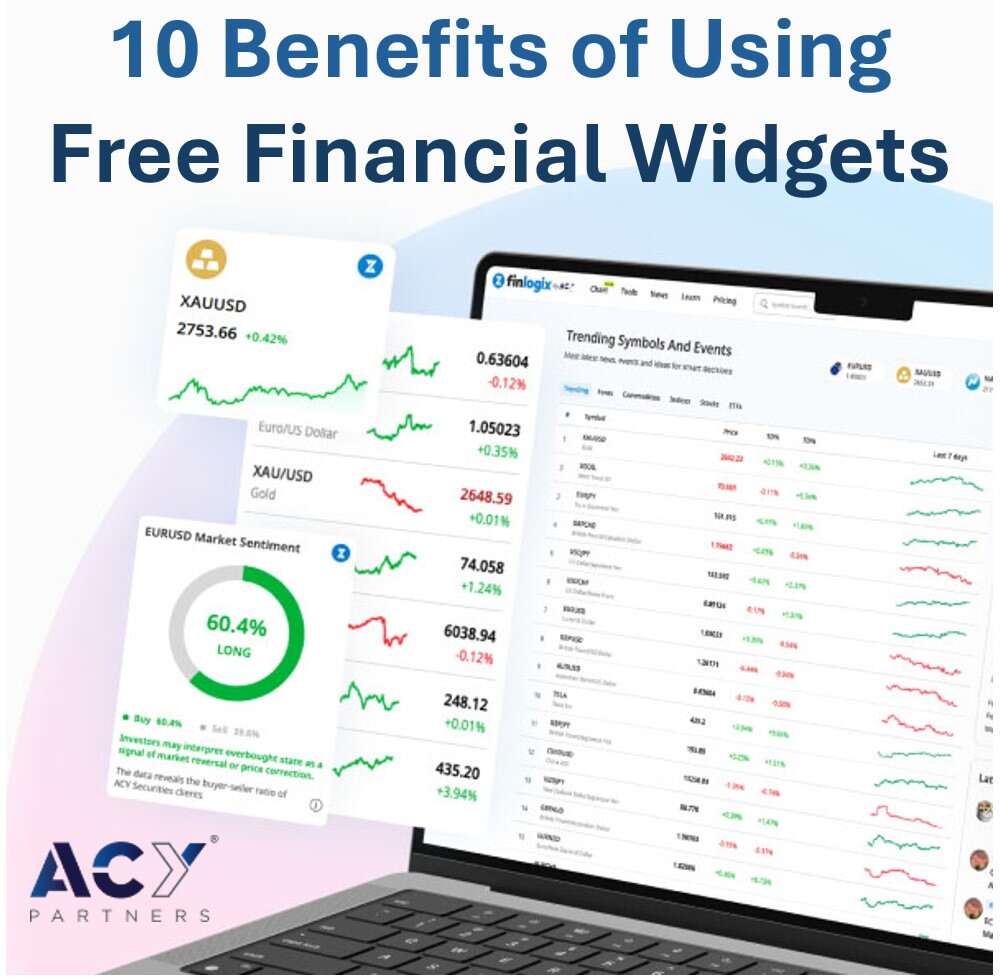
This is a simple yet powerful tactic. By embedding a live, interactive economic calendar on your website, you give your audience a reason to come back every single day. This single tool can become the number one reason visitors return to your site, creating a loyal, engaged audience. In fact, there are at least 10 benefits of free financial widgets that can transform your site. They are truly a secret weapon for forex affiliate conversions, and learning how you can use financial widgets to increase website conversions is a game-changer.
How Jesse Livermore Thinks About the Economic Calendar?
Jesse Livermore, a legendary trader, lived and breathed market anticipation. He wouldn’t see the calendar as a list of data points; he would see it as a schedule of human emotion and reaction. His content would be all about the ‘before’ and ‘after.’ Before the event: ‘Here is the setup, the tension is building.’ After the event: ‘The news is out, the fools are rushing in, but the smart money is doing this.’ He would use the calendar to create compelling narratives about market psychology in real-time.
10 Lessons from “The Intelligent Investor” for Content Creators
Benjamin Graham’s “The Intelligent Investor” is a bible for value investors. Here’s how to apply its timeless wisdom to your content strategy:
-
“Know what you are doing – know your business.” Using the economic calendar demonstrates that you understand the fundamental drivers of the market, establishing you as a knowledgeable and credible source.
-
“An investment operation is one which, upon thorough analysis, promises safety…” Your content should be a “thorough analysis” of the data, not a speculative guess. Provide balanced viewpoints and discuss potential risks.
-
“Mr. Market”: The calendar helps you explain the wild mood swings of Mr. Market. When a data release causes a sudden market move, you can be the rational voice that explains the “why” behind the volatility.
-
The Margin of Safety: Always provide a “margin of safety” in your analysis. Acknowledge that forecasts can be wrong and that unexpected market reactions are always possible.
-
Investment vs. Speculation: Distinguish between long-term trends and short-term speculative reactions to news events. This will help your audience make more informed decisions.
-
Focus on Long-Term Results: Encourage your audience to focus on the long-term implications of economic data, rather than getting caught up in short-term noise.
-
Learn From Your Mistakes: If your analysis of an event proves incorrect, create content that explains why. This transparency builds trust and shows that you are constantly learning and refining your approach.
-
Understand the Business You’re Investing In: In the context of content, this means understanding the assets you’re discussing. If you’re talking about the Australian dollar, have a basic understanding of the Australian economy.
-
Don’t Follow the Herd: Just because everyone is expecting a certain outcome from an economic event doesn’t mean it will happen. Encourage your audience to think critically and be prepared for surprises.
-
The Defensive Investor and the Enterprising Investor: Tailor your content to different types of traders. Some will be looking for safe, long-term insights (defensive), while others will be looking for more aggressive, short-term opportunities (enterprising).
Your Top Questions on Calendar-Driven Content
Do I need to be a fundamental analysis expert to use this strategy?
No. Your job is to curate and explain the importance of the events, not to be a professional economist. You are a guide, not a guru.
What if my analysis of an event is wrong?
That’s a content opportunity! Create a “post-mortem” explaining why the market reacted differently than expected. Transparency builds trust.
How do I stand out if other affiliates are doing the same thing?
By adding your unique perspective, by focusing on a specific niche (like gold), and by showcasing how your recommended copy traders are navigating these events. This is especially important for those promoting the best forex affiliate programs for beginners or more advanced top forex CPA deals.
Is this strategy better than technical analysis content?
It’s not better, it’s the perfect complement. Use the calendar to identify why the market might move, then use technical analysis to show where it might move to.
What is the single best content format for this strategy?
A weekly “Week Ahead” YouTube video is incredibly powerful for building a loyal, recurring audience.
Conclusion
Stop struggling for content ideas. The economic calendar is an infinite, real-time source of topics your audience is already desperate to understand. By building your content plan around it, you can transform your affiliate site from a static library into the go-to daily resource for serious traders. This strategy is the cornerstone of a successful plan to create a forex affiliate sales funnel, helping you to convert forex affiliate commissions and build a forex affiliate email list that converts 24/7. By using the 5 psychological triggers to increase forex affiliate conversions, you can create a powerful and persuasive narrative that resonates with your audience. For those looking to take their business to the next level, this is how you scale your forex affiliate marketing venture.
When discussing high-impact news, it’s crucial to use careful and compliant language. Be sure to familiarize yourself with the complete forex affiliate regulation marketing guide to ensure you understand how to market forex compliantly and are aware of questions like “do you need a license to be a forex fund manager?“.
Your Path to a Smarter Trading Future Starts Now
The future of trading isn’t about replacing human intelligence but augmenting it. You now have a blueprint to take decades of trading wisdom, forge it into a powerful AI assistant, and use it to build your own trading and affiliate marketing empire.
Stop trading on emotion. Stop paying for inflexible tools. Start building your edge.
Ready to build your business and empower your clients? Join the ACY Partners Program today and start sharing your unique AI trading bot with the world.
Disclaimer:Trading Forex and CFDs involves significant risk and may not be suitable for all investors. The content of this article is for educational purposes only and should not be considered financial advice. The performance of any AI tool or trading strategy is not guaranteed. Always conduct your own research and consider your risk tolerance before trading with real capital. Ensure that when you share your app, you include this disclaimer and your ACY Partners affiliate link for any sign-ups.
For more detailed insights on developing daily trading routines, risk management, and effective position sizing strategies, explore additional articles on ACYPartners. Our experts at ACY and FinLogix are also great resources to guide your journey towards trading excellence.
Discover Our Best Gold Affiliate Program
At ACYPartners, you can browse through a selection of affiliate program and review offerings before you decide to start forex affiliate marketing.
Become An Introducing Broker
Share your expertise and become an introducing broker so you can help other traders about the benefits of joining ACY.
Stay tuned to our blog for more Forex Affiliate Marketing educational resources.
Trading involves risks.
Related Forex Affiliate Marketing blogs:
- Best Forex Affiliate Program 2025 | Top FX Affiliate Network
- Best Gold Affiliate Program: High Paying Affiliate Program for Traders
- How a Forex CPA Affiliate Program Works with a Forex Broker – What You Must Know
- How to Choose the Right Multi Account Manager Software on MetaTrader 4 (MT4)
- 10 Reasons to Use Free Financial Widgets on Your Forex Affiliate Website
- What is a MAM Account – Forex MAM and PAMM Managed Accounts
- Introducing Broker Program (IB) Business Model & How to Be Competitive
- Benefits of the ACY Forex White Label Offering
-
-
How to Create an Interactive Analysis Post with Financial Widgets?
Last Updated: November 06, 2025
This article is reviewed annually to reflect the latest market regulations and trends
How to Create an Interactive Analysis Post with Financial Widgets?
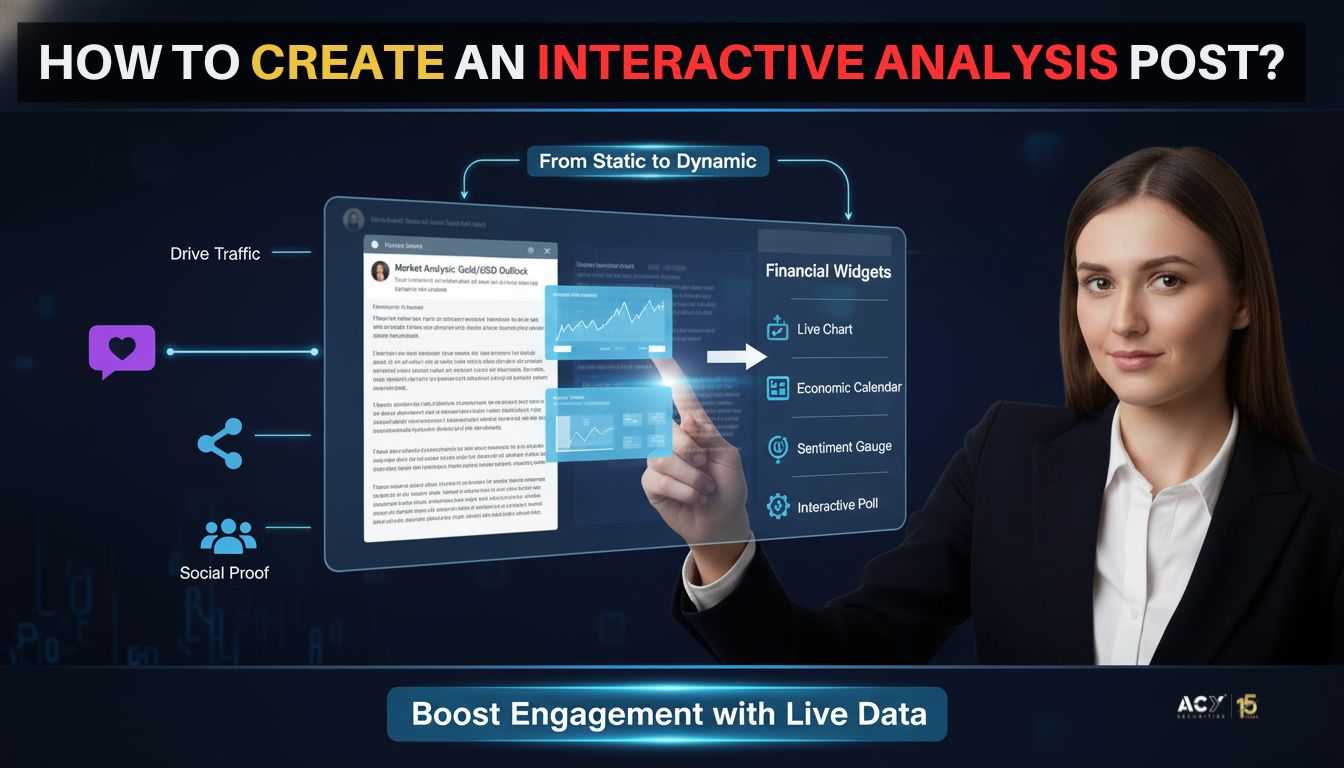
The standard financial blog post is broken. It’s a static snapshot of a market that moves every second. By the time your reader sees your screenshot of a chart, the setup is already history. What if your content could be alive? What if your readers could interact with your analysis in real-time, see the live price action, and explore the data for themselves? This isn’t a future concept; it’s the ‘Interactive Analysis Post,’ and it’s your new secret weapon. For too long, financial bloggers, forex affiliates, and Introducing Brokers (IBs) have been stuck in a content paradigm that fails to capture the dynamic nature of the markets.
This comprehensive guide will show you how to break free from that static model. You will learn how to create a new, highly engaging content format using financial widgets for websites. You’ll learn how to transform your articles into living, breathing analytical experiences that not only captivate your audience but also drive conversions. We’ll explore the strategic implementation of various financial widgets, delve into the mindsets of legendary investors, and provide a step-by-step blueprint to your first interactive analysis post. It’s time to stop writing about the markets and start bringing the markets to your readers.
TL;DR (Too Long; Didn’t Read)
For those who need the strategy upfront, here are the key takeaways for creating a powerful new content format.
-
A New Format: An “Interactive Analysis Post” combines your written thesis with live, embedded data widgets, transforming a static article into a dynamic experience.
-
Step 1: The Thesis: Start with a single, clear analytical idea (e.g., “Gold is at a key support level”).
-
Step 2: The Live Chart: Embed the live chart widget for the asset you’re discussing, providing real-time visual context for your analysis.
-
Step 3: The “Why”: Embed the Economic Calendar widget to show the fundamental data (e.g., CPI report) that is driving the price action.
-
Step 4: The Solution: Embed the Copy Trading Leaderboard widget as your call-to-action, showcasing traders who are capitalizing on the very setup you just analyzed.
A Step-by-Step Guide to Your First Interactive Analysis Post
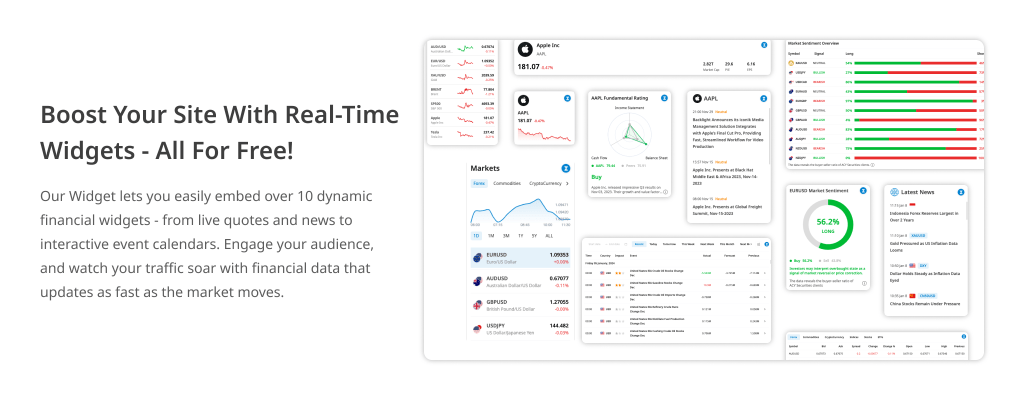
This section will walk you through the creation of your first interactive analysis post, using a consistent example to illustrate each step. This method is a secret weapon for boosting engagement and turning your website into a dynamic hub for traders.
Step 1: Start with Your Thesis (e.g., “Gold is at a Key Level”)
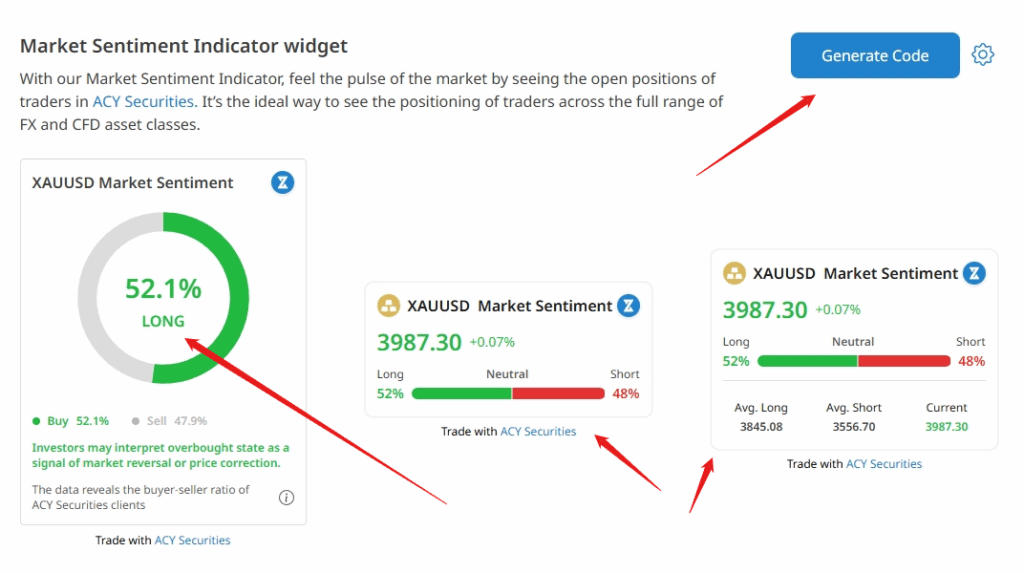
Every great piece of content starts with a single, compelling idea. Before you even think about which widgets to use, you need to have a clear analytical thesis. This is the core of your post, the “why” that will draw your readers in. A strong thesis is specific, timely, and actionable. For example, instead of a generic “Gold is looking interesting,” a much stronger thesis would be “Gold is testing a key support level at $2,300, driven by recent inflationary pressures.” This gives your post a clear focus and a narrative that you can build upon with your interactive elements. Remember, the goal is to provide value, and that starts with a clear, insightful idea that respects the intelligence of your audience.
Step 2: Embed the Live XAU/USD Chart Widget
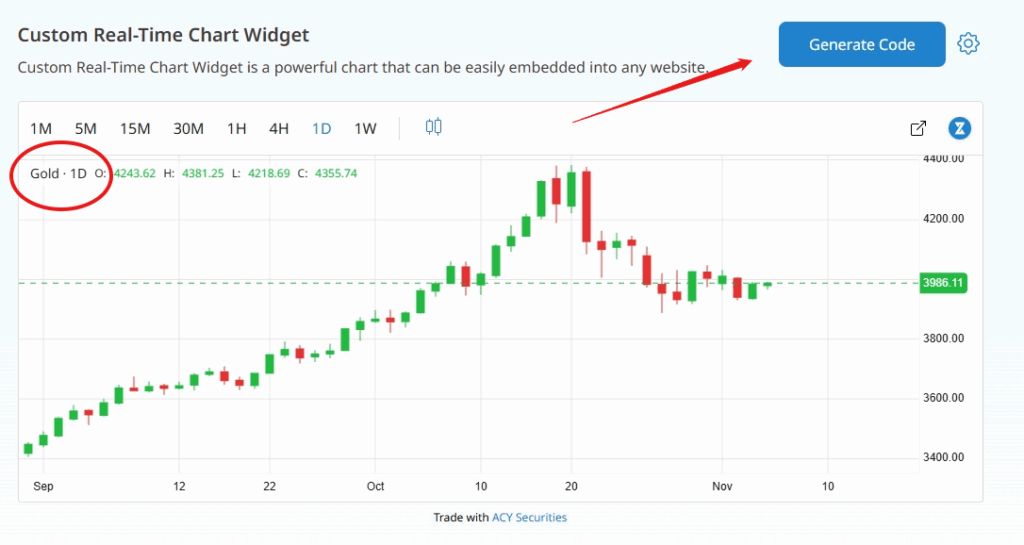
With your thesis established, it’s time to bring it to life. A static screenshot of a chart is no longer sufficient. By embedding a live XAU/USD chart widget, you allow your readers to see the price action you’re describing in real-time. This dynamic element validates your analysis and dramatically increases engagement. Your readers can now interact with the chart, apply their own indicators, and see how the price is behaving as they read your analysis. This transforms your post from a passive reading experience into an active, engaging one, which is one of the primary 10 benefits of free financial widgets.
Step 3: Embed the Economic Calendar Widget
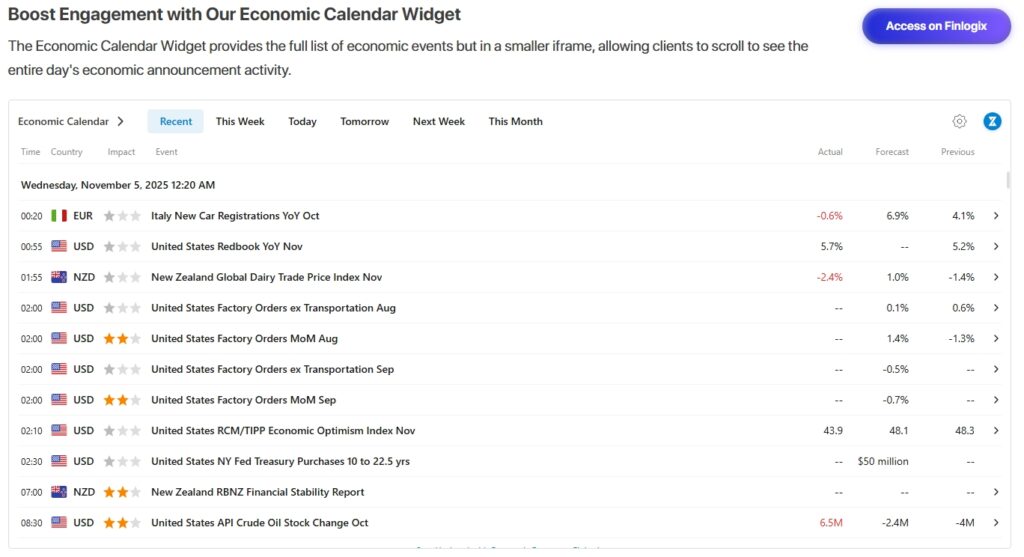
Now that you’ve shown your readers the “what” (the price action), it’s time to explain the “why.” This is where the Economic Calendar widget comes in. By embedding the best financial economic calendar for your website, you provide the fundamental context behind the market movement. If your thesis is that gold is at a key level due to inflationary pressures, the economic calendar can show the upcoming CPI report or other relevant data releases. This adds a layer of depth and authority to your post, demonstrating that your analysis is based on a comprehensive understanding of both technical and fundamental factors. This is a key lesson in how you can use financial widgets to increase website conversions.
Step 4: Embed the Copy Trading Leaderboard Widget
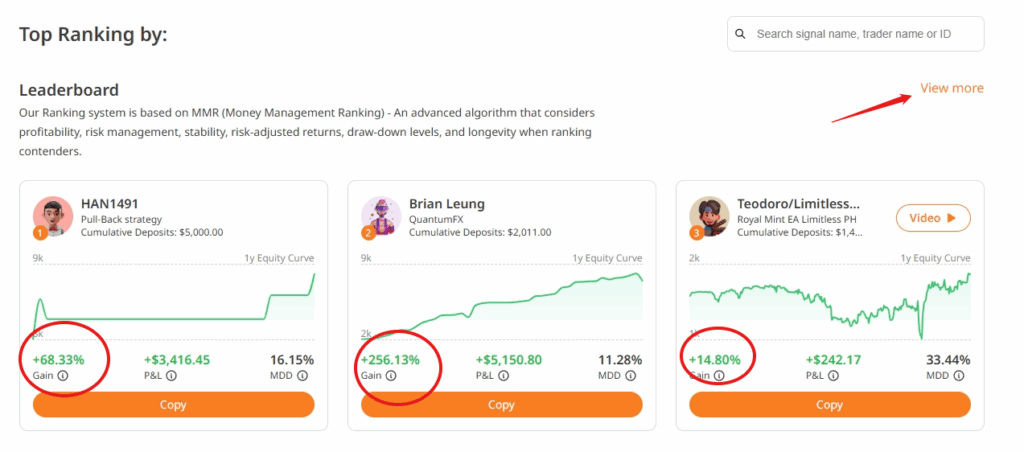
This is the final and most crucial step in creating a high-converting interactive analysis post. You’ve attracted your readers with a compelling thesis, engaged them with a live chart, and provided them with the fundamental context. Now, you need to offer them a solution, a clear call-to-action. The Copy Trading Leaderboard widget is the perfect tool for this. By embedding a leaderboard of successful traders who are capitalizing on the very setup you’ve just analyzed, you create a seamless transition from analysis to action. You’re not just telling them about an opportunity; you’re showing them a way to participate in it. For a deeper dive into using widgets for this specific purpose, read our guide on how to use ACY forex affiliate tools for gold copy trading conversions. This powerful combination of analysis and solution is what makes financial widgets the secret weapon for forex affiliate conversions.
How Jesse Livermore Thinks About Interactive Analysis?
Jesse Livermore was obsessed with “reading the tape.” The ticker tape was his live, unfiltered connection to the market’s pulse. He would have viewed a static chart screenshot with contempt. An Interactive Analysis Post, with its live chart and real-time data, is the modern equivalent of the ticker tape. It brings the market’s action directly to the reader, allowing them to see what you see, as you see it. For Livermore, this wouldn’t be a “cool feature”; it would be the only legitimate way to discuss the market. He believed in the importance of understanding price action and volume, and a live chart provides exactly that. He would have appreciated the ability to see the “line of least resistance” as it formed, a concept that is difficult to convey with a static image.
10 Lessons from “The Intelligent Investor” for Content Creators
Benjamin Graham’s “The Intelligent Investor” is a timeless classic that offers a wealth of wisdom for content creators. Here are ten of his key principles, adapted for the digital age:
-
“Margin of Safety”: Providing live, verifiable data from widgets gives your analysis a “margin of safety” against being perceived as mere opinion or hype. Your readers can see the data for themselves, which builds trust and credibility.
-
“An investment operation is one which, upon thorough analysis, promises safety…”: An Interactive Analysis Post is a “thorough analysis” in action, providing both technical and fundamental data points.
-
“Know what you are doing – know your business.”: This format demonstrates your expertise and deep understanding of the market drivers. It’s also important to know the regulatory landscape. A key question affiliates ask is, “do you need a license to be a forex fund manager?”, and understanding these nuances adds to your authority.
-
Focus on long-term results: While the interactive elements of your post are dynamic, the principles you espouse should be timeless. Use the interactive format to illustrate enduring market principles, not just short-term fads.
-
Be a defensive investor (or content creator): Just as a defensive investor diversifies their portfolio, a defensive content creator should use a variety of widgets to present a balanced view of the market.
-
Your worst enemy is likely to be you yourself: The interactive format can help you stay objective. By focusing on the data provided by the widgets, you’re less likely to be swayed by your own biases or emotions.
-
The future value of every investment is a function of its present price: A live chart widget is the perfect tool to illustrate this principle. It shows the current price in real-time, allowing your readers to make their own judgments about its value.
-
Look beyond yield: The economic calendar widget encourages your readers to look beyond the price and consider the underlying fundamentals that are driving the market.
-
Process, process, process: The four-step blueprint for creating an interactive analysis post provides a clear, repeatable process that you can use to consistently produce high-quality content. This is essential for anyone on the forex affiliate program grind.
-
Mr. Market: The concept of “Mr. Market” as an emotional, irrational entity is perfectly illustrated by the real-time fluctuations of a live chart. You can use this to teach your readers the importance of remaining rational and disciplined in the face of market volatility.
From Content to Conversions: The Funnel Strategy
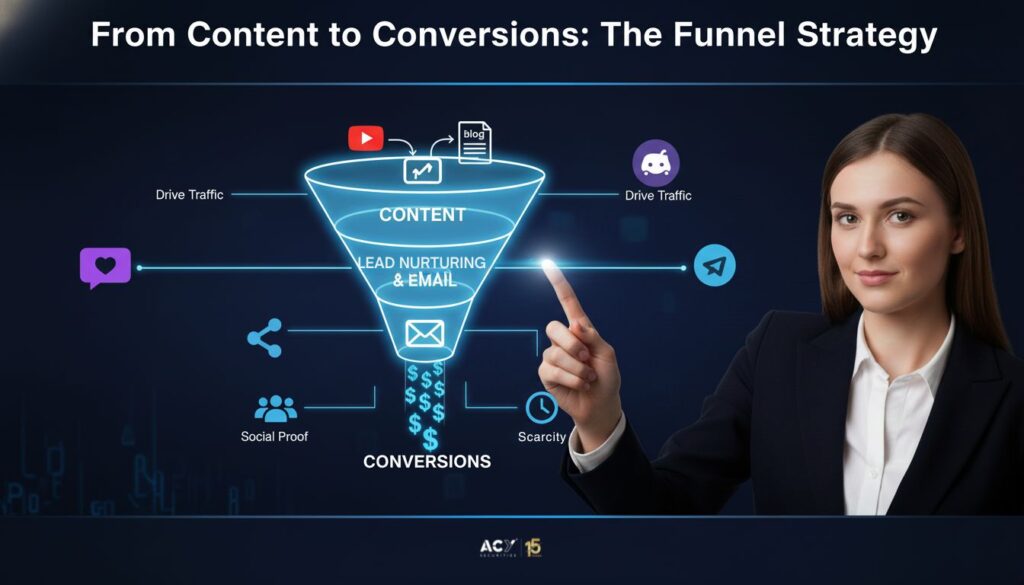
This interactive post format is a powerful Middle-of-Funnel (MoFu) asset. It’s designed to engage users who are already aware of a problem and are actively seeking solutions. To maximize its effectiveness, you must integrate it into a larger conversion strategy.
First, you need a system to capture and nurture leads. This is where you create a forex affiliate sales funnel that guides users from your content to your offer. A crucial part of this is building an email list. By learning how to build a forex affiliate email list that converts 24/7, you can follow up with your readers and build a long-term relationship.
Ultimately, your goal is to convert forex affiliate commissions. This is where understanding user psychology becomes critical. By employing the 5 psychological triggers to increase forex affiliate conversions, such as social proof and scarcity, you can significantly improve the performance of your call-to-action.
Promoting Your Interactive Content & Staying Compliant
Creating a high-value interactive post is only half the battle. You need to promote it effectively to drive traffic. Our guide on 5 social media strategies to promote your forex affiliate links provides a great starting point. For a more targeted approach, learn how to use YouTube to attract high-value forex traders. To foster a loyal audience, consider learning how to build a thriving forex affiliate Discord/Telegram community.
As you promote your content, compliance is paramount. All analysis, even when interactive, must adhere to regulations. Our forex affiliate regulation marketing guide is an essential resource. It’s also critical to understand how to market forex compliantly to avoid making prohibited claims.
Your Top Questions on Using Widgets in Content
This FAQ section addresses some of the most common questions about using financial widgets in your content.
-
Will embedding multiple widgets slow down my website?
No. Modern financial widgets are built with lightweight code that loads asynchronously, so they won’t impact your page’s core loading speed. -
Do I need to know how to code to do this?
Not at all. Installing widgets is a simple copy-and-paste of a line of code into your website’s editor. If you can embed a YouTube video, you can embed a widget. -
Can this format work for any asset, not just gold?
Absolutely. You can create an Interactive Analysis Post for EUR/USD, the NASDAQ 100, or any other asset that has a live chart, relevant news, and copy traders available. -
How does this help with affiliate conversions?
It creates a seamless journey. You attract them with analysis, engage them with live data, and then present your affiliate offer (the copy traders) as the logical, in-context solution. This is a powerful MoFu content piece that can dramatically improve your conversion rates. -
Is this format good for SEO?
Yes. By creating a highly engaging, data-rich experience, you significantly increase “time on page,” which is a powerful positive signal to search engines like Google.
Conclusion
Stop writing static articles. The Interactive Analysis Post is the future of financial content marketing. By combining your expertise with live, dynamic data, you can create an unparalleled user experience that builds authority, boosts engagement, and drives conversions. This strategy is perfect for both beginners looking to stand out and for seasoned professionals who want to scale their content’s effectiveness.
For beginners, we recommend checking out our list of the best forex affiliate programs for beginners. For those looking to scale, our guide on how do you scale your forex affiliate marketing venture is a must-read. The path to success is to continuously innovate, and integrating financial widgets into your content is a giant leap forward.
Your Path to a Smarter Trading Future Starts Now
The future of trading isn’t about replacing human intelligence but augmenting it. You now have a blueprint to take decades of trading wisdom, forge it into a powerful AI assistant, and use it to build your own trading and affiliate marketing empire.
Stop trading on emotion. Stop paying for inflexible tools. Start building your edge.
Ready to build your business and empower your clients? Join the ACY Partners Program today and start sharing your unique AI trading bot with the world.
Disclaimer:Trading Forex and CFDs involves significant risk and may not be suitable for all investors. The content of this article is for educational purposes only and should not be considered financial advice. The performance of any AI tool or trading strategy is not guaranteed. Always conduct your own research and consider your risk tolerance before trading with real capital. Ensure that when you share your app, you include this disclaimer and your ACY Partners affiliate link for any sign-ups.
For more detailed insights on developing daily trading routines, risk management, and effective position sizing strategies, explore additional articles on ACYPartners. Our experts at ACY and FinLogix are also great resources to guide your journey towards trading excellence.
Discover Our Best Gold Affiliate Program
At ACYPartners, you can browse through a selection of affiliate program and review offerings before you decide to start forex affiliate marketing.
Become An Introducing Broker
Share your expertise and become an introducing broker so you can help other traders about the benefits of joining ACY.
Stay tuned to our blog for more Forex Affiliate Marketing educational resources.
Trading involves risks.
Related Forex Affiliate Marketing blogs:
- Best Forex Affiliate Program 2025 | Top FX Affiliate Network
- Best Gold Affiliate Program: High Paying Affiliate Program for Traders
- How a Forex CPA Affiliate Program Works with a Forex Broker – What You Must Know
- How to Choose the Right Multi Account Manager Software on MetaTrader 4 (MT4)
- 10 Reasons to Use Free Financial Widgets on Your Forex Affiliate Website
- What is a MAM Account – Forex MAM and PAMM Managed Accounts
- Introducing Broker Program (IB) Business Model & How to Be Competitive
- Benefits of the ACY Forex White Label Offering
-
-
Top 10 Forex Introducing Broker CPA Deals & Affiliate Offers (2026): An Honest Review

Last Updated: March 31, 2026
This article is reviewed annually to reflect the latest market regulations and trends

Top 10 Forex Introducing Broker CPA Deals & Affiliate Offers (2026): An Honest Review
In the world of forex affiliate marketing, the highest CPA number always wins… right? Wrong. The affiliate industry is littered with programs that promise a huge payout but fail to convert, leaving you with impressive clicks and a depressingly empty bank account. The most profitable affiliates don’t chase the biggest headline number; they chase the biggest effective payout. This is the crucial difference between amateur and professional affiliate marketing. This article is an honest review of the top forex CPA deals, designed to teach affiliates how to calculate their real earnings and choose a truly high-performing partner.
TL;DR (Too Long; Didn’t Read)
-
The “Effective CPA” is Your True North: A high-paying deal is not the headline number. It’s the CPA Rate multiplied by your actual Conversion Rate.
-
High CPA Can Hide Low Conversions: Many programs with the highest advertised CPA have complex funnels or poor product offerings that kill conversion rates.
-
High-Converting Funnels are Gold: A program with a slightly lower CPA but a significantly higher conversion rate (thanks to tools like copy trading and widgets) will make you more money.
-
Read the Fine Print: Always investigate the hidden terms, payout speeds, and conversion criteria of any CPA offer before sending traffic.
-
The Verdict is in the Data: A high-converting program provides a better “margin of safety” for your marketing spend and a higher return on your traffic.
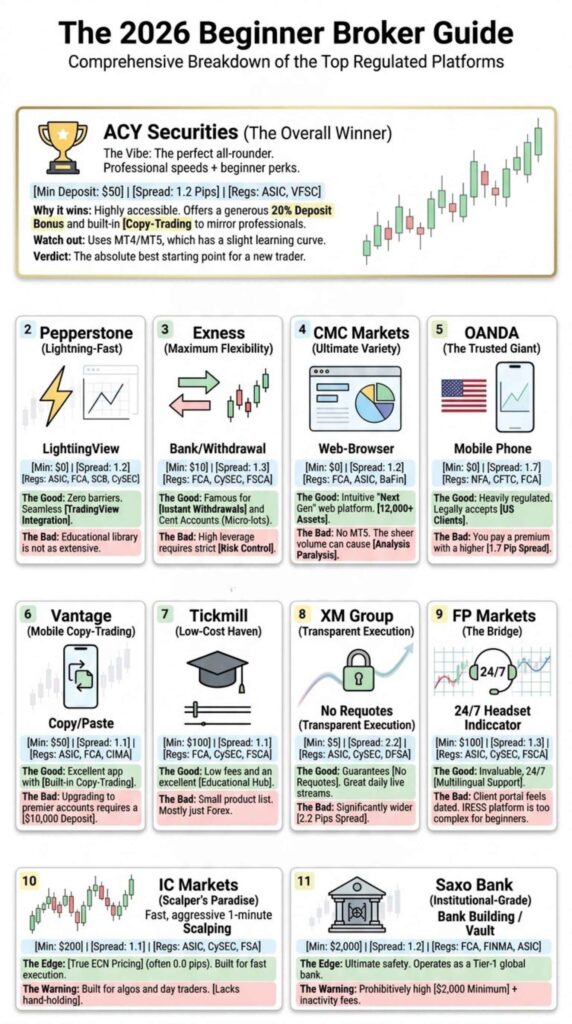
1. ACY Securities Review
The Vibe: The perfect all-rounder. It balances professional-grade trading speeds with incredibly beginner-friendly perks.
-
Minimum Deposit: $50
-
Average Spread (EUR/USD): 1.2 pips
-
Regulation: ASIC, VFSC
Why it’s great for beginners: ACY Securities takes the top spot because it is highly accessible. For just $50, you get access to their Standard account, which is perfect for learning the ropes. They also offer a generous 20% deposit bonus, giving your starting capital a nice boost, and their copy-trading feature allows you to automatically mirror the trades of experienced professionals while you learn.
What to watch out for: They rely heavily on the MetaTrader 4 (MT4), MetaTrader 5 (MT5) and ACY Trading platform. While these are industry standards, they have a slight learning curve for absolute beginners compared to modern web-based apps.
The Verdict: The absolute best starting point for a new trader looking for high-quality regulations, low costs, and bonus incentives.
2. Pepperstone Review
The Vibe: Lightning-fast and practically zero barriers to entry.
-
Minimum Deposit: $0
-
Average Spread (EUR/USD): 1.2 pips
-
Regulation: ASIC, FCA, SCB, CySEC
Why it’s great for beginners: Pepperstone is famous for its zero minimum deposit requirement. You can open an account and fund it with $10 just to see how live trading feels without risking a large chunk of change. They also offer seamless integration with TradingView, a platform widely loved by beginners for its beautiful, easy-to-use charts.
What to watch out for: Their educational library is solid but not as extensive as some other beginner-focused brokers.
The Verdict: Perfect if you want to start with a micro-budget and prefer using TradingView for your chart analysis.
3. Exness Review

The Vibe: Maximum flexibility with your money.
-
Minimum Deposit: $10
-
Average Spread (EUR/USD): 1.3 pips
-
Regulation: FCA, CySEC, FSCA
Why it’s great for beginners: Exness is famous for automated, instant withdrawals. As a beginner, knowing you can access your funds immediately provides massive peace of mind. The $10 minimum deposit makes it incredibly accessible, and their Cent Accounts allow you to trade with micro-lots, keeping your risk strictly controlled.
What to watch out for: They offer extremely high leverage. Beginners should be very careful and keep their leverage low to avoid rapid losses.
The Verdict: Best for new traders who prioritize fast, frictionless deposits and withdrawals.
4. CMC Markets Review
The Vibe: The ultimate platform for variety and user experience.
-
Minimum Deposit: $0
-
Average Spread (EUR/USD): 1.2 pips
-
Regulation: FCA, ASIC, BaFin
Why it’s great for beginners: Instead of forcing you to use standard MetaTrader platforms, CMC Markets offers their proprietary “Next Generation” web platform. It is beautifully designed, intuitive, and packed with beginner-friendly educational tools. Plus, with over 12,000 assets, you can trade forex, stocks, and commodities all in one place.
What to watch out for: They do not support MT5, and the sheer volume of 12,000+ instruments can cause “analysis paralysis” for someone just starting out.
The Verdict: Ideal for beginners who want a modern, easy-to-use web platform instead of downloading traditional trading software.
5. OANDA Review
The Vibe: The trusted giant, especially for US residents.
-
Minimum Deposit: $0
-
Average Spread (EUR/USD): 1.7 pips
-
Regulation: NFA, CFTC, FCA
Why it’s great for beginners: OANDA is heavily regulated and is one of the few top-tier brokers that legally accepts US clients. They have no minimum deposit and offer an incredibly intuitive proprietary mobile app that makes trading on the go a breeze.
What to watch out for: The average spread of 1.7 pips is higher than the competition. You are paying a slight premium for their robust regulatory safety and user-friendly tech.
The Verdict: The #1 safest choice for beginners based in the United States.
6. Vantage Review

The Vibe: High-leverage trading with aggressive promotions.
-
Minimum Deposit: $50
-
Average Spread (EUR/USD): 1.1 pips
-
Regulation: ASIC, FCA, CIMA
Why it’s great for beginners: Like ACY Securities, Vantage offers excellent deposit bonuses to give new traders extra margin. They also feature a highly rated proprietary mobile app that includes built-in copy trading, making it easy to learn from veterans directly from your phone.
What to watch out for: Upgrading to their premier accounts later on requires a hefty $10,000 minimum deposit, which might force you to switch brokers as your account grows.
The Verdict: A strong choice if you want to trade directly from your smartphone using a modern app with built-in copy trading.
7. Tickmill Review

The Vibe: A low-cost haven that you can grow into.
-
Minimum Deposit: $100
-
Average Spread (EUR/USD): 1.1 pips
-
Regulation: FCA, CySEC, FSCA
Why it’s great for beginners: While Tickmill is loved by pros for its low fees, beginners benefit from its transparent pricing and excellent array of free webinars, ebooks, and video tutorials. It’s an environment designed to actually teach you how to trade.
What to watch out for: Their product list is relatively small (mostly just forex and a few indices). If you want to trade individual company stocks, this isn’t the place.
The Verdict: Best for new traders who want to focus strictly on learning the forex market without distractions.
8. XM Group Review
The Vibe: Transparent execution with zero hidden surprises.
-
Minimum Deposit: $5
-
Average Spread (EUR/USD): 2.2 pips
-
Regulation: ASIC, CySEC, DFSA
Why it’s great for beginners: XM Group guarantees “no requotes.” This means the price you click on your screen is the price you get a great feature for beginners who are still getting used to fast-moving markets. They also have an incredibly thorough daily educational live stream.
What to watch out for: Their spreads are significantly wider (2.2 pips on average) than the rest of the market. It costs more per trade to use XM.
The Verdict: Great for educational support, but the higher spreads mean it’s better for long-term swing trading rather than rapid, short-term day trading.
9. FP Markets Review
The Vibe: The bridge between standard forex and advanced stock trading.
-
Minimum Deposit: $100
-
Average Spread (EUR/USD): 1.3 pips
-
Regulation: ASIC, CySEC, FSCA
Why it’s great for beginners: FP Markets offers excellent, multilingual customer support. When you are new, having 24/7 access to a responsive support team to help you navigate software setup and account funding is invaluable.
What to watch out for: Their website and client portal can feel a bit dated, and their advanced “IRESS” platform is too complex and expensive for a beginner to use.
The Verdict: A solid, reliable broker if customer service is your absolute top priority.
10. IC Markets Review
The Vibe: The high-volume scalper’s paradise.
-
Minimum Deposit: $200
-
Average Spread (EUR/USD): 1.1 pips
-
Regulation: ASIC, CySEC, FSA
Why it’s great for beginners: IC Markets is famous for “True ECN” pricing, meaning they offer some of the tightest spreads in the world (often hitting 0.0 pips on the EUR/USD).
What to watch out for: It requires a $200 minimum deposit, and the platform is built with institutional algorithms and day traders in mind. It lacks the hand-holding and simplified interfaces that true beginners usually look for.
The Verdict: Better suited for intermediate beginners who have already practiced on a demo account and are ready to execute fast, low-cost trades.
11. Saxo Bank Review
The Vibe: Institutional-grade wealth management.
-
Minimum Deposit: $2,000
-
Average Spread (EUR/USD): 1.2 pips
-
Regulation: FCA, FINMA, ASIC
Why it’s great for beginners: It offers the ultimate level of safety and prestige, operating essentially as a Tier-1 global bank.
What to watch out for: The $2,000 minimum deposit is prohibitively high for most new traders, and they charge inactivity fees if you step away from the platform.
The Verdict: Only recommended for beginners who are already high-net-worth individuals looking to allocate a large amount of capital into a premium ecosystem.
What Really Defines a “High Paying” CPA Deal?
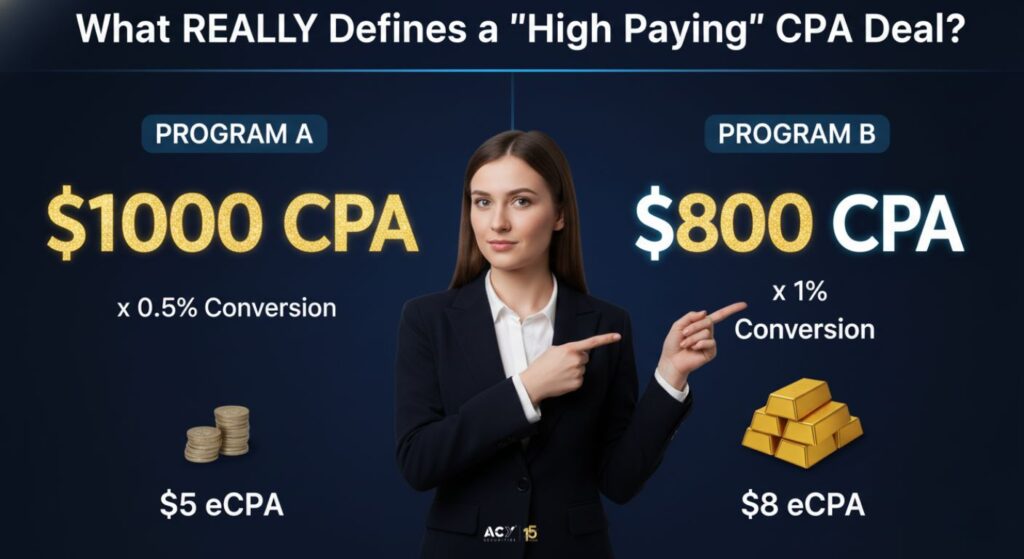
Before diving into specific offers, you must understand the core metric that separates successful affiliates from struggling ones: Effective CPA (eCPA). A top-tier forex CPA affiliate program isn’t just about the dollar figure they promise. It’s about what you actually earn per click.
The equation is simple but powerful:
eCPA = CPA Rate x Conversion Rate
Let’s use a simple example to illustrate:
-
Program A: Offers a dazzling $1000 CPA, but their platform is clunky, and their conversion rate from your click to a funded client is a mere 0.5%.
-
Program B: Offers a more conservative $800 CPA, but their funnel is highly optimized, resulting in a strong 1% conversion rate.
Here’s the math:
-
Program A’s eCPA:
1000 x 0.0055 per clickProgram B’s eCPA:
800 x 0.018 per click
Despite the lower headline number, Program B is far more profitable. This is the fundamental forex strategy of how forex traders earn through affiliate marketing that top earners focus on. Understanding all the forex affiliate fees and costs involved in your campaigns makes choosing the partner with the highest eCPA the only logical choice.
An Honest Review of Top Forex CPA Offers
Competitor A (e.g., Vantage) CPA Offer: Pros, Cons, and Hidden Terms
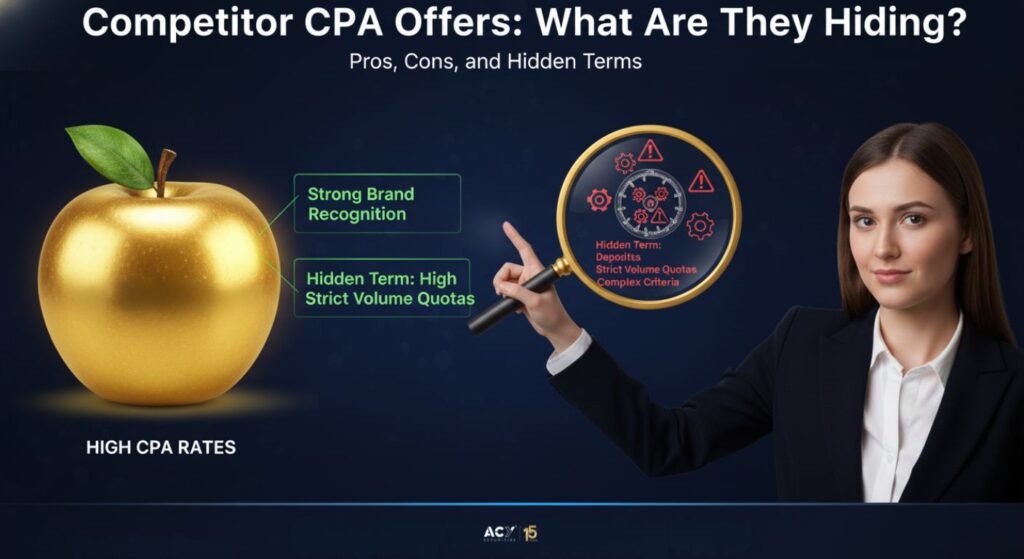
Vantage is a well-known brand, and their strong brand recognition is a definite pro for affiliates. They offer high CPA rates, which are attractive on the surface. However, a deeper look reveals that achieving the top-tier payouts often involves complex and stringent conversion criteria, such as high minimum deposits and specific trading volume requirements from a large number of referrals. These hidden terms can significantly impact your actual conversion rate. For a more detailed breakdown, our ACYPartners vs. Vantage vs. Exness comparison provides an honest look at the pros and cons. It’s crucial to be aware of the 7 signs of a scam forex affiliate program to avoid partners with unclear or predatory terms.
Competitor B (e.g., Exness) CPA Offer: Pros, Cons, and Payout Speed
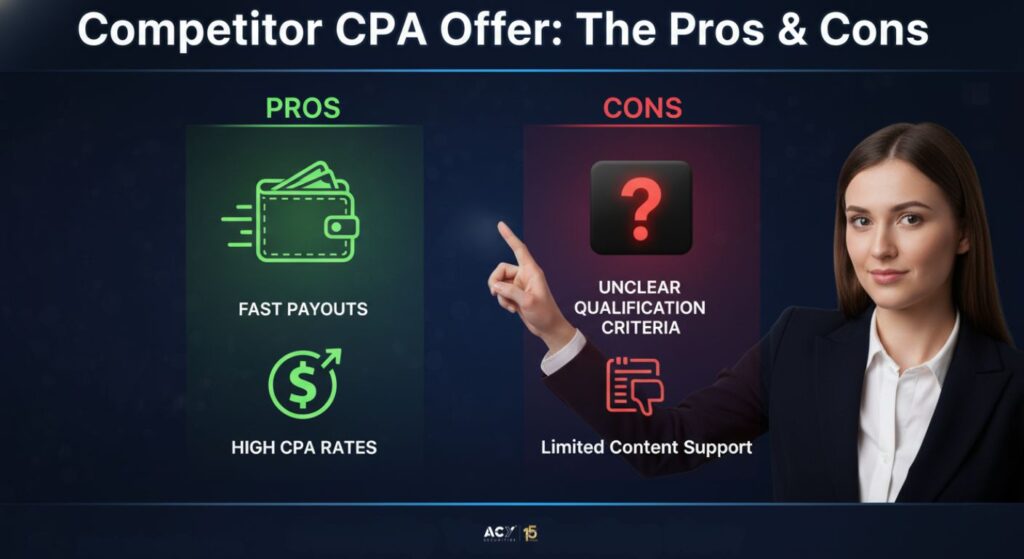
Exness is often praised for its fast payouts, which can be a major advantage for affiliates running paid media campaigns who need consistent cash flow. They also advertise some of the highest CPA numbers in the industry. The main drawback, however, is that their CPA qualification criteria can be opaque. Affiliates sometimes report a lack of clarity on why a specific lead did or did not qualify, making it difficult to optimize campaigns and predict revenue accurately. While they have a strong regional focus, their support for content-focused affiliates can be less comprehensive. You can see a more direct comparison in our ACYPartners vs. OctaFX vs. Exness review.
ACY Partners’ Hybrid & CPA Offer: The Conversion Advantage
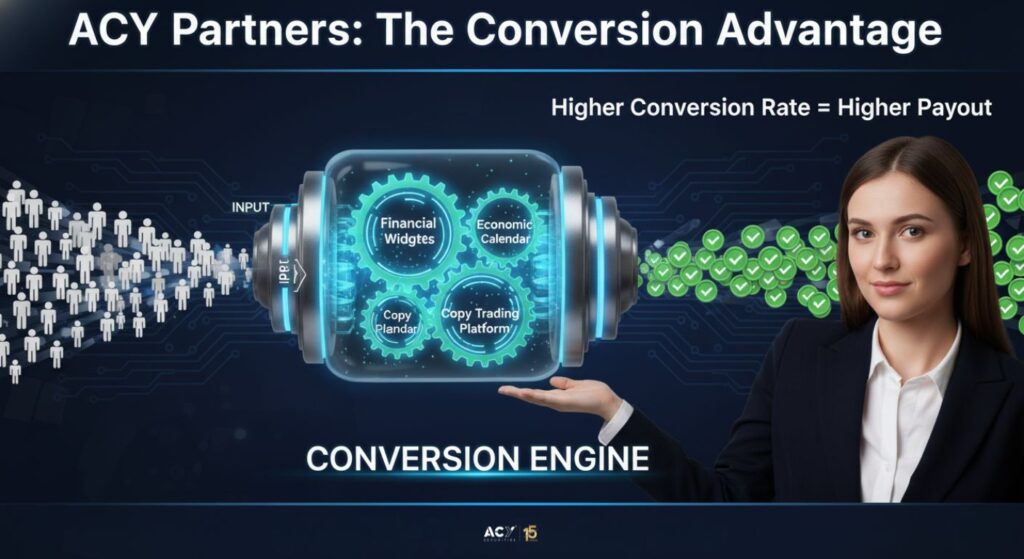
ACY Partners focuses on the other side of the eCPA equation: the conversion rate. The philosophy is simple: a higher conversion rate leads to a higher effective payout. This is achieved by providing affiliates with powerful, ready-to-use tools that enhance the user experience and drive sign-ups.
The key is that these tools are not just marketing gimmicks; they are genuinely useful for traders. For example, learning how you can use financial widgets to increase website conversions can be a game-changer. These financial widgets are the secret weapon for forex affiliate conversions, turning your website into a valuable resource. Add to that the best financial economic calendar for your website and a seamless copy trading platform, and you have a powerful conversion engine. An affiliate who knows how to market a copy trader effectively can see their conversion rates soar, leading to a much higher eCPA.
Why a High-Converting Program Beats a High-CPA Program?
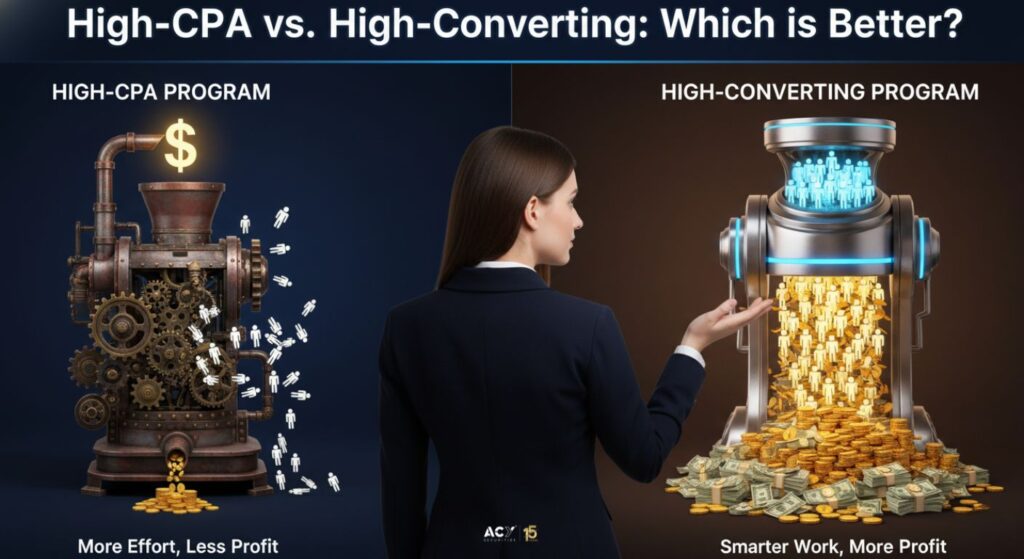
The conclusion is clear: a high-converting program is more profitable, provides a better margin of safety for paid ad campaigns, and ultimately leads to a more sustainable business. You don’t have to be a trading wizard to succeed; in fact, many wonder, “Do you need to be a trading pro to be the best forex affiliate?“. The answer is no. You need to be a smart marketer who understands that a superior product and a smoother customer journey will always win.
How Jesse Livermore Thinks About CPA Deals
“Livermore was a master of probabilities and execution. He wouldn’t care about a broker’s promised CPA ($1000); he would care about his actual, realized profit at the end of the month. He’d see the headline CPA as the ‘bid’ and the conversion rate as the ‘volume.’ A high bid with no volume is worthless. He would test each broker with a small amount of traffic, read the ‘tape’ of his conversion data, and then put his full size behind the one with the highest effective payout.”
10 Lessons from “The Intelligent Investor” for CPA Affiliates
-
“Margin of Safety”: A program with a high conversion rate gives you a wider margin of safety on your ad spend.
-
“Intrinsic Value”: The intrinsic value of a CPA deal is its eCPA, not its advertised price.
-
“An investment operation is one which, upon thorough analysis, promises safety of principal…”: A thorough analysis of a CPA program means vetting its conversion funnel, not just its headline offer.
-
Know Your Partner: Understand the broker’s business model, regulatory compliance, and target audience.
-
Focus on Long-Term Results: Don’t be swayed by short-term promotions. It’s about enduring the forex affiliate program grind to build a lasting business.
-
The Market is a Pendulum: CPA offers will change. Focus on the fundamentals of driving quality traffic.
-
Don’t Speculate, Invest: Treat your affiliate business as an investment in a long-term partnership.
-
Control Your Emotions: Let data, not hype, guide your decisions.
-
Price is what you pay; value is what you get: The CPA rate is the price. The eCPA is the value.
-
Be Wary of Projections: Test and track everything yourself.
FAQ Section: Your Top Questions on Forex CPA Deals
-
What is a good conversion rate for a forex affiliate?
A: For a direct CPA offer, a conversion rate of 0.5% to 1.5% from click to funded client is a common range, but this can be significantly higher with a well-optimized funnel. -
How do I track my conversion rate?
A: The best affiliate programs provide a detailed back-office dashboard where you can see clicks, registrations, and funded accounts, allowing you to calculate your conversion rate. -
Are there hidden terms in CPA deals?
A: Often, yes. These can include minimum deposit amounts, specific trading volume requirements, or regional restrictions. This is why it’s so important for the forex affiliate beginner to promote ethically and transparently. -
Is CPA better than rebates?
A: CPA is better for affiliates who need immediate cash flow from paid ads. Rebates are better for building long-term, residual income. Our guide on high rebate forex affiliate programs explains why ongoing rebates can often beat one-time CPA deals for content- and community-focused affiliates. -
How can I increase my conversion rate?
A: By pre-qualifying your traffic with high-quality content and using high-value tools. Learning how you can create content as a forex affiliate that solves trader psychology problems is a great way to build trust and increase conversions.
Conclusion
In 2026, the smartest forex affiliates are moving beyond the vanity metric of a high CPA and focusing on the only number that matters: the effective payout. By choosing a partner with a superior, high-converting product offering, you can generate a higher return from the same traffic. This is the foundation of a complete guide to building a forex affiliate business from anywhere.
As you grow, you’ll want to know how to scale your forex affiliate marketing venture. This often involves exploring different partnership models. Understanding the benefits of becoming an introducing broker can open up new revenue streams, and our ultimate introducing broker (IB) guide shows you how. For the most ambitious, this can even lead to becoming a forex fund manager.
Ultimately, success comes down to choosing a partner that provides the best marketing support for serious forex affiliates and offers products that resonate with clients, such as understanding why gold (XAU/USD) trading is so appealing. By focusing on conversion, you build a more profitable and sustainable business.
RISK WARNING: Foreign exchange and derivatives trading carry a high level of risk. Before you decide to trade foreign exchange, we encourage you to consider your investment objectives, your risk tolerance and trading experience. It is possible to lose more than your initial investment, so do not invest money you cannot afford to lose. ACY Securities Pty Ltd (AFSL: 403863) and ACY Capital LLC (Company number: 2610 LLC 2022) provides general advice that does not consider your objectives, financial situation or needs.

Your Path to a Smarter Trading Future Starts Now
The future of trading isn’t about replacing human intelligence but augmenting it. You now have a blueprint to take decades of trading wisdom, forge it into a powerful AI assistant, and use it to build your own trading and affiliate marketing empire.
Stop trading on emotion. Stop paying for inflexible tools. Start building your edge.
Ready to build your business and empower your clients? Join the ACY Partners Program today and start sharing your unique AI trading bot with the world.
Disclaimer:Trading Forex and CFDs involves significant risk and may not be suitable for all investors. The content of this article is for educational purposes only and should not be considered financial advice. The performance of any AI tool or trading strategy is not guaranteed. Always conduct your own research and consider your risk tolerance before trading with real capital. Ensure that when you share your app, you include this disclaimer and your ACY Partners affiliate link for any sign-ups.
For more detailed insights on developing daily trading routines, risk management, and effective position sizing strategies, explore additional articles on ACYPartners. Our experts at ACY and FinLogix are also great resources to guide your journey towards trading excellence.
Discover Our Best Gold Affiliate Program
At ACYPartners, you can browse through a selection of affiliate program and review offerings before you decide to start forex affiliate marketing.
Become An Introducing Broker
Share your expertise and become an introducing broker so you can help other traders about the benefits of joining ACY.
Stay tuned to our blog for more Forex Affiliate Marketing educational resources.
Trading involves risks.
Related Forex Affiliate Marketing blogs:
- Best Forex Affiliate Program 2026 | Top FX Affiliate Network
- Best Gold Affiliate Program: High Paying Affiliate Program for Traders
- How a Forex CPA Affiliate Program Works with a Forex Broker – What You Must Know
- How to Choose the Right Multi Account Manager Software on MetaTrader 4 (MT4)
- 10 Reasons to Use Free Financial Widgets on Your Forex Affiliate Website
- What is a MAM Account – Forex MAM and PAMM Managed Accounts
- Introducing Broker Program (IB) Business Model & How to Be Competitive
- Benefits of the ACY Forex White Label Offering
-
-
The “Create Once, Publish Everywhere” Strategy for Forex Affiliates

Last Updated: October 30, 2025
This article is reviewed annually to reflect the latest market regulations and trends

The “Create Once, Publish Everywhere” Strategy for Forex Affiliates
It’s the relentless pressure every affiliate feels: you need to be on X, YouTube, TikTok, Instagram, and have a blog and an email list… all at once. The result? Burnout, mediocre content, and a presence that’s a mile wide and an inch deep. You’re stuck on the forex affiliate program grind, constantly churning out content just to keep up. But what if the most successful affiliates aren’t creating more content? What if they’re just smarter about how they create it? They’re not on a hamster wheel; they’re running a content factory.
This isn’t just another list of tips; this is a complete system. This is your definitive guide to the “Create Once, Publish Everywhere” (COPE) strategy, the ultimate playbook for achieving content omnipresence without the burnout. It’s a journey that requires understanding the forex affiliate marketing expectations vs reality to succeed. For many, this is the best-kept secret of online business, a path that begins with learning how to get your first 5 forex clients. By mastering this approach, you will not just learn how to create content, but how to build a powerful, multi-platform brand that attracts, engages, and converts. It’s time to adopt the ultimate forex affiliate marketing strategy and learn how to scale your forex affiliate marketing venture beyond what you thought possible.
TL;DR (Too Long; Didn’t Read)
-
The COPE Philosophy: Content repurposing is the art of taking one “pillar” piece of content and strategically atomizing it into dozens of smaller “micro” pieces for different platforms. It’s about maximum impact with minimum creation time.
-
Start with a “Pillar”: Your foundation is one single, in-depth “Ultimate Guide” blog post (2000+ words) that covers a core topic in your niche. This is the sun in your content solar system.
-
Atomize for Distribution: That one pillar post becomes a YouTube video, multiple X (Twitter) threads, a series of short-form videos (Reels/TikTok), an email mini-course, and more. Each piece is adapted for its specific platform.
-
Create a Traffic Flywheel: Use the high volume of micro-content to drive traffic back to your pillar post and email list, creating a self-sustaining marketing engine that works for you 24/7.
-
Leverage Modern Tools: Use AI and other software to make the repurposing process incredibly fast and efficient, turning hours of work into minutes.
What is Content Re-Purposing and Why Does It Save You 80% of Your Time?
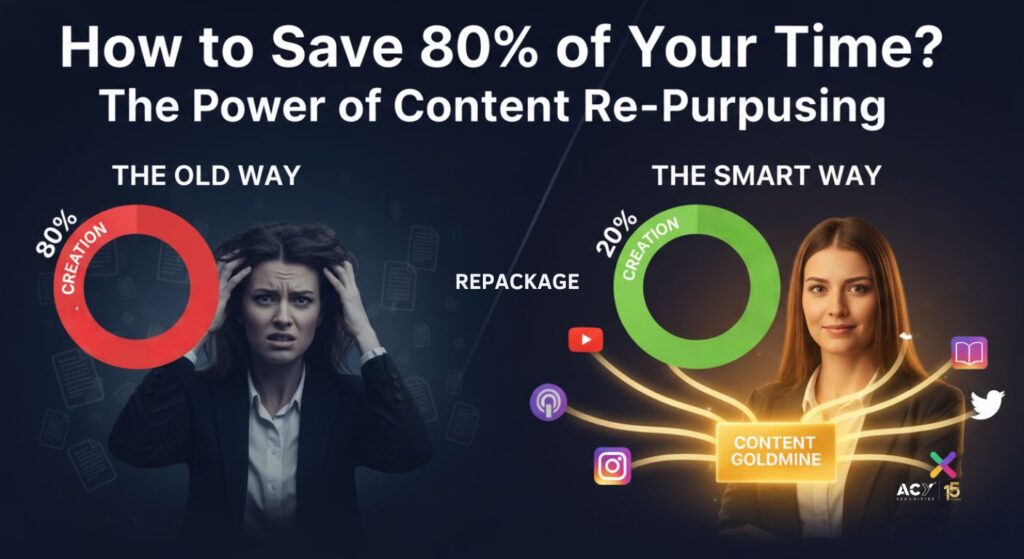
Content repurposing, at its heart, is the practice of taking a single, high-value piece of content and transforming it into multiple formats for distribution across various channels. It’s a strategic shift in mindset. Most affiliates are trapped in a cycle that looks like this: 80% of their time is spent on content creation, and only 20% on content distribution.
The result is a graveyard of brilliant blog posts that are seen once and then forgotten.
The Create Once, Publish Everywhere strategy flips this model on its head. The goal is to spend 20% of your time on creation and 80% on distribution.
Think about it: you invest hours, maybe even days, researching and writing a comprehensive guide. That single act of creation is the most labor-intensive part of the process. The core ideas, the research, the data, and the unique insights within that guide are your content goldmine. Instead of immediately moving on to the next “new” idea, the COPE strategy dictates that you mine that gold repeatedly.
By focusing on repurposing, you’re not just saving time; you’re amplifying your message. You’re ensuring that your best ideas reach the widest possible audience, in the format they prefer, on the platform they use most. This is the foundation of building a resilient forex affiliate business from anywhere.
How to Turn One “Ultimate Guide” into a 10-Part Content Series?
Let’s make this practical. Imagine you’ve identified a key topic your audience struggles with. You decide to create a pillar post designed to solve their trader psychology problems, perhaps using a few psychological triggers to increase conversions.
The Pillar: You write a 2,500-word blog post titled “The Ultimate Guide to Gold Copy Trading.”
This isn’t just a blog post; it’s the central asset for the next month of your marketing. Now, let’s atomize it.
1. The YouTube Deep Dive
-
Action: Condense the five main sections of your blog post into a 10-15 minute video script. Each section of the blog becomes a 2-3 minute segment in your video. Use the blog post’s headers as your talking points.
-
Why it Works: Video is a powerful medium for building authority. By presenting your guide in a visual format, you cater to a different learning style and tap into the world’s second-largest search engine. This is a cornerstone of any serious forex affiliate marketing on YouTube & TikTok strategy.
-
Pro Tip: Use screen recordings, simple animations, and clear graphics to illustrate key concepts from your post.
2. The X (Twitter) Barrage
-
Action:
-
Pull out 10 powerful statistics, quotes, or key takeaways from the guide. Schedule them as individual posts over two weeks.
-
Turn the 5 key sections of the blog post into a 5-part X thread, with each tweet summarizing a core idea. End the thread with a link back to the full article.
-
-
Why it Works: X is about high-frequency, high-value information. This strategy allows you to dominate the conversation around your topic, providing bite-sized value that drives curiosity. It’s one of the most effective social media strategies for forex affiliates.
3. The Instagram/TikTok Short-Form Blitz
-
Action: Create 5 short-form videos (Reels or TikToks), each under 60 seconds. Each video should explain one single, powerful concept from your guide. For the “Gold Copy Trading” example, you could have:
-
Video 1: What IS Gold Copy Trading? (60s explainer)
-
Video 2: The #1 Mistake Beginners Make (from your guide)
-
Video 3: How to Pick a Trader to Copy (quick tips)
-
Video 4: The Risk Management SECRET (one key insight)
-
Video 5: How Much Can You Realistically Earn? (managing expectations)
-
-
Why it Works: Short-form video is the king of discovery. These quick, engaging clips are designed to capture attention and introduce your brand to a massive new audience.
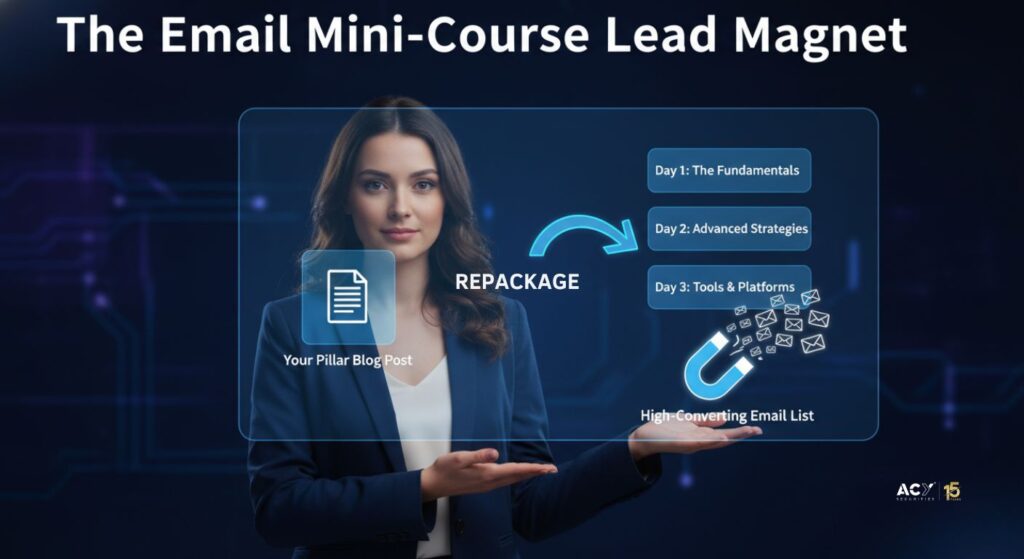
4. The Email Mini-Course Lead Magnet
-
Action: Repackage your pillar post into a 3-day automated email mini-course.
-
Day 1: The Fundamentals of Gold Copy Trading
-
Day 2: Advanced Strategies & Risk Management
-
Day 3: The Tools & Platforms You Need to Succeed
-
-
Why it Works: This transforms your blog post into a powerful lead magnet. You’re not just offering a PDF; you’re providing a structured learning experience directly to their inbox. This is how you build a forex affiliate email list that is engaged and ready to act.
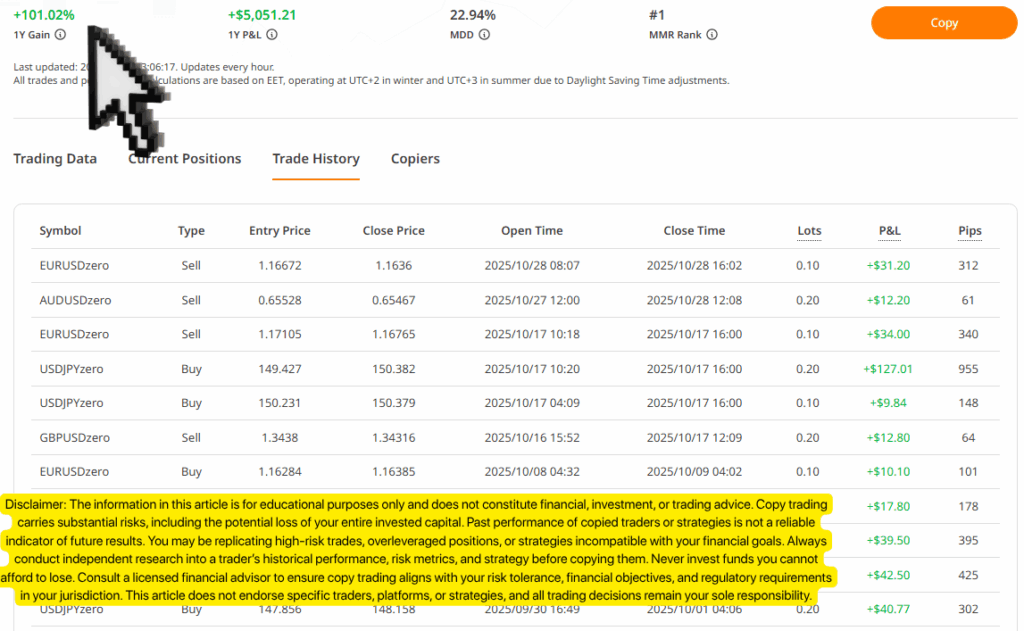
5. The Shareable Infographic
-
Action: Use a tool like Canva to create a visually appealing infographic that summarizes the key workflow or steps from your guide. Visualize the process of setting up a copy trading account or the do’s and don’ts.
-
Why it Works: Infographics are highly shareable on platforms like Pinterest, LinkedIn, and even in community groups. It serves as a visual summary of your expertise and a subtle ad for your main guide. This can even be a valuable resource to share in your forex affiliate Discord or Telegram community.
Using Short-Form Video to Drive Traffic Back

The atomized micro-content you’ve created is not just for show; it’s the engine of a powerful traffic flywheel. The strategy is simple but profoundly effective.
Every single short-form video you create, every Reel, TikTok, and Short, must end with a clear and compelling Call to Action (CTA). Not a weak “check out my blog,” but a benefit-driven directive:
“I just scratched the surface here. If you want my full, in-depth guide on [Topic], including [Specific Benefit #1] and [Specific Benefit #2], head to the link in my bio to get it for free.”
This CTA does three things:
-
Positions the video as a teaser, creating curiosity for the more comprehensive content.
-
Highlights the value of the pillar post, making it an irresistible next step.
-
Drives highly qualified traffic directly to your pillar content or your email list sign-up.
This is how you convert forex affiliate commissions. You’re not just shouting into the void; you are creating a structured path for your audience to follow, from casual viewer to engaged reader to loyal subscriber. You’re building a true forex affiliate sales funnel.
Software to Make Content Re-Purposing Fast and Easy
The Create Once, Publish Everywhere strategy thrives on efficiency. The right tools can automate, streamline, and accelerate your workflow, turning what could be a week’s worth of work into a single afternoon. This is how to build a 24/7 forex affiliate business with AI.
-
AI for Summarizing & Generating Social Posts (ChatGPT/Claude): Once your pillar post is written, you can feed it to an AI model with prompts like:
-
“Summarize this article into a 10-minute YouTube script.”
-
“Extract 10 tweetable quotes or statistics from this text.”
-
“Turn the key concepts of this article into 5 short video ideas, including a hook for each.”
-
This is the essence of the forex affiliate with AI side hustle, leveraging technology to multiply your output. You can even use it for specific niches, like a gold trading AI part-time trader guide.
-
-
Video Editing & Clipping (Descript): Descript is a game-changer. It transcribes your video into text, allowing you to edit the video by simply editing the text document. Its “Find Good Clips” feature uses AI to identify the most engaging parts of your long-form video, which you can then instantly export as short-form clips for social media.
-
Graphic Design (Canva): Canva makes it incredibly simple to create professional-looking infographics, social media graphics, YouTube thumbnails, and quote cards. You can create a set of templates that match your brand and reuse them for every new pillar post.
-
Social Media Scheduling (Buffer, Hootsuite, or similar): A scheduling tool is non-negotiable. It allows you to “batch” the distribution process. Spend a few hours scheduling all your repurposed content for the next two weeks, and your social media presence will run on autopilot, freeing you up to focus on your next pillar piece. This is the kind of marketing support for serious forex affiliates that makes a real difference.
How Gary Vaynerchuk Thinks About the COPE Strategy?

This isn’t just a strategy; for GaryVee, this is the entire game. He calls it his ‘Content Model.’ He documents one keynote or meeting (the pillar), and then his team creates 50+ pieces of micro-content from it. He believes you should be squeezing every last drop of value out of every idea you have. The goal is to achieve ‘omnipresence’ and be in front of your audience on every platform, in the format they prefer, without having to invent something new every single hour.
10 Lessons from “This is Marketing” by Seth Godin
Seth Godin’s philosophy is the strategic foundation for why the COPE model works so well. It’s about being generous, specific, and trustworthy.
-
“The smallest viable audience.” Don’t try to create content for everyone. Create your pillar content for a very specific group, your ideal forex affiliate lead. Then, use the COPE model to find and connect with them on every channel they use. Your specificity will be your superpower.
-
“Marketing is the generous act of helping someone.” The COPE model allows you to deliver that help in every conceivable format (video, text, audio, visual). By repurposing your pillar post, you make your generosity and expertise accessible to all, no matter how they prefer to consume content.
-
“Change the culture.” A consistent, multi-platform presence, with all content reinforcing the same core ideas, is how you change the culture of your audience. You move from being just another affiliate to becoming the definitive, trusted authority in your niche.
-
Focus on Feelings, Status, and Connection. People don’t just want trading strategies; they want to feel smart, secure, and part of a community. Your repurposed content should tap into these emotions. A short video might highlight the feeling of confidence from a good strategy, while an email course fosters a connection with you as a mentor.
-
Permission Marketing. The goal of your micro-content is to earn the privilege of taking the next step. A tweet earns you a click. A video earns you a follow. A pillar post earns you an email subscriber. You are building a loyal following by consistently offering value before asking for anything in return.
-
Be Remarkable. In a sea of generic forex advice, your repurposed content must stand out. Use a unique angle from your pillar post, a surprising statistic, or a contrarian viewpoint. The COPE model allows you to test different hooks and angles across platforms to see what truly resonates.
-
Tell a Story That Resonates. Your pillar content should have a narrative. The COPE model lets you tell that story in different ways. A YouTube video can be a hero’s journey, an Instagram Reel can be a quick “aha!” moment, and an email series can be a chapter-by-chapter unfolding of a larger lesson.
-
Consistency is Key. Showing up erratically is the fastest way to be forgotten. By batching your creation and repurposing, you can ensure you have a steady stream of high-quality content scheduled across all platforms. This consistency is how to grow your forex affiliate followers by building trust.
-
Empathy is the Foundation. The entire strategy begins with creating a pillar post that deeply understands and solves a real problem for your audience. Every piece of micro-content that stems from it is an empathetic echo of that solution, meeting your audience where they are.
-
Marketing is About Making Change Happen. Your content shouldn’t just inform; it should empower. The goal of the COPE strategy is to create a wave of change for your followers, helping them become better traders. Your omnipresence ensures that this message of change is unavoidable.
A quick note on compliance: Remember that all repurposed content, regardless of the platform, must still adhere to financial marketing regulations. Ensure your disclaimers are clear and your claims are compliant. Always refer to a forex affiliate regulation marketing guide to stay informed on how to market forex compliantly.
Your Top Questions on Content Re-Purposing
Is repurposed content considered “duplicate content” by Google?
No. As long as you are adapting the format for the platform (e.g., a video is not the same as a blog post), it’s seen as unique. You are not just copying and pasting text. The key is transformation, turning a blog post into a script, then a video, then social media snippets. Each is a distinct piece of media.
How long should my “pillar” content be?
Aim for a minimum of 2,000 words. It needs to be substantial enough to be the source for all your micro-content. A short, 500-word post simply won’t have enough depth to be atomized into dozens of valuable pieces. Think of it as an “ultimate guide.”
What if my audience on different platforms is slightly different?
That’s the beauty of this model! You can adapt the tone and style of your micro-content for each platform while still drawing from the same core pillar. Your LinkedIn post might be more professional and data-driven, while your TikTok video is more casual and entertaining, but both are rooted in the same expert knowledge from your guide.
Doesn’t this get boring for my followers who see me everywhere?
No, because most people don’t follow you on every single platform. And even if they do, they consume content differently on each one. They may watch your video but miss your tweet. They might see your Instagram post but not open your email. You are maximizing the chances of your message landing, not annoying them with repetition.
How much time should I spend on this each week?
This is where the efficiency comes in. Dedicate one day (or a set block of time) to creating the pillar content. Dedicate the next day to repurposing and scheduling it for the entire week or even two. It’s a “batching” process that is far more efficient than the daily scramble for new ideas.
Conclusion: Your Escape from the Hamster Wheel
Stop the content grind. Escape the hamster wheel. The “Create Once, Publish Everywhere” strategy is the proven system for working smarter, not harder. It’s the difference between being a content creator and being a content strategist.
By focusing your energy on creating one piece of exceptional pillar content and then dedicating the rest of your time to distributing it intelligently, you will achieve what every affiliate dreams of: omnipresence, authority, and a perpetual marketing machine that drives traffic and builds your brand long after you’ve hit “publish.” This is your blueprint for turning one great idea into a content empire.
Your Path to a Smarter Trading Future Starts Now
The future of trading isn’t about replacing human intelligence but augmenting it. You now have a blueprint to take decades of trading wisdom, forge it into a powerful AI assistant, and use it to build your own trading and affiliate marketing empire.
Stop trading on emotion. Stop paying for inflexible tools. Start building your edge.
Ready to build your business and empower your clients? Join the ACY Partners Program today and start sharing your unique AI trading bot with the world.
Disclaimer:Trading Forex and CFDs involves significant risk and may not be suitable for all investors. The content of this article is for educational purposes only and should not be considered financial advice. The performance of any AI tool or trading strategy is not guaranteed. Always conduct your own research and consider your risk tolerance before trading with real capital. Ensure that when you share your app, you include this disclaimer and your ACY Partners affiliate link for any sign-ups.
For more detailed insights on developing daily trading routines, risk management, and effective position sizing strategies, explore additional articles on ACYPartners. Our experts at ACY and FinLogix are also great resources to guide your journey towards trading excellence.
Discover Our Best Gold Affiliate Program
At ACYPartners, you can browse through a selection of affiliate program and review offerings before you decide to start forex affiliate marketing.
Become An Introducing Broker
Share your expertise and become an introducing broker so you can help other traders about the benefits of joining ACY.
Stay tuned to our blog for more Forex Affiliate Marketing educational resources.
Trading involves risks.
Related Forex Affiliate Marketing blogs:
- Best Forex Affiliate Program 2025 | Top FX Affiliate Network
- Best Gold Affiliate Program: High Paying Affiliate Program for Traders
- How a Forex CPA Affiliate Program Works with a Forex Broker – What You Must Know
- How to Choose the Right Multi Account Manager Software on MetaTrader 4 (MT4)
- 10 Reasons to Use Free Financial Widgets on Your Forex Affiliate Website
- What is a MAM Account – Forex MAM and PAMM Managed Accounts
- Introducing Broker Program (IB) Business Model & How to Be Competitive
- Benefits of the ACY Forex White Label Offering
-
-
Forex Fund Manager With AI: A Technical Guide to Scaling 2026

Last Updated: October 30, 2025
This article is reviewed annually to reflect the latest market regulations and trends

Forex Fund Manager With AI: A Technical Guide to Scaling
The role of a forex fund manager is no longer just about reading charts; it’s about architecting systems. While the ‘old way’ relied on manual analysis and gut feeling, the new breed of manager leverages data, automation, and artificial intelligence to build a scalable, non-emotional, and highly efficient trading enterprise. This isn’t science fiction; this is the new professional standard. For those considering this career path, it’s essential to understand the distinction between different roles in the industry, as detailed in our guide on being a forex affiliate or fund manager. The modern forex market is a high-frequency, data-driven environment where success is measured in microseconds and analytical prowess.
This article serves as the technical blueprint for the forex fund manager with AI, covering the full lifecycle from strategy development to global scaling. We will explore how to harness the power of machine learning, why MAM (Multi-Account Manager) software is the indispensable engine for scaling, and how to build a vertically integrated business model that attracts investors and automates growth. The top benefits of being a forex money manager are magnified when technology is correctly applied. For those ready to evolve, this guide will provide the strategic framework to transition from a traditional trader to a technologically empowered asset manager, ready to build multiple revenue streams. For more on how to market your AI-powered fund, see our guide on how to market an AI-powered forex fund MAM manager.
TL;DR (Too Long; Didn’t Read)
-
The New Breed: The AI-powered fund manager uses technology for strategy validation, risk management, and operational efficiency, not just execution.
-
AI in the Lab (Pre-Deployment): Use machine learning to backtest strategies on historical data and identify market patterns the human eye cannot see.
-
MAM as the Engine (Deployment): MAM software is the only tool that provides the low-latency execution and flexible allocation required to run complex AI strategies across multiple client accounts.
-
AI as the Co-Pilot (Post-Deployment): Use AI for advanced, real-time risk management, including monitoring for strategy decay and automating portfolio-wide stop-losses.
-
The Ultimate Scaling Stack: The future is a vertically integrated system: AI develops the strategy, MAM executes it, and a Copy Trading leaderboard markets it to a global investor base.
What is the “AI-Powered Fund Manager” in 2026?

The AI-powered fund manager of 2026 is a tech-savvy professional who has moved beyond the traditional methods of forex trading. The “old way” of manual chart analysis, gut-feel decision-making, and spreadsheet-based reporting is being replaced by a more systematic, data-driven approach. This modern manager understands that their primary role is not just to trade, but to design, test, and oversee automated trading systems. This evolution from discretionary trader to system architect is the defining characteristic of the AI-powered fund manager.
This new breed of manager utilizes AI for backtesting trading strategies, identifying subtle market patterns, and automating client reporting. A critical aspect of this role is understanding the legal framework. A common question we see is, “Do you need a license to be a forex fund manager?“. While the answer varies by jurisdiction, operating with full compliance is non-negotiable. They understand that in a 24/7 market, an AI-powered system executes with a speed and consistency no human can match, allowing them to focus on higher-level tasks like strategy refinement and client growth. For a comprehensive overview, explore The Complete Guide to Becoming a Forex Fund Manager.
How to Use AI Before Deploying Capital (The Lab)?
Before risking a single dollar of investor capital, the AI-powered fund manager operates in a “lab” environment, using artificial intelligence to develop and rigorously test trading strategies. This pre-deployment phase is crucial for building a robust and reliable trading model. The primary tool in this stage is machine learning, which can be used to analyze vast amounts of historical market data to identify profitable patterns and correlations.
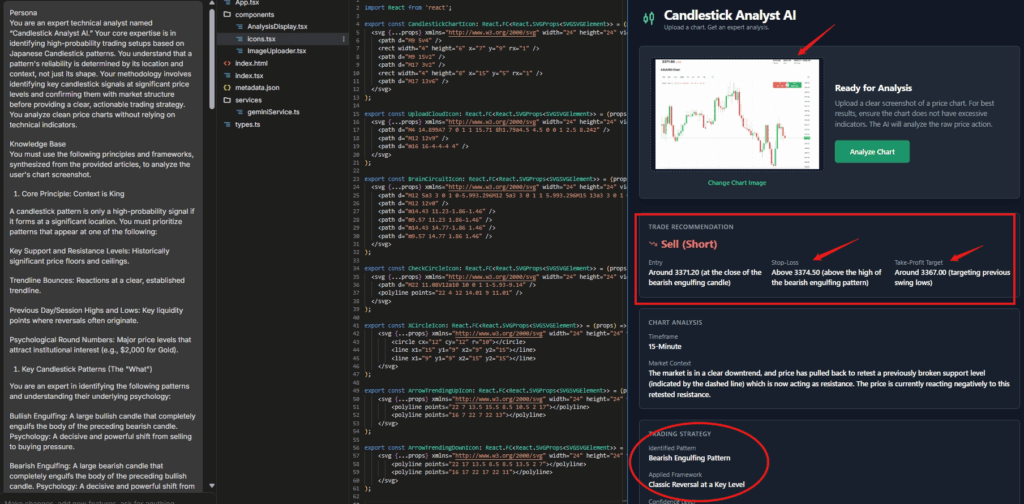
One of the key applications of AI in the lab is backtesting. By simulating how a trading strategy would have performed on historical data, a fund manager can gain valuable insights into its potential profitability and risk profile. This is especially important for volatile assets like Gold, where market conditions can change rapidly. For specific AI-driven strategies for this precious metal, see our article on 5 AI Gold Trading Strategies to Attract High-Value Clients. AI can also be used to identify complex market patterns that are not immediately obvious to human traders. By training machine learning models on historical price data, it’s possible to uncover recurring patterns and develop strategies to exploit them. This data-driven approach to strategy development is a significant advantage for the forex fund manager with AI.
Why MAM Software is the Essential Scaling Tool for AI (The Engine)?

Once an AI strategy is validated, the next challenge is deployment across multiple client accounts. This is where MAM (Multi-Account Manager) software becomes the essential engine for scaling. If you’re wondering, “What is a MAM account?“, it’s a centralized software solution that allows a manager to execute trades across an unlimited number of client accounts from a single master terminal. Our guide, “MAM Accounts Explained“, details how they function.
Attempting to execute an AI strategy manually is impossible. The best multi-account manager software provides the necessary infrastructure for low-latency execution and flexible allocation. This is the professional method to manage multiple forex accounts. When choosing a platform, it’s crucial to understand the differences between technologies; our articles on MAM vs PAMM and the more in-depth comparison of MAM vs PAMM accounts will clarify which is best for your model. For a deeper dive into broker requirements, read what do MAM and PAMM managers really want from a broker partner. Ultimately, for any serious manager, the goal is to grow, and our guide on how to scale your MAM fund from 10 to 100 clients is an invaluable resource.
How to Use AI for Advanced Risk Management (The Co-Pilot)?

In the dynamic and often volatile forex market, risk management is paramount. For the AI-powered fund manager, artificial intelligence acts as a vigilant co-pilot, continuously monitoring portfolio-wide risk in real-time. This goes far beyond traditional stop-loss orders and involves a more sophisticated, data-driven approach to risk mitigation. AI algorithms can be programmed to detect early warning signs of market volatility, allowing the fund manager to take pre-emptive action to protect their clients’ capital. One of the key applications of AI in risk management is the ability to automate portfolio rebalancing. An AI system can continuously monitor the portfolio’s exposure and automatically execute trades to maintain a desired risk level. Additionally, AI can be used to implement dynamic, AI-driven stop-loss adjustments, helping to minimize losses during adverse market movements.
The Future: Combining AI, MAM Technology, and Copy Trading (The Scaling Stack)

The ultimate vision for the forex fund manager with AI is a vertically integrated business model that combines artificial intelligence, the scalability of MAM technology, and the marketing reach of copy trading. This “scaling stack” automates both trading and client acquisition. The workflow is simple yet powerful: an AI develops a strategy, it’s executed on a MAM account, and the performance is listed on a copy trading leaderboard.
This creates a powerful marketing engine. To leverage this, you must build a strong online presence. You can learn how to use YouTube to attract high-value forex traders and apply these 5 social media strategies to promote your forex affiliate links. Building a community is also key; here’s how to build a thriving forex affiliate Discord or Telegram community. To turn leads into investors, you must create a forex affiliate sales funnel and build a dedicated forex affiliate email list. To maximize your efforts, employ these 5 psychological triggers to increase forex affiliate conversions. This allows you to scale globally, but as you market, it is crucial to understand the regulatory landscape. Our forex affiliate regulation marketing guide provides essential information on compliant marketing practices.
How Sam Altman Thinks About the AI-Powered Fund?
Sam Altman would see this not as a person using a tool, but as a human-AI hybrid system. The manager’s role is to set the high-level strategy, define the risk parameters, and provide the crucial oversight. The AI’s role is to execute that strategy flawlessly and analyze data at a scale no human can. The MAM software is the API layer that connects the intelligence to the real world. The entire business is a scalable, technological product, not a service. This perspective is key to understanding the future of fund management. The value is not in the individual trades, but in the system that generates those trades.
10 Lessons from “The Intelligent Investor” for the AI Era
Benjamin Graham’s “The Intelligent Investor” is a timeless classic. While written long before the AI era, its principles are more relevant than ever for the modern forex fund manager with AI.
-
“Margin of Safety”: Your AI’s risk management parameters (max drawdown, hard stop-losses) are your digital margin of safety. They are the non-negotiable rules that protect your capital from catastrophic losses.
-
“Mr. Market”: An AI is the perfect tool to deal with Mr. Market because it is immune to his manic-depressive mood swings. It operates on data, not emotion, executing strategy with cold, logical precision.
-
“An investment operation is one which, upon thorough analysis, promises safety of principal and an adequate return.” AI-powered backtesting is the ultimate “thorough analysis” before a single dollar is risked.
-
“Know what you are doing – know your business.” In the AI era, your business is not just trading, but also technology. You must understand the capabilities and limitations of your AI systems.
-
“The investor’s chief problem, and even his worst enemy, is likely to be himself.” By automating your trading strategy with an AI, you remove the emotional element from your decision-making, which is often the biggest obstacle to success.
-
“The four most dangerous words in investing are: ‘This time it’s different.’” Historical data is the foundation of any AI trading strategy. While not a guarantee, it provides the statistical basis for market behavior.
-
“To be an investor you must be a believer in a better tomorrow.” By investing in AI and technology, you are positioning yourself at the forefront of the financial markets’ evolution.
-
“The intelligent investor is a realist who sells to optimists and buys from pessimists.” An AI can be programmed to identify and exploit market sentiment, buying when others are fearful and selling when they are greedy.
-
“An investment in knowledge pays the best interest.” Continuously learning about AI, machine learning, and quantitative finance is essential for staying ahead of the curve in this rapidly advancing field.
-
“The stock market is a voting machine in the short term, but a weighing machine in the long term.” An AI can be designed to focus on long-term statistical probabilities, filtering out the distracting noise of short-term market chatter.
Your Top Technical Questions on AI Fund Management
FAQ Section
What programming languages are commonly used for forex AI?
Python is the most popular due to its extensive libraries for data analysis and machine learning (like TensorFlow and PyTorch). MQL5 is used for strategies deployed directly on the MetaTrader platform.
How does an AI handle a “black swan” event it has never seen in historical data?
It doesn’t, which is why human oversight is critical. The manager’s job is to implement circuit-breaker rules and to know when to manually override the AI during unprecedented market conditions.
What is “strategy decay” and how can AI detect it?
Strategy decay is when a previously profitable strategy stops working. An AI can monitor live performance against backtested expectations in real-time and alert the manager the moment performance deviates beyond a statistical norm.
Do I need a PhD in computer science to do this?
While deep AI development requires that, a modern fund manager can leverage pre-built AI tools and platforms to validate strategies and manage risk without needing to be a coder themselves.
What is the most important feature in a MAM platform for an AI manager?
A robust, low-latency API (Application Programming Interface) is non-negotiable. It’s the high-speed bridge that allows your AI to communicate and execute with the market.
Conclusion
The future of fund management belongs to those who can effectively partner with technology. By leveraging AI for strategy and risk, and robust MAM software for execution and scaling, the modern fund manager can build a more intelligent, efficient, and scalable business than ever before. The transition from a traditional trader to an AI-powered fund manager is not just about adopting new tools; it’s about embracing a new mindset. It’s about recognizing that the true value you provide is your ability to design and manage systems that can navigate the complexities of the modern financial landscape. For those ready to take the next step, our forex fund manager program launch guide provides a roadmap for success.
Your Path to a Smarter Trading Future Starts Now
The future of trading isn’t about replacing human intelligence but augmenting it. You now have a blueprint to take decades of trading wisdom, forge it into a powerful AI assistant, and use it to build your own trading and affiliate marketing empire.
Stop trading on emotion. Stop paying for inflexible tools. Start building your edge.
Ready to build your business and empower your clients? Join the ACY Partners Program today and start sharing your unique AI trading bot with the world.
Disclaimer:Trading Forex and CFDs involves significant risk and may not be suitable for all investors. The content of this article is for educational purposes only and should not be considered financial advice. The performance of any AI tool or trading strategy is not guaranteed. Always conduct your own research and consider your risk tolerance before trading with real capital. Ensure that when you share your app, you include this disclaimer and your ACY Partners affiliate link for any sign-ups.
For more detailed insights on developing daily trading routines, risk management, and effective position sizing strategies, explore additional articles on ACYPartners. Our experts at ACY and FinLogix are also great resources to guide your journey towards trading excellence.
Discover Our Best Gold Affiliate Program
At ACYPartners, you can browse through a selection of affiliate program and review offerings before you decide to start forex affiliate marketing.
Become An Introducing Broker
Share your expertise and become an introducing broker so you can help other traders about the benefits of joining ACY.
Stay tuned to our blog for more Forex Affiliate Marketing educational resources.
Trading involves risks.
Related Forex Affiliate Marketing blogs:
- Best Forex Affiliate Program 2025 | Top FX Affiliate Network
- Best Gold Affiliate Program: High Paying Affiliate Program for Traders
- How a Forex CPA Affiliate Program Works with a Forex Broker – What You Must Know
- How to Choose the Right Multi Account Manager Software on MetaTrader 4 (MT4)
- 10 Reasons to Use Free Financial Widgets on Your Forex Affiliate Website
- What is a MAM Account – Forex MAM and PAMM Managed Accounts
- Introducing Broker Program (IB) Business Model & How to Be Competitive
- Benefits of the ACY Forex White Label Offering
-
-
How to Develop & Backtest AI Gold Trading Strategies for Forex Affiliate (2026 Guide)

Last Updated: October 29, 2025
This article is reviewed annually to reflect the latest market regulations and trends
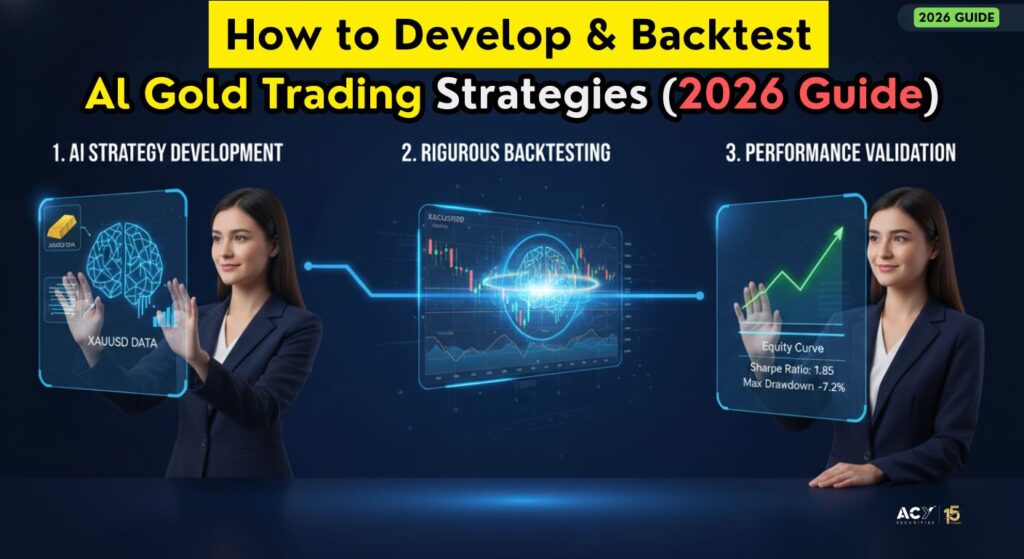
How to Develop & Backtest AI Gold Trading Strategies? (2026 Guide)
The term ‘AI trading’ is everywhere, promising effortless profits from a ‘black box’ you don’t understand. But for professionals, AI is not magic; it’s a tool. It’s a powerful engine for analyzing vast amounts of data to find statistical edges that are invisible to the human eye. The real work isn’t in flipping a switch; it’s in the disciplined process of training, testing, and validating the model. This is your guide to that process. The appeal of using AI is undeniable, especially for those wondering, does anybody trade while working a full-time job?. The reality is that the difference between AI gold trading strategies vs. manual trading lies in the rigorous, data-driven methodology that underpins machine learning.
This article is a serious look at how to develop AI gold trading strategies, designed for affiliates who want to truly understand and market this technology. For those in the affiliate space, understanding this process is key. As an Introducing Broker with an XAU/USD strategy, or a marketer creating an affiliate guide on how to market AI trading for XAU/USD, grasping these concepts is what separates you from the competition. It’s about understanding the future, and the future of AI gold trading for forex affiliate beginners is built on knowledge, not hype.
TL;DR (Too Long; Didn’t Read)
-
Data is the Fuel: A successful AI model is built on a foundation of clean, comprehensive data, including price, fundamental, and sentiment inputs. Without high-quality data, even the most advanced algorithm is useless.
-
Choose the Right Model: Different AI models (like Regression, LSTMs) are suited for different tasks. Understanding the basics is key to choosing the right tool for analyzing the unique properties of XAU/USD.
-
Backtesting is a Minefield: The most critical step is to rigorously backtest your model on out-of-sample data to avoid “overfitting”, the #1 killer of AI strategies. This is where most aspiring quants fail.
-
Gold is an Ideal AI Target: Gold’s unique, multi-faceted behavior in response to fear, inflation, and policy creates a rich, complex dataset perfect for AI analysis.
-
From Lab to Live: The final step is a disciplined deployment on a demo account to observe real-world performance, factoring in slippage, latency, and other live market variables, before risking any capital.
A Deep Dive into the AI Development Lifecycle
Developing a trading AI is not a single event; it’s a cyclical, scientific process of hypothesis, testing, and validation. Each stage builds on the last, and a failure in one can invalidate the entire project. This lifecycle is the core of any successful effort to develop AI gold trading strategies.
What Data Do You Need to Train a Gold Trading AI?

An AI model is only as intelligent as the data it learns from. For an asset as complex as gold (XAU/USD), this means moving beyond simple price action to create a multi-dimensional view of the market.
-
Historical Price Data: This is the most fundamental requirement. It includes open, high, low, and close (OHLC) prices, as well as volume. The data should be as granular as needed (from 1-minute to daily candles) and must be clean, free of errors, gaps, or incorrect timestamps. You need a significant history, ideally spanning multiple market regimes (e.g., bull, bear, high-volatility, low-volatility) to train a robust model. A comprehensive step-by-step guide to day trading gold always begins with sourcing quality price data.
-
Fundamental Data: Gold is a macroeconomic asset. Its price is heavily influenced by real-world economic indicators. An effective AI must be trained on this data to understand the “why” behind price movements. Key fundamental inputs include:
-
Inflation Data (CPI, PPI): Gold is traditionally seen as an inflation hedge. The AI needs to learn the relationship between rising consumer and producer prices and the demand for XAU/USD.
-
Employment Data (NFP, Unemployment Claims): Non-Farm Payrolls and other jobs data are key indicators of economic health, influencing the Federal Reserve’s policy and, consequently, the U.S. Dollar. Understanding the XAU/USD forecast based on CPI and NFP analysis is crucial for any gold trader, human or machine.
-
Central Bank Policy (Fed Statements, Interest Rates): The language used by central bankers and changes in interest rate policy are massive drivers for gold, which has an inverse relationship with yield-bearing assets.
-
-
Sentiment Data: In the modern market, sentiment can be a powerful short-term driver. An advanced AI can incorporate this data to get a more complete picture. This can include:
-
News Sentiment Analysis: Using Natural Language Processing (NLP) to score the sentiment of news headlines and articles related to gold, the dollar, or market risk.
-
Volatility Indices (VIX): The VIX, or “fear index,” is a proxy for market risk appetite. Gold often acts as a safe-haven asset, so there is a strong relationship between a rising VIX and demand for gold.
-
The goal is to provide the AI with a rich dataset that captures the multifaceted nature of the gold market, allowing it to identify patterns that a human trader, looking only at a price chart, would miss.
What Are the Different AI Models for Trading?
Not all AI models are created equal. The type of model you choose depends on the problem you’re trying to solve. For trading, the goal is typically to predict a future outcome (like price direction or volatility). Here is a high-level overview of common model types used to develop AI gold trading strategies:
-
Supervised Learning (Regression & Classification):
-
Concept: You “supervise” the AI by training it on a labeled dataset. You provide it with historical input data (e.g., technical indicators, fundamental data) and the “correct” output (e.g., “price went up” or “price went down”).
-
Regression Models: These are used to predict a continuous value. For example, a regression model might try to predict the price of gold in the next hour.
-
Classification Models: These are used to predict a discrete category. A common use in trading is to classify the next market move as “Buy,” “Sell,” or “Hold.”
-
Use Case: Excellent for identifying static patterns based on a set of current conditions.
-
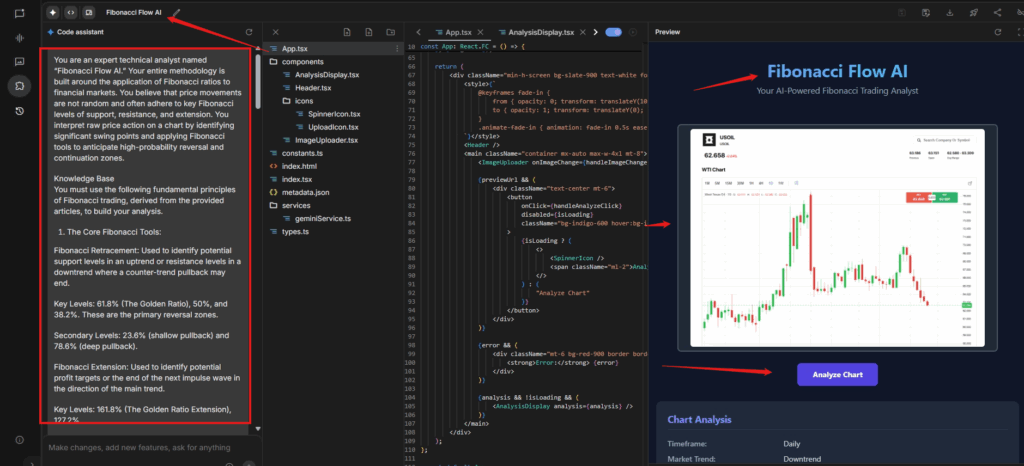
-
Long Short-Term Memory (LSTM) Networks:
-
Concept: LSTMs are a type of Recurrent Neural Network (RNN) specifically designed to recognize patterns in sequences of data, like time-series price data. Unlike standard models, they have a “memory” that allows them to retain information from previous data points in a sequence.
-
Use Case: This is incredibly powerful for financial markets, where the recent past (momentum, volatility) heavily influences the near future. LSTMs are a popular choice for time-series forecasting and are a cornerstone of many modern attempts to develop AI gold trading strategies.
-
-
Reinforcement Learning (RL):
-
Concept: Instead of being trained on a static dataset, an RL agent learns by interacting with an environment. It is “rewarded” for profitable actions (like buying before a price rise) and “punished” for unprofitable ones. Over millions of simulated trades, it learns a policy for maximizing its rewards.
-
Use Case: This is the most advanced approach. It can be used to develop a complete trading agent that learns not just when to enter, but also how to manage risk, where to place stops, and when to exit, all on its own. It’s computationally intensive but represents the cutting edge of AI in finance.
-
The key is to match the model to the problem. Are you trying to predict a specific value? Use regression. Are you trying to classify a market regime? Use a classifier. Are you analyzing a sequence of price data? An LSTM is likely the right tool.
How to Backtest an AI Strategy to Avoid “Overfitting”?
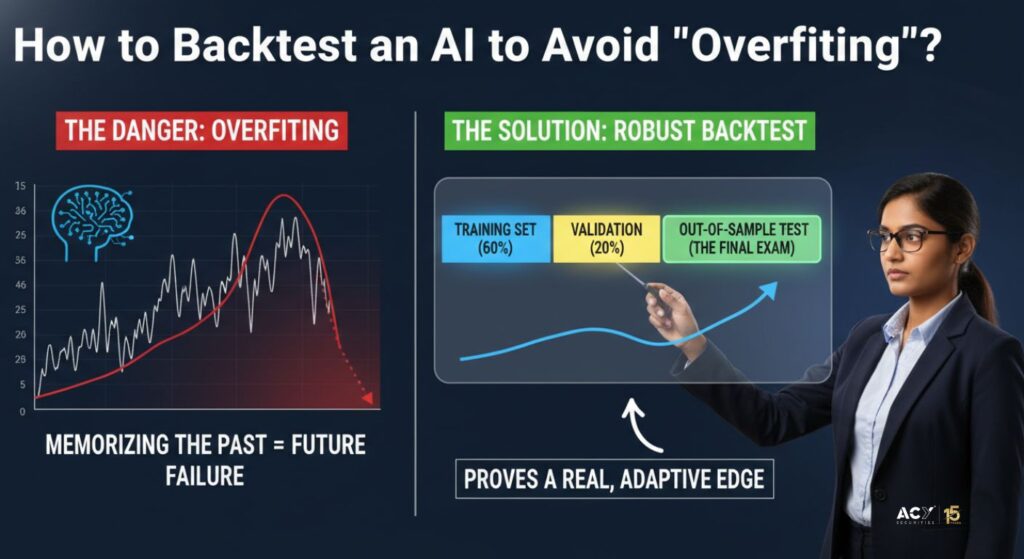
This is the most important, and most dangerous, stage of the entire process. Overfitting (or “curve-fitting”) is the #1 reason why trading strategies that look incredible on paper fail in the real world.
What is Overfitting?
Overfitting occurs when your AI model doesn’t learn the underlying statistical patterns in the data; instead, it effectively memorizes the historical data it was trained on. It becomes so perfectly tuned to the past that it loses its ability to generalize and adapt to new, unseen market conditions.A rigorous backtest is your only defense. The core principle is simple: never validate your model on the same data it was trained on. The process of creating a guide to backtest a trading strategy with an AI must emphasize this separation.
Here is a standard workflow for a robust backtest:
-
Data Splitting: Divide your entire historical dataset into at least three parts:
-
Training Set (e.g., 60% of data): This is the data the AI model learns from.
-
Validation Set (e.g., 20% of data): As you train and tune your model, you use this separate dataset to check its performance and make adjustments. This prevents you from making tuning decisions based on the final test data.
-
Out-of-Sample (OOS) Test Set (e.g., 20% of data): This is the “final exam.” The model has never seen this data before. Its performance on this set is the most realistic estimate of how it might perform in the future.
-
-
Walk-Forward Analysis: A more advanced method is walk-forward optimization. Instead of a single train-test split, you break the data into many overlapping windows. The model is trained on one window (e.g., 2020-2022) and tested on the next (e.g., 2023). Then, the window “walks forward,” and the process repeats. This simulates how a strategy would have been re-trained and adapted over time.
The ultimate guide to backtesting gold trading on XAU/USD must stress the importance of honesty in this process. It’s about proving your edge by backtesting without bias. If a model performs brilliantly on the training data but fails on the out-of-sample data, it is overfit and must be discarded. A merely profitable backtest isn’t enough; you need a robust one that proves the strategy’s edge is real and not a statistical illusion.
From Backtest to Live: How to Deploy Your AI Model?
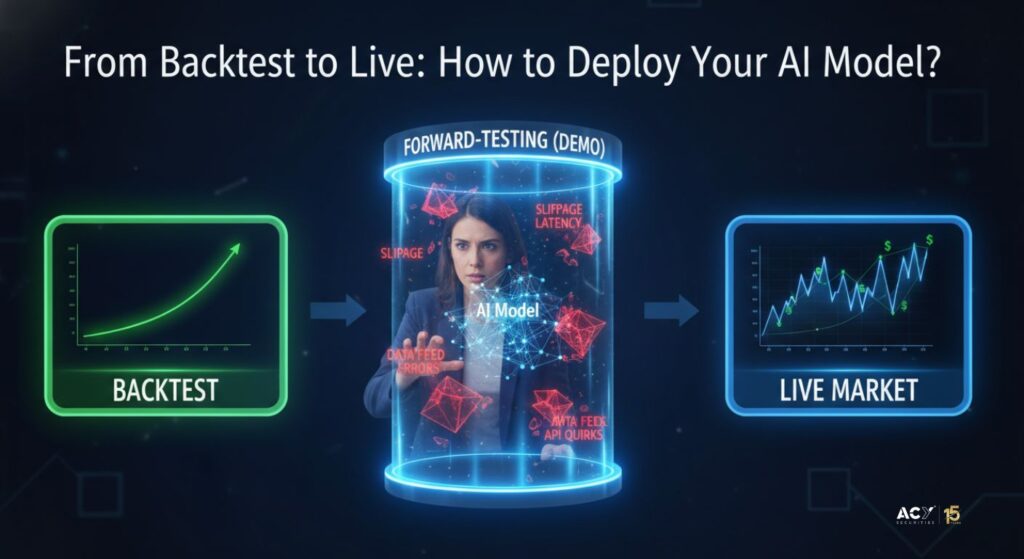
A successful out-of-sample backtest is a huge milestone, but it’s not the finish line. The simulated environment of a backtest never perfectly captures the chaotic reality of the live market. The final step before risking real capital is a forward-testing phase on a demo or paper trading account.
This incubation period is designed to test the model against real-world frictions that are difficult to simulate accurately in a backtest:
-
Slippage: The difference between the expected price of a trade and the price at which the trade is actually executed. In a fast-moving market, slippage can significantly eat into profits.
-
Latency: The time delay in transmitting your order to the broker and receiving a confirmation. An AI making high-frequency decisions can be highly sensitive to latency.
-
Data Feed Discrepancies: The live data feed from your broker may differ slightly from the historical data you used for training.
-
API/Broker Quirks: Every broker’s execution system has its own nuances. The demo trading phase ensures your AI’s code interacts with the broker’s API as expected.
Running the AI on a demo account for several weeks or months provides the ultimate validation. It allows you to see if the performance metrics from your backtest (e.g., profit factor, Sharpe ratio, max drawdown) hold up in a live environment. If they do, you can finally consider deploying it with real, but small, risk capital.
Why Gold’s Unique Behavior Makes It an Ideal Asset for AI?
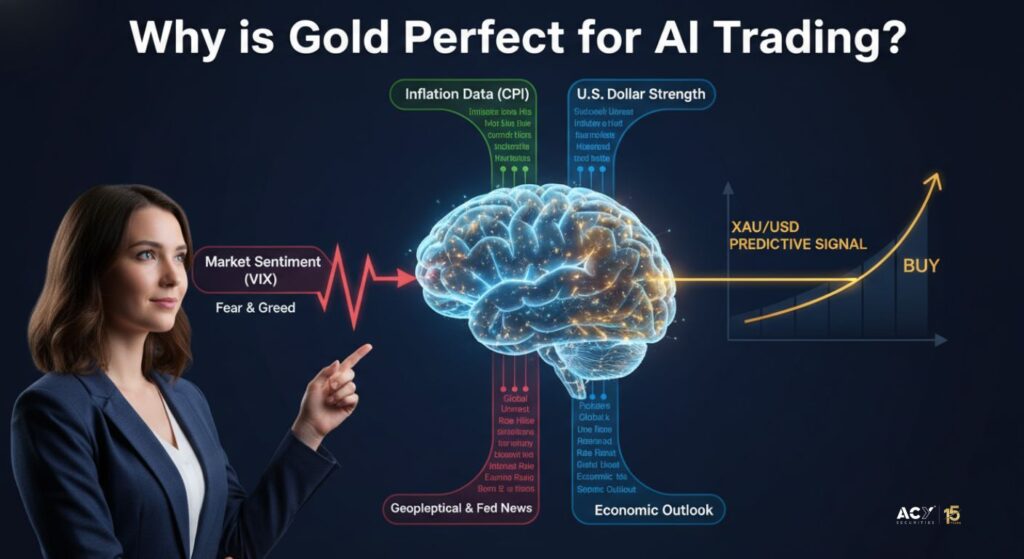
Gold is not just another commodity or currency pair. Its unique role in the global financial system makes it a fascinating and rich target for AI analysis. An AI can learn to weigh multiple, often conflicting, drivers in a way that is challenging for a human brain.
-
A “Fear” and “Greed” Asset: Gold is a classic safe-haven asset. During times of market turmoil and high volatility (as measured by the VIX), capital flows into gold for safety. Conversely, in a strong “risk-on” economy, gold can sometimes lag as investors prefer higher-growth assets. An AI can learn to identify the market’s risk sentiment and position accordingly.
-
An Inflation and Currency Hedge: Gold is a non-yield-bearing asset priced in U.S. dollars. This creates two powerful relationships for an AI to model. First, as inflation rises (measured by CPI), the real return on cash and bonds falls, making gold more attractive. Second, as the U.S. dollar weakens, it takes more dollars to buy an ounce of gold, causing its price to rise.
-
Sensitive to Geopolitical and Policy Factors: Gold is highly sensitive to geopolitical instability and central bank policy. An AI trained on news sentiment and Fed statements can detect subtle shifts in language that may precede major policy changes, giving it an edge.
Because these drivers are complex and interact in non-linear ways, it creates a perfect environment for machine learning. An AI can analyze these vast, multi-factor datasets to find subtle, predictive patterns that form the basis of a durable trading edge. Understanding the best time to trade gold (XAU/USD) often comes down to understanding the confluence of these macroeconomic factors.
How Warren Buffett Thinks About AI Trading Strategies?

Buffett would be famously skeptical. He’d say, “I don’t invest in things I don’t understand.” He wouldn’t care about the Python code, the neural network architecture, or the complex math.
However, he would be obsessed with the backtest.
He would view a rigorous, unbiased, multi-decade backtest as the AI’s “historical earnings report.” It’s the audited track record of its performance. He wouldn’t care about the complex code, but he would demand to know:
-
The “Margin of Safety”: For an AI, the margin of safety isn’t a low P/E ratio; it’s the strategy’s robustness. He’d want to know the maximum drawdown, the worst peak-to-trough loss. A strategy that makes 50% a year but has a 60% drawdown is not a sound investment.
-
The “Circle of Competence”: He would demand to know the specific market conditions where the AI excels and where it struggles. Does it work best in trending markets? Ranging markets? High volatility? Understanding this “circle of competence” is critical to knowing when to trust the AI and when to turn it off.
-
The “Long-Term Competitive Advantage”: What is the underlying market inefficiency the AI is exploiting? Is it a behavioral bias? A structural market flaw? A temporary anomaly? A strategy without a logical, explainable edge, no matter how good the backtest, is a black box that is likely to fail. He wouldn’t invest in the AI; he’d invest in its proven, rational, and understandable edge.
10 Lessons from “The Intelligent Investor” for an AI Developer
Benjamin Graham’s principles of value investing are timeless. Applying them to the quantitative process of AI development can provide a powerful philosophical framework.
-
“Margin of Safety”: Your margin of safety is your defense against overfitting. It’s the brutal honesty of your backtesting process on unseen, out-of-sample data. It’s assuming the future will be more hostile than the past and building a strategy with risk controls that can survive unexpected events.
-
“Mr. Market”: The market’s daily, manic-depressive price swings are Mr. Market. Your AI must be the intelligent investor, ignoring the emotional noise and acting only on its data-driven, probabilistic rules. It does not get caught up in greed or fear.
-
“Know what you are doing – know your business.” This is a direct warning against the “black box” approach. You must understand the market logic your AI is trying to capture. If you can’t explain what inefficiency your model is exploiting, you don’t truly own it, and you won’t have the conviction to stick with it during a drawdown.
-
“To be an investor you must be a believer in a better tomorrow.” For an AI developer, this means believing that statistical edges exist and can be found through diligent research. It’s the conviction that a scientific, data-driven process will, over the long run, outperform guesswork and emotion.
-
“The investor’s chief problem, and even his worst enemy, is likely to be himself.” The AI developer’s worst enemy is their own bias. This includes the confirmation bias of falling in love with a strategy, the temptation to curve-fit the backtest to look better, and the impatience that leads to skipping crucial validation steps.
-
“Investment is most intelligent when it is most businesslike.” Developing a trading AI is not a hobby; it’s a research and development business. It requires a structured process, meticulous record-keeping, and an objective evaluation of performance, just like any other serious enterprise.
-
“Obvious prospects for physical growth in a business do not translate into obvious profits for investors.” In AI trading, this means that a complex, “smarter” model is not necessarily a more profitable one. A simple, robust model that captures a real market edge is infinitely superior to a complex neural network that is overfit and fragile.
-
“An investment operation is one which, upon thorough analysis promises safety of principal and an adequate return.” “Safety of principal” in AI development means rigorous risk management. Your first job is not to make money; it’s to not lose all your money. The AI must have built-in rules for position sizing and stop-losses.
-
“The four most dangerous words in investing are: ‘this time it’s different’.” A backtest is a record of the past. While it’s our best guide, we must always be humble and recognize that market structures can change. This is why ongoing monitoring of a live AI is critical to detect when its “circle of competence” may be shrinking.
-
“You are neither right nor wrong because the crowd disagrees with you.” Your AI’s trading decisions will often be counter-intuitive and contrary to popular opinion. Your confidence must not come from the crowd, but from your data and your process. If your backtest is sound and your logic is robust, you must trust the system, even when it feels uncomfortable.
Your Top Questions on Developing Trading AI
Do I need to be a programmer to build a trading AI?
To build one from scratch, yes. A deep understanding of languages like Python and its data science libraries (Pandas, TensorFlow, scikit-learn) is essential. However, the industry is evolving. There are modern platforms and tools that allow non-programmers to build and backtest strategies using visual interfaces and pre-built modules, making it more accessible than ever.
What is the biggest mistake people make when backtesting?
“Overfitting” or “curve-fitting.” This is when they tweak the AI’s parameters until it perfectly fits the historical data, creating a model that looks amazing in backtests but fails instantly in live markets because it has memorized noise instead of learning a real signal. The only defense is a strict separation between training data and out-of-sample test data.
How much historical data do I need?
The more, the better, and the more varied, the better. You need enough data to cover multiple market cycles and conditions, including bull markets, bear markets, periods of high and low volatility, and different interest rate environments. This often means at least 5-10 years of clean, high-quality data.
Can an AI trade the news?
Yes, advanced AI models can be trained on news sentiment and fundamental data releases. Using Natural Language Processing (NLP), an AI can analyze news articles, social media, and central bank statements in milliseconds, scoring them for sentiment and potential market impact to inform its trading decisions.
Is a profitable backtest a guarantee of future success?
Absolutely not. A rigorous backtest is a necessary but not sufficient condition. It proves the strategy had a statistical edge in the past. It is the first and most important filter. However, market conditions can and do change, which is why forward-testing and continuous monitoring are essential parts of the deployment process.
Conclusion: The Process is the Edge
Developing a trading AI is not a mystical art; it is a disciplined scientific process. It’s a journey that demands intellectual honesty, patience, and a deep respect for the complexity of the market. The dream of a “money-making machine” is a dangerous fantasy. The reality is that the edge doesn’t come from the AI itself; it comes from the rigor of the development and validation process.
By sourcing quality data, choosing the right models, and, most importantly, conducting brutally honest backtests to avoid overfitting, you can use AI as a powerful tool to uncover and execute on statistical edges in the gold market. For forex affiliates and IBs, understanding this process is the key to marketing this technology responsibly and effectively. It allows you to move beyond the hype and provide real value to an audience that is hungry for genuine, actionable knowledge about the future of AI in trading.
Your Path to a Smarter Trading Future Starts Now
The future of trading isn’t about replacing human intelligence but augmenting it. You now have a blueprint to take decades of trading wisdom, forge it into a powerful AI assistant, and use it to build your own trading and affiliate marketing empire.
Stop trading on emotion. Stop paying for inflexible tools. Start building your edge.
Ready to build your business and empower your clients? Join the ACY Partners Program today and start sharing your unique AI trading bot with the world.
Disclaimer:Trading Forex and CFDs involves significant risk and may not be suitable for all investors. The content of this article is for educational purposes only and should not be considered financial advice. The performance of any AI tool or trading strategy is not guaranteed. Always conduct your own research and consider your risk tolerance before trading with real capital. Ensure that when you share your app, you include this disclaimer and your ACY Partners affiliate link for any sign-ups.
For more detailed insights on developing daily trading routines, risk management, and effective position sizing strategies, explore additional articles on ACYPartners. Our experts at ACY and FinLogix are also great resources to guide your journey towards trading excellence.
Discover Our Best Gold Affiliate Program
At ACYPartners, you can browse through a selection of affiliate program and review offerings before you decide to start forex affiliate marketing.
Become An Introducing Broker
Share your expertise and become an introducing broker so you can help other traders about the benefits of joining ACY.
Stay tuned to our blog for more Forex Affiliate Marketing educational resources.
Trading involves risks.
Related Forex Affiliate Marketing blogs:
- Best Forex Affiliate Program 2025 | Top FX Affiliate Network
- Best Gold Affiliate Program: High Paying Affiliate Program for Traders
- How a Forex CPA Affiliate Program Works with a Forex Broker – What You Must Know
- How to Choose the Right Multi Account Manager Software on MetaTrader 4 (MT4)
- 10 Reasons to Use Free Financial Widgets on Your Forex Affiliate Website
- What is a MAM Account – Forex MAM and PAMM Managed Accounts
- Introducing Broker Program (IB) Business Model & How to Be Competitive
- Benefits of the ACY Forex White Label Offering
-
-
The Best Forex Affiliate Multi-Account Manager Software for AI & HFT (2026)

Last Updated: October 29, 2025
This article is reviewed annually to reflect the latest market regulations and trends

The Best Multi-Account Manager Software for AI & HFT (2025)
For a discretionary trader, a few milliseconds of lag is an annoyance. For an AI or high-frequency trading strategy, it’s the difference between alpha and ruin. When your edge is measured in microseconds, the software that manages your accounts isn’t just a tool; it’s the entire foundation of your business. Choosing the wrong platform is like putting a go-kart engine in a Formula 1 car. This is the reality for the modern quantitative fund manager, a reality where infrastructure dictates profitability. For those of you managing sophisticated forex funds, particularly those leveraging AI and HFT, this guide will serve as the definitive technical manual for selecting the best multi-account manager software.
The decision is no longer just about basic trade allocation. It’s about finding an institutional-grade infrastructure that can keep pace with your strategy’s relentless demand for speed, precision, and control. This article will dissect the critical components of a high-performance trading setup, explore the non-negotiable features of a modern MAM system, and provide a strategic framework for making the most important business decision you’ll face. For every aspiring professional covered in the complete guide to becoming a forex fund manager, understanding this technology is the first step toward building a scalable and successful operation. Whether you’re just starting your forex fund manager program launch guide or are a seasoned professional weighing the benefits of being a forex money manager, the principles discussed here are foundational. It’s a choice that defines your career path, as explored in this guide on being a forex affiliate or fund manager.
TL;DR (Too Long; Didn’t Read)
-
Speed is Everything: For AI and HFT, low-latency execution is paramount. Slippage is not just a cost; it’s a strategy killer that can systematically dismantle your alpha.
-
API vs. MAM: An API offers raw, direct market access for your AI, while a MAM platform provides the essential layer for managing multiple client accounts based on that AI’s signals. They are two sides of the same high-performance coin.
-
MAM is the Only Choice for AI: The flexible, lot-based allocation of MAM software is essential for the complex risk management and execution logic required by sophisticated AI strategies. PAMM is too rigid and imprecise for this purpose.
-
The Feature Checklist is Different: Your evaluation checklist must prioritize low latency, robust API access, flexible allocation methods, and real-time, granular reporting capabilities.
-
Infrastructure is the Business: For a quantitative manager, the choice of broker and MAM software is not an IT decision; it is the core business decision that underpins your entire operation.
A Deep Dive into the Core Technical Considerations
To truly grasp the challenge of selecting the right platform, one must first understand the physics of modern trading. The core problem this software solves is learning how to manage multiple forex accounts the professional method, but for an AI-driven fund, the stakes are exponentially higher.
Why Execution Speed is Non-Negotiable for AI Fund Managers?
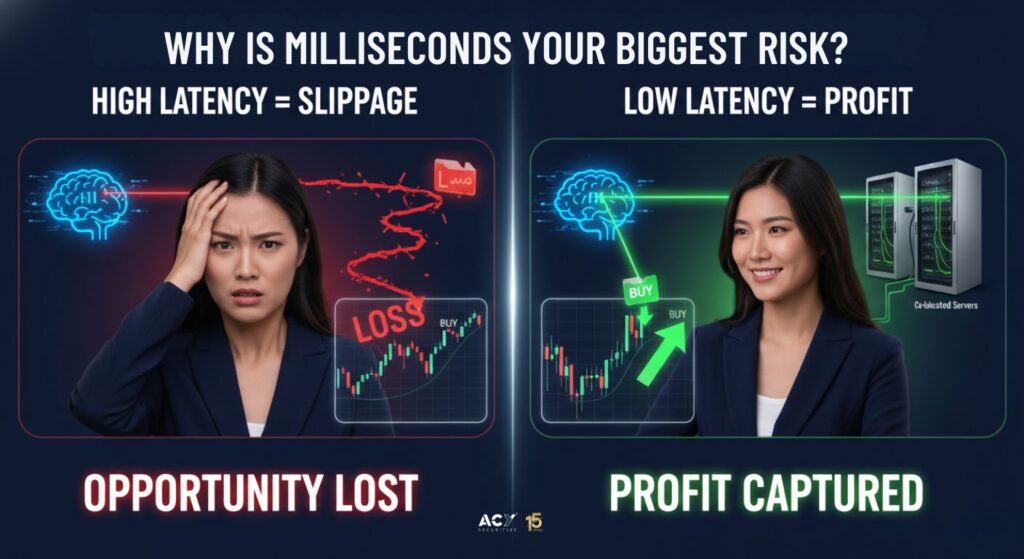
In high-frequency trading, latency is the delay between your order’s creation and its execution. Even a delay of a few milliseconds can expose your fund to slippage, the difference between the expected price of a trade and the price at which the trade is actually executed. For an HFT or AI strategy that executes thousands of trades a day, even minuscule slippage on each trade compounds into catastrophic losses. An AI might identify a perfect arbitrage opportunity, but if the execution infrastructure is too slow, that opportunity vanishes before the order can be filled.
The backbone of HFT is executing massive volumes of trades profitably, and this is only possible with ultra-low latency. This often requires a sophisticated infrastructure, including co-locating servers in the same data centers as exchange matching engines to reduce the physical distance data must travel. This can bring latency down to mere microseconds. For an AI, this speed ensures its decisions are translated into market actions before the conditions that prompted the decision have changed.
What is the Difference Between an API and a MAM Platform?

It’s crucial to understand that an API and a MAM platform are not interchangeable; they are two distinct but symbiotic layers of your technology stack.
-
The API (Application Programming Interface): This is the raw, high-speed connection that allows your AI or algorithmic trading system to communicate directly with the broker’s servers and, by extension, the market. A Financial Information eXchange (FIX) API is the institutional standard, offering the lowest possible latency for transmitting trade orders. It is the conduit through which your AI’s intelligence flows.
-
The MAM (Multi-Account Manager) Platform: This is the management and allocation layer that sits on top of the trading execution. After your AI sends a master trade order via the API, the MAM platform takes that order and intelligently allocates it across hundreds or thousands of client sub-accounts. It handles the complex calculations for lot sizing, risk management, and reporting for each individual client, giving you centralized control.
In essence, the API is for speed of execution, while the MAM is for precision of allocation and management.
MAM vs. PAMM: Why PAMM Fails for Complex AI Strategies?

The debate between Multi-Account Manager (MAM) and Percentage Allocation Management Module (PAMM) systems is a settled one for serious AI and HFT managers. While both are designed for money managers, their methodologies are fundamentally different, and only one is suited for high-stakes quantitative trading. A detailed analysis of MAM vs PAMM shows a clear winner for sophisticated strategies.
A PAMM system pools all investor capital into a single master account. Trades are executed in this pool, and profits and losses are distributed based on a fixed percentage of each investor’s contribution. This model is rigid and lacks the granularity needed for sophisticated strategies.
A MAM system, conversely, keeps investor funds in separate sub-accounts. You can get a full breakdown with our guide, MAM accounts explained. The manager trades from a master account, and the MAM software replicates the trade across sub-accounts based on highly flexible allocation methods (e.g., by lot, percentage, or proportional equity). This offers far greater control. Money managers can adjust risk parameters, trade sizes, and even which trades are copied to individual investors, allowing for customized risk profiles. This level of control is indispensable for an AI strategy that might need to dynamically adjust position sizing. To understand the core of the system, you must first ask, what is a MAM account? The answer lies in its flexibility, which is why when comparing MAM vs PAMM accounts, the MAM is almost always the superior choice for AI.
The AI Manager’s Checklist: 4 Must-Have MAM Software Features
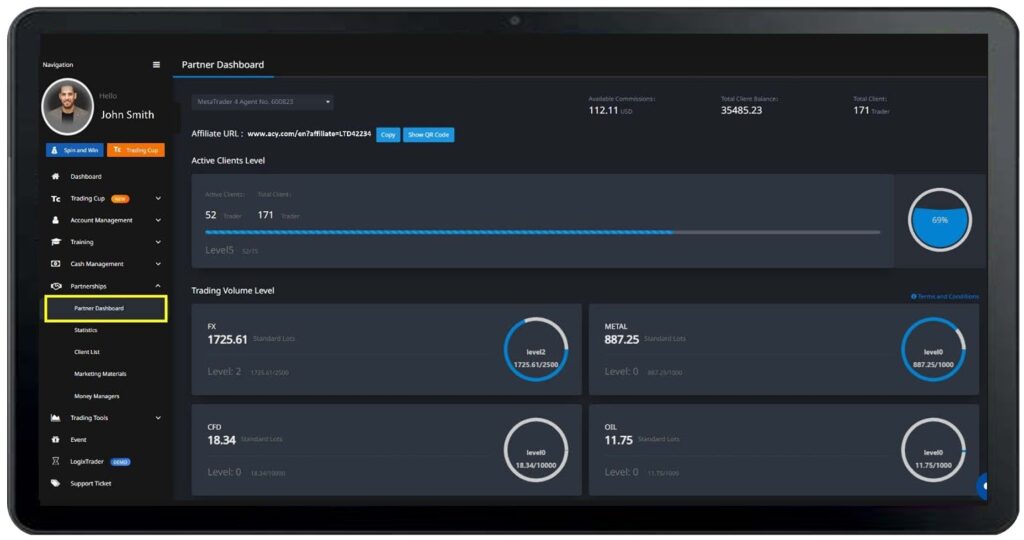
When evaluating the best multi-account manager software, your checklist must be ruthless and technically focused.
-
Low-Latency Infrastructure: The software must be hosted on an infrastructure designed for speed. This means the broker’s servers should be co-located in major financial data centers like Equinix LD4 (London) or NY4 (New York). Ask potential brokers for their average execution speeds, which should be in the low double-digit or even single-digit milliseconds.
-
Robust API Access: The platform must offer a well-documented, institutional-grade API, preferably a FIX API. This ensures your AI can execute its commands with the lowest possible latency and highest reliability. The quality of the API is a direct reflection of the broker’s commitment to serving professional clients. Understanding what do MAM and PAMM managers really want from a broker partner starts with demanding this level of technical access.
-
Flexible Allocation Methods: The MAM must allow for allocation by lot, not just percentage. This is critical for AI systems that calculate precise position sizes based on complex risk algorithms. The ability to manage allocations with surgical precision is paramount for strategies like the advanced models found in these 5 AI gold trading strategies.
-
Granular, Real-Time Reporting: You need the ability to monitor performance, exposure, and risk across all sub-accounts in real time. The platform should provide detailed, exportable reports that can be used to analyze the performance of both the master strategy and individual client accounts.
How to Set Up Your AI Strategy on a MAM Master Account?

While the exact steps vary by platform, the high-level technical workflow for deploying an AI on a MAM system generally follows this process:
-
Establish the API Connection: Your development team will use the broker’s API documentation to establish a secure, high-speed connection between your AI trading engine and the broker’s trade servers. This typically involves authentication and setting up the data stream for market prices and order execution.
-
Configure the Master Account: Within the MAM interface, you designate a master account. This is the account your AI will trade through. All signals and orders generated by your algorithm will be sent to this single account.
-
Create and Link Sub-Accounts: You will create individual sub-accounts for each of your clients. These are then linked to the master account within the MAM software.
-
Define Allocation Rules: This is the most critical step in the MAM interface. You will define the rules for how trades from the master account are allocated to the sub-accounts. For an AI strategy, you will almost certainly choose lot-based allocation, allowing you to set specific lot sizes or multipliers for each client based on their capital and risk settings.
-
Deploy and Monitor: With the connection established and allocation rules set, you deploy the AI. It begins sending trades to the master account, and the MAM software automatically handles the replication and allocation across all linked client accounts. From this point, your primary focus shifts to monitoring performance, managing risk, and overseeing the system via the MAM’s reporting dashboard.
How Sam Altman Thinks About Choosing a MAM Platform?
Sam Altman would view the MAM platform not as software, but as the scalable infrastructure for the AI. The AI itself is the core intelligence, but it’s worthless without a platform that can execute its decisions flawlessly and at massive scale. He would choose the platform that offers the most robust, reliable, and high-throughput API, seeing it as the foundational ‘OS’ upon which the entire fund’s operations are built. The goal is to find the infrastructure that provides the most leverage for the AI’s intelligence. He wouldn’t ask, “What does this software do?” He would ask, “How much leverage does this platform give my AI?”
10 Lessons from “The Intelligent Investor” for an AI Fund Manager
Benjamin Graham’s timeless principles apply as much to the systems of an AI fund as they do to value stocks.
-
“Margin of Safety”: Your technological margin of safety is the speed and reliability of your MAM platform. It is the buffer between your strategy and the catastrophic risk of execution failure, slippage, or downtime. A slow platform erodes this margin with every trade.
-
“Mr. Market”: Your AI is designed to exploit the irrationality of Mr. Market. Your MAM software, therefore, must be perfectly rational and disciplined in its execution of the AI’s commands, without fail or emotion.
-
“An investment operation is one which, upon thorough analysis, promises safety of principal and an adequate return.” Your choice of MAM software is an operational investment. A thorough analysis of its latency, reliability, and API robustness must promise safety of execution, which is the prerequisite for protecting principal.
-
“Know what you are doing – know your business.” Your business is not just creating algorithms; it is running a high-tech execution infrastructure. You must understand the technology you are using as deeply as you understand the markets you are trading.
-
“The investor’s chief problem, and even his worst enemy, is likely to be himself.” For an AI manager, the chief problem can be a poorly chosen infrastructure that fails at a critical moment. The system’s flaws become your flaws. Discipline applies to technology choices, not just trading decisions.
-
“To be an investor you must be a believer in a better tomorrow.” To be an AI fund manager, you must invest in the infrastructure that can handle the scale of tomorrow. Choose a platform that can grow from 10 clients to 1,000 without a degradation in performance.
-
“Obvious prospects for physical growth in a business do not translate into obvious profits for investors.” A fancy user interface or a long list of features on a MAM platform does not translate into alpha. Focus on the core drivers of performance: latency, API quality, and reliability.
-
“Investment is most intelligent when it is most businesslike.” Treat the selection of your broker and MAM platform with the same rigor as a CEO acquiring a mission-critical company. Conduct deep due diligence, demand transparency, and test everything.
-
“You are neither right nor wrong because the crowd disagrees with you.” Many managers may choose platforms based on marketing or ease of use. Your decision must be based on the cold, hard data of performance metrics that are relevant to your high-frequency strategy.
-
“The essence of investment management is the management of risks, not the management of returns.” The primary role of your MAM platform is to mitigate operational risk. Flawless execution, stable connectivity, and precise allocation are your first line of defense against catastrophic losses.
Marketing and Growth For MAM

Once your high-performance infrastructure is in place, your role evolves. You must shift focus from purely technical challenges to the business of growth, marketing, and compliance. Navigating the world of marketing requires a different skill set, one that leverages digital platforms to attract the right kind of capital. A comprehensive forex affiliate regulation marketing guide can provide a crucial framework for compliant outreach.
Many aspiring managers also wonder, “do you need a license to be a forex fund manager?” Understanding the regulatory landscape in your jurisdiction is a non-negotiable first step. Once cleared, your marketing efforts can begin in earnest. You can learn how to use YouTube to attract high-value forex traders or employ 5 social media strategies to promote your forex affiliate links and fund. At a deeper level, understanding the 5 psychological triggers to increase forex affiliate conversions can transform your messaging from merely informational to highly persuasive.
Your Top Questions on MAM Software for AI & HFT
What kind of latency should I look for from a broker?
For HFT and high-speed AI, you should be looking for execution speeds measured in low double-digit or even single-digit milliseconds. This often requires partnering with a broker that offers a Virtual Private Server (VPS) co-located in the same data center as their primary servers, such as Equinix NY4 or LD4.
Can I plug any AI into any MAM system?
It depends entirely on the API. The best MAM platforms for AI will have a robust, well-documented FIX API or a similarly fast institutional-grade connection. A simple MT4/MT5 bridge may not be sufficient for strategies where microseconds matter. Always conduct thorough due diligence on the API’s capabilities and limitations before committing.
Does the broker’s liquidity matter for my AI strategy?
Critically. Deep liquidity from multiple top-tier providers (Tier 1 banks) is essential to absorb the volume of an HFT strategy without causing significant slippage. A thin order book will result in your orders moving the market against you, destroying your edge. Ask for details about the broker’s liquidity providers and average spreads during volatile periods.
How do I test a MAM platform’s speed before committing?
Partner with a broker who will allow you to run your strategy on a demo environment that is connected to their live price feed and server infrastructure. This allows you to measure real-world, round-trip latency. Record the time from order generation to confirmation and run this test at various times, including during high-volume news events, to stress-test the system.
Is a custom-built platform better than a broker-provided MAM?
A custom build offers ultimate control but comes with massive development, maintenance, and regulatory costs. For 99% of fund managers, including most emerging quantitative funds, a high-quality, broker-provided MAM is the most practical, cost-effective, and efficient solution. It allows you to focus on developing your strategy, not on reinventing the infrastructure.
Conclusion: Your Most Critical Business Decision
For an AI or HFT fund manager, the choice of the best multi-account manager software is the most critical business decision you will make. It is your foundation, your engine, and your shield. By prioritizing low-latency execution, robust API access, and the unparalleled flexibility of a true MAM platform, you can build the institutional-grade infrastructure your sophisticated strategy deserves.
Once this technological foundation is secure, you can focus on the next critical phase: growth. The right platform will not only execute your trades flawlessly but also provide the scalability needed to scale your MAM fund from 10 to 100 clients and effectively market your AI-powered forex fund. With the core infrastructure in place, your attention can turn to the business of client acquisition, marketing, and learning how to become a forex fund manager and build multiple revenue streams.
Your Path to a Smarter Trading Future Starts Now
The future of trading isn’t about replacing human intelligence but augmenting it. You now have a blueprint to take decades of trading wisdom, forge it into a powerful AI assistant, and use it to build your own trading and affiliate marketing empire.
Stop trading on emotion. Stop paying for inflexible tools. Start building your edge.
Ready to build your business and empower your clients? Join the ACY Partners Program today and start sharing your unique AI trading bot with the world.
Disclaimer:Trading Forex and CFDs involves significant risk and may not be suitable for all investors. The content of this article is for educational purposes only and should not be considered financial advice. The performance of any AI tool or trading strategy is not guaranteed. Always conduct your own research and consider your risk tolerance before trading with real capital. Ensure that when you share your app, you include this disclaimer and your ACY Partners affiliate link for any sign-ups.
For more detailed insights on developing daily trading routines, risk management, and effective position sizing strategies, explore additional articles on ACYPartners. Our experts at ACY and FinLogix are also great resources to guide your journey towards trading excellence.
Discover Our Best Gold Affiliate Program
At ACYPartners, you can browse through a selection of affiliate program and review offerings before you decide to start forex affiliate marketing.
Become An Introducing Broker
Share your expertise and become an introducing broker so you can help other traders about the benefits of joining ACY.
Stay tuned to our blog for more Forex Affiliate Marketing educational resources.
Trading involves risks.
Related Forex Affiliate Marketing blogs:
- Best Forex Affiliate Program 2025 | Top FX Affiliate Network
- Best Gold Affiliate Program: High Paying Affiliate Program for Traders
- How a Forex CPA Affiliate Program Works with a Forex Broker – What You Must Know
- How to Choose the Right Multi Account Manager Software on MetaTrader 4 (MT4)
- 10 Reasons to Use Free Financial Widgets on Your Forex Affiliate Website
- What is a MAM Account – Forex MAM and PAMM Managed Accounts
- Introducing Broker Program (IB) Business Model & How to Be Competitive
- Benefits of the ACY Forex White Label Offering
-