-
How to Market Your AI-Powered Forex Fund: A MAM Manager’s Guide

Last Updated: October 24, 2025
This article is reviewed annually to reflect the latest market regulations and trends

How to Market Your AI-Powered Forex Affiliate Fund?
You’ve built a sophisticated, AI-powered trading strategy that executes with discipline and precision. But now comes the harder part: how do you explain this complex ‘black box’ to an investor in a way that builds trust, not confusion? Marketing an AI-powered fund isn’t about hype; it’s about translating computational power into a language of security, process, and performance. It’s about selling the intelligence behind the machine.
This article is the definitive guide to help MAM managers market their AI-powered forex fund by mastering the art of sophisticated communication. For those at the beginning of their journey, understanding the fundamentals is crucial. Before you can market a fund, you must build one. This begins with exploring The Complete Guide to Becoming a Forex Fund Manager to grasp the core principles. From there, you can learn how to become a forex fund manager and build multiple revenue streams, a vital step for long-term success.
Many aspiring managers weigh their options, and this honest guide to choosing between a forex affiliate or fund manager path can provide clarity. Once committed, the top three benefits of being a forex money manager will reinforce your decision. Finally, our detailed forex fund manager program launch guide will provide a strategic roadmap to get your operations off the ground.
TL;DR (Too Long; Didn’t Read)
-
“AI-Powered” is a Signal: This message attracts sophisticated investors by signaling a data-driven, non-emotional, and systematic approach to trading.
-
The Report is Your Resume: A professional performance report, showcasing key metrics like the Sharpe ratio and max drawdown, is your most credible marketing document.
-
Public Track Record is Proof: Using a public copy trading profile is the ultimate form of transparency, allowing potential investors to verify your performance in real-time.
-
Target the Right Investor: Your ideal client is tech-savvy, values data over “guru” personalities, and is looking for a diversifying asset uncorrelated with their other investments.
-
Explain the “How,” Not the “What”: Market your fund by explaining your risk management process and strategic approach, not by revealing the specific code or “secret sauce.”
Why “AI-Powered” is a Powerful Marketing Message for Investors?

In today’s competitive asset management landscape, “AI-powered” is more than a buzzword; it’s a strategic message that resonates with a specific and desirable class of investors. It signals a departure from emotional, gut-feeling trading and an embrace of a data-driven, systematic, and non-emotional process. This is highly attractive to modern investors who are increasingly looking for strategies that are not susceptible to human biases and errors. The term “AI” implies a level of sophistication and a commitment to leveraging technology for a competitive edge. It suggests that your fund is at the forefront of financial innovation, employing advanced analytics and machine learning to navigate the complexities of the forex market. This can be a significant differentiator, especially in a crowded field of fund managers.
Furthermore, an AI-driven approach suggests a level of transparency and predictability in the trading process, even if the underlying algorithms are complex. Investors are drawn to the idea of a system that operates based on predefined rules and logic, rather than the whims of a human trader. This perception of a more controlled and disciplined trading environment can be a powerful tool for building investor confidence.
For MAM managers, the use of technology is central to their value proposition. A foundational understanding of the tools is non-negotiable. Our guide, “MAM Accounts Explained: How They Work and Why Fund Managers Love Them,” is the perfect starting point. It’s also critical to understand the landscape of available technologies. Managers must evaluate whether MAM vs. PAMM accounts are best for their fund and grasp the key differences when considering MAM vs. Copytrading vs. PAMM. This technical knowledge underpins your ability to articulate your fund’s operational advantages.
How to Create a Professional Performance Report for Your AI Strategy?
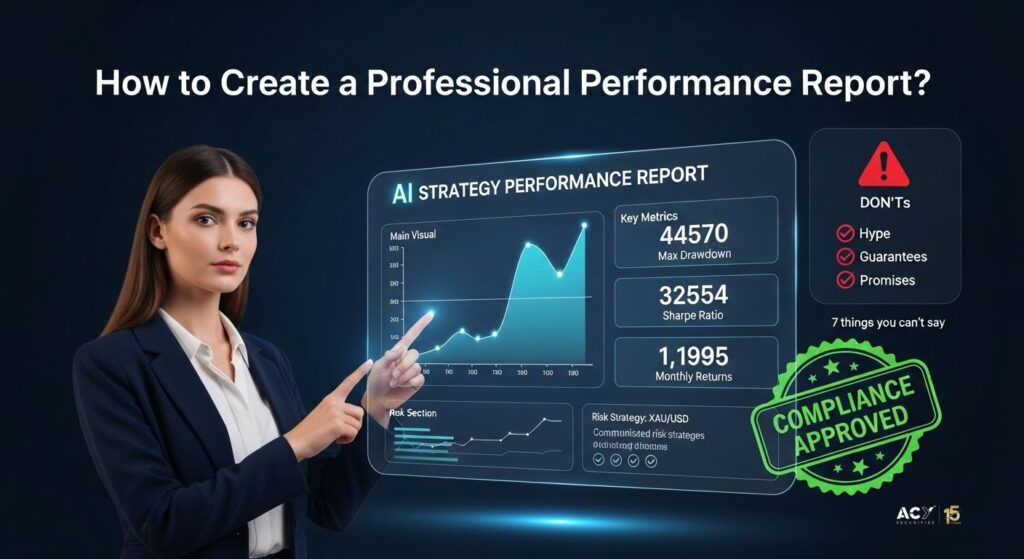
Your performance report is the cornerstone of your marketing efforts. It’s your opportunity to showcase the results of your AI-powered strategy in a clear, concise, and professional manner. A well-structured report should include the following key elements:
-
Equity Curve: A visual representation of your fund’s growth over time. A smooth, upward-sloping curve is the ideal, but it’s also important to be transparent about periods of drawdown.
-
Max Drawdown: This metric indicates the largest peak-to-trough decline in your fund’s value. It’s a crucial measure of risk and should be presented prominently.
-
Sharpe Ratio: A measure of risk-adjusted return. A higher Sharpe ratio indicates a better performance for the amount of risk taken.
-
Monthly/Annual Returns: A breakdown of your fund’s performance over different time periods.
-
Clear, Concise Explanation of the Strategy’s Philosophy: A brief overview of your AI’s approach to the market, without revealing your proprietary code.
When presenting your performance report, it’s essential to be mindful of compliance. Your marketing materials must be professional and, above all, compliant. A crucial read is the forex affiliate regulation and marketing guide, which outlines the broader legal landscape. You must also consult a simple guide on whether you need a license to be a forex fund manager in your specific jurisdiction. Furthermore, understanding how to market forex compliantly and the 7 things you can’t say is non-negotiable. Finally, integrating and clearly communicating your 5 risk management strategies for Gold (XAU/USD) copy trading can add a layer of credibility and transparency to your report.
How to Use a Public Track Record as Your Best Marketing Tool?
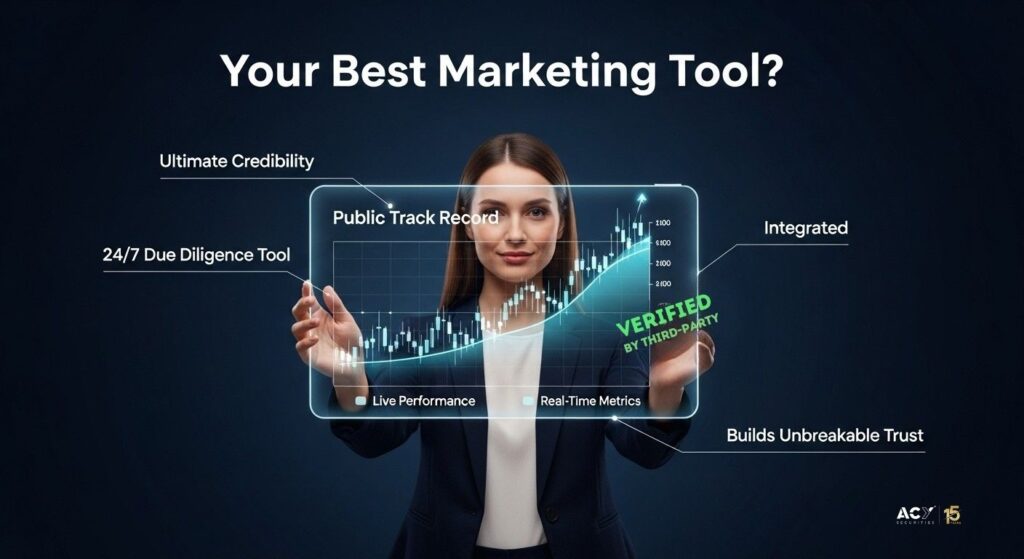
In the world of forex, a verified public track record is the ultimate form of transparency and credibility. A public copy trading profile on a reputable platform allows potential investors to see your performance in real-time, independently verified by a third party. This is a powerful tool for building trust, as it leaves no room for doubt about the authenticity of your results. A public track record serves as a 24/7 due diligence tool for potential clients. They can monitor your trading activity, analyze your performance metrics, and gain a deep understanding of your strategy’s behavior in different market conditions. This level of transparency can be a significant competitive advantage, as it demonstrates your confidence in your AI’s ability to perform consistently over time.
This approach requires a strong relationship with your broker. It’s vital to understand what MAM and PAMM managers really want from a broker partner to ensure they can support your transparency goals. Furthermore, the best marketing support for serious forex affiliate traders often includes tools and platforms that facilitate this kind of public-facing performance tracking.
What Kind of Investor is Attracted to an AI-Managed Fund?
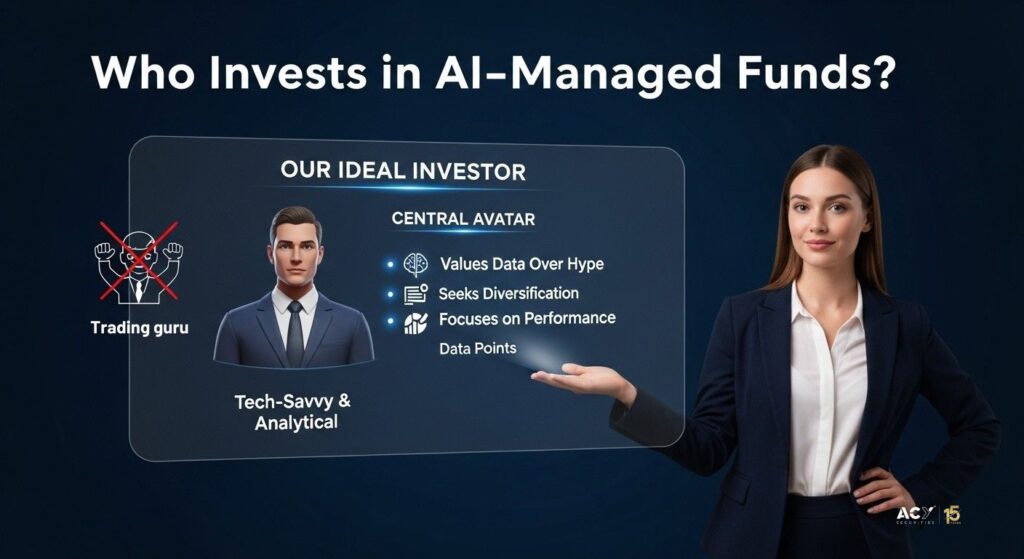
The ideal investor for an AI-managed fund is typically tech-savvy, analytical, and values a systematic, data-driven approach to investing. They are often professionals from fields like engineering, finance, or technology who appreciate the logic and discipline of an algorithmic strategy. They are less interested in “guru” personalities and more focused on verifiable performance and a sound investment process. These investors are often looking for a diversifying asset that is uncorrelated with their other investments. An AI-powered forex fund can be an attractive option, as it offers the potential for returns that are not dependent on the performance of traditional asset classes like stocks and bonds.
To attract these investors, your marketing materials should be professional, data-focused, and free of hype. Focus on providing clear, concise information about your strategy, performance, and risk management process. This will resonate with the analytical mindset of your target audience and help you build a loyal following of sophisticated investors.
How to Explain Your AI Strategy Without Revealing Your “Secret Sauce”?
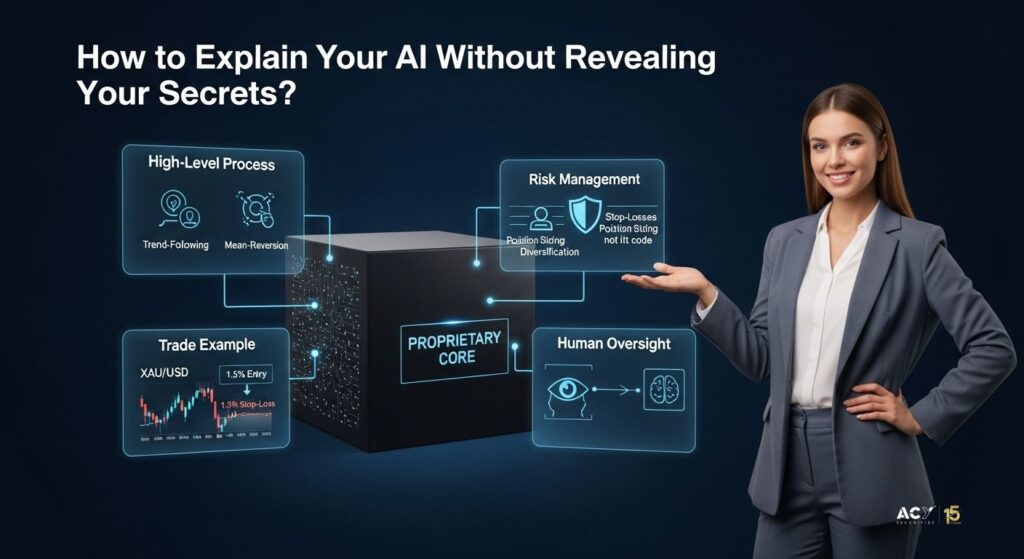
One of the biggest challenges in marketing an AI-powered fund is explaining your strategy without giving away your proprietary code. The key is to focus on communicating the “how” of your process, not the “what” of your specific algorithms.
Here are some tips for explaining your AI strategy effectively:
-
Focus on the high-level process: Describe the general approach of your AI, such as trend-following, mean-reversion, or sentiment analysis.
-
Highlight your risk management parameters: Explain how your AI manages risk, such as through the use of stop-losses, position sizing, and portfolio diversification.
-
Provide concrete examples: Use hypothetical trade examples to illustrate how your AI identifies and executes trades. For example, “Our AI is designed to identify high-probability mean-reversion setups on XAU/USD, with a hard stop-loss of 1.5% per trade.”
-
Emphasize the role of human oversight: Reassure investors that your AI is not a “black box” operating without human supervision. Explain your role in monitoring the system, managing risk, and making strategic adjustments as needed.
By focusing on these aspects of your strategy, you can provide investors with the information they need to feel comfortable with your approach, without compromising your intellectual property.
How Warren Buffett Would Evaluate an AI Fund Manager?
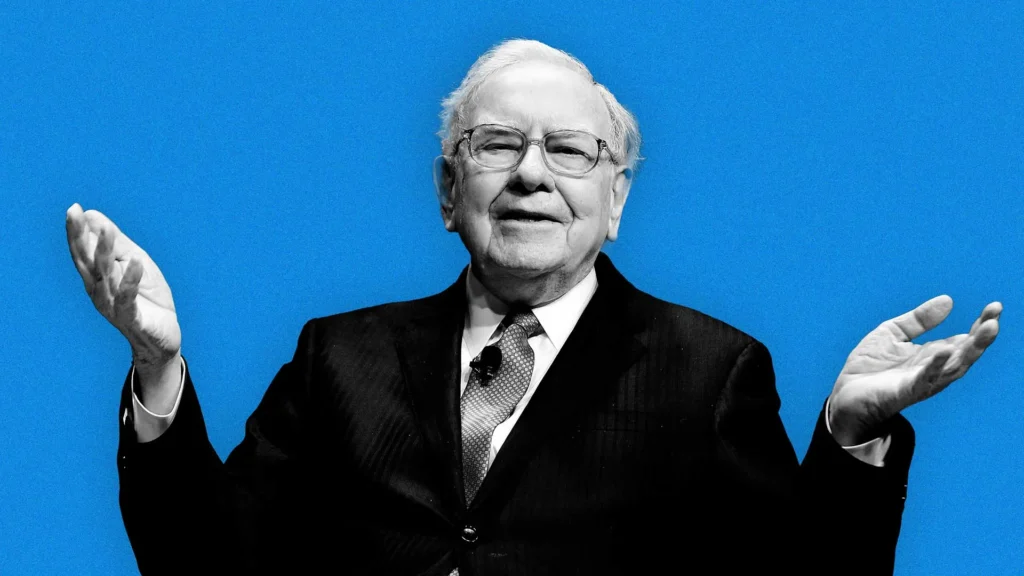
Warren Buffett famously says, “Never invest in a business you cannot understand.” He would be initially skeptical of an AI ‘black box.’ Therefore, the manager’s job isn’t to sell the AI’s complexity but its simplicity of principle. He would want to understand the manager’s philosophy, the system’s rules for risk management, and its behavior over a long period. He wouldn’t care about the code; he would care about the durability and rationality of the process the code executes. Your marketing must prove that you are the intelligent operator of the machine.
10 Lessons from “The 48 Laws of Power” for Marketing a Fund
-
Law 4: Always Say Less Than Necessary. When explaining your AI, be concise and focus on the high-level process. Unnecessary technical details create confusion, not confidence.
-
Law 9: Win Through Your Actions, Never Through Argument. Don’t argue that your AI is the best. Let your verified track record (your actions) prove it for you.
-
Law 27: Play on People’s Need to Believe to Create a Cultlike Following. Frame your AI not just as a strategy, but as a new, more intelligent philosophy of trading that your investors can be a part of.
-
Law 3: Conceal Your Intentions. Don’t reveal the specific inner workings of your algorithm. Instead, focus on the results and the overall strategy.
-
Law 5: So Much Depends on Reputation – Guard It with Your Life. Your track record and professional conduct are your most valuable assets. Protect them at all costs.
-
Law 6: Court Attention at All Costs. In a crowded market, you need to stand out. Use professional branding and a strong online presence to attract attention.
-
Law 12: Use Selective Honesty and Generosity to Disarm Your Victim. Be transparent about your performance, including drawdowns. This builds trust and shows that you are not hiding anything.
-
Law 13: When Asking for Help, Appeal to People’s Self-Interest, Never to their Mercy or Gratitude. Frame your fund as a solution to investors’ problems, such as the need for diversification or non-correlated returns.
-
Law 25: Re-Create Yourself. Continuously improve and adapt your AI strategy to changing market conditions. This shows that you are a dynamic and forward-thinking manager.
-
Law 37: Create Compelling Spectacles. Use professional marketing materials, such as a well-designed website and performance reports, to create a powerful and persuasive presentation of your fund.
Your Top Questions on Marketing an AI Fund
FAQ Section
-
Do I need a license to market my AI fund?
Marketing a fund to the public often requires specific licenses and adherence to strict regulations. It’s crucial to understand the rules in your jurisdiction. -
How do I build trust if I can’t explain exactly how the AI works?
You build trust by being transparent about the things that matter to an investor: the risk management rules, the historical performance (including drawdowns), and your own professional oversight of the system. -
What is a “Sharpe ratio” and why is it important?
The Sharpe ratio measures your risk-adjusted return. A higher Sharpe ratio indicates a better performance for the amount of risk taken, and it’s a key metric that sophisticated investors look for. -
Is it better to have a very complex AI or a simple one?
From a marketing perspective, it’s better to have a strategy whose principles are simple to explain, even if the execution is complex. Investors are more likely to trust what they can understand. -
How do I handle a period of drawdown or underperformance?
Proactive and transparent communication is key. Explain the drawdown in the context of the system’s historical performance and reinforce your confidence in the long-term process.
Conclusion
Marketing an AI-powered forex fund is a game of trust and translation. It’s about taking a complex technological edge and communicating it through a clear narrative of process, performance, and professionalism. By mastering this, you can attract the sophisticated capital that your advanced strategy deserves.
As you build your marketing materials and attract your first clients, remember that the journey doesn’t end there. You must learn how to manage multiple forex accounts using the professional method to scale effectively. The core of your growth will be learning how to grow your forex affiliate followers by building trust and using AI. For practical first steps, our guide on how to get your first 5 forex clients will be invaluable.
For your next steps, a multi-channel marketing strategy is essential. Learn how to build a loyal following that drives revenue and how to use YouTube to attract high-value forex traders. Implement these 5 social media strategies to promote your forex affiliate links and build a dedicated investor base by creating a thriving forex affiliate Discord or Telegram community.
To systematize your growth, you must create a forex affiliate sales funnel and master how to build a forex affiliate email list that converts 24/7. Understanding the psychology behind investor decisions with these 5 psychological triggers to increase forex affiliate conversions will sharpen your messaging. Enhance your website engagement with a strategic guide to financial widgets for forex affiliate websites. Ultimately, all these efforts are designed to convert your forex affiliate commissions into a scalable and profitable fund management business.
Your Path to a Smarter Trading Future Starts Now
The future of trading isn’t about replacing human intelligence but augmenting it. You now have a blueprint to take decades of trading wisdom, forge it into a powerful AI assistant, and use it to build your own trading and affiliate marketing empire.
Stop trading on emotion. Stop paying for inflexible tools. Start building your edge.
Ready to build your business and empower your clients? Join the ACY Partners Program today and start sharing your unique AI trading bot with the world.
Disclaimer:Trading Forex and CFDs involves significant risk and may not be suitable for all investors. The content of this article is for educational purposes only and should not be considered financial advice. The performance of any AI tool or trading strategy is not guaranteed. Always conduct your own research and consider your risk tolerance before trading with real capital. Ensure that when you share your app, you include this disclaimer and your ACY Partners affiliate link for any sign-ups.
For more detailed insights on developing daily trading routines, risk management, and effective position sizing strategies, explore additional articles on ACYPartners. Our experts at ACY and FinLogix are also great resources to guide your journey towards trading excellence.
Discover Our Best Gold Affiliate Program
At ACYPartners, you can browse through a selection of affiliate program and review offerings before you decide to start forex affiliate marketing.
Become An Introducing Broker
Share your expertise and become an introducing broker so you can help other traders about the benefits of joining ACY.
Stay tuned to our blog for more Forex Affiliate Marketing educational resources.
Trading involves risks.
Related Forex Affiliate Marketing blogs:
- Best Forex Affiliate Program 2025 | Top FX Affiliate Network
- Best Gold Affiliate Program: High Paying Affiliate Program for Traders
- How a Forex CPA Affiliate Program Works with a Forex Broker – What You Must Know
- How to Choose the Right Multi Account Manager Software on MetaTrader 4 (MT4)
- 10 Reasons to Use Free Financial Widgets on Your Forex Affiliate Website
- What is a MAM Account – Forex MAM and PAMM Managed Accounts
- Introducing Broker Program (IB) Business Model & How to Be Competitive
- Benefits of the ACY Forex White Label Offering
-
-
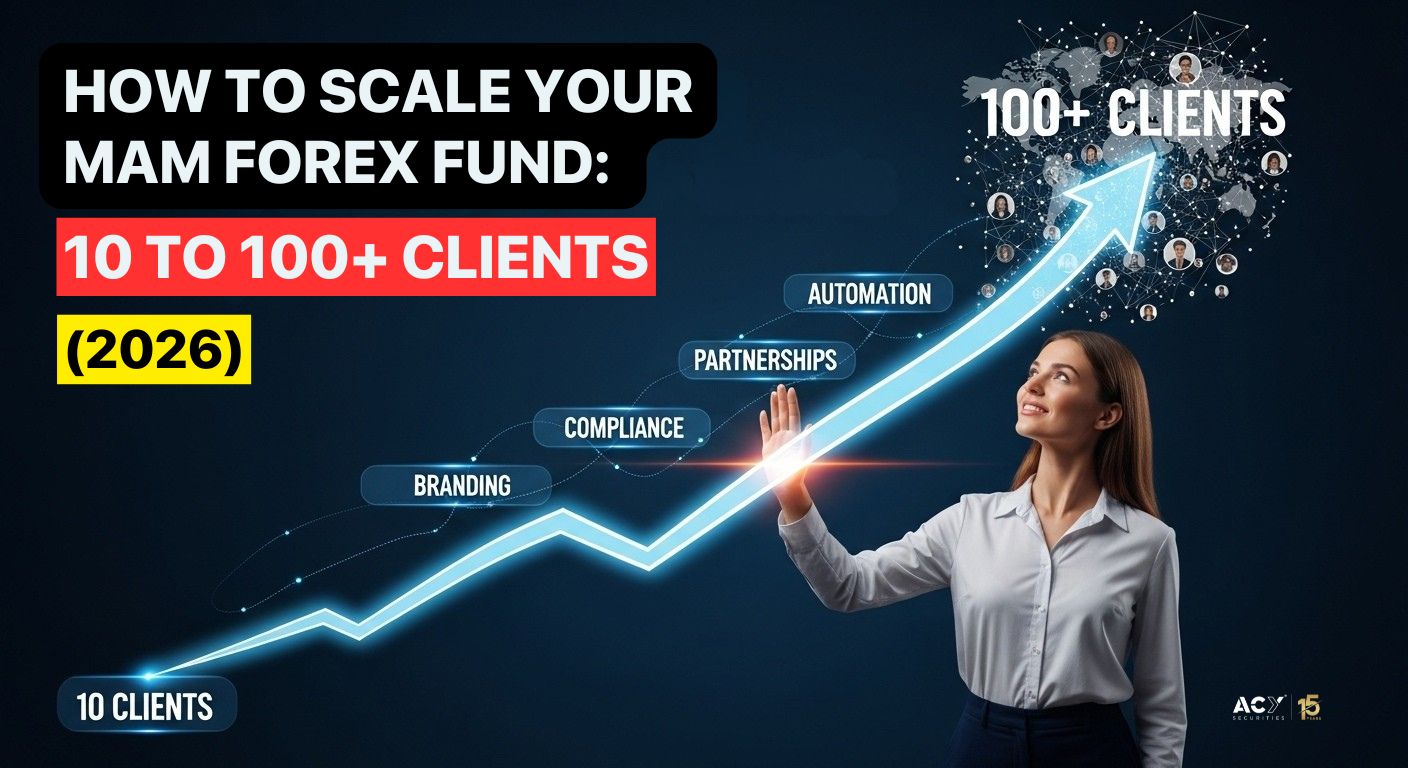
How to Scale Your MAM Forex Fund from 10 to 100+ Clients (2026)
Last Updated: October 24, 2025
This article is reviewed annually to reflect the latest market regulations and trends
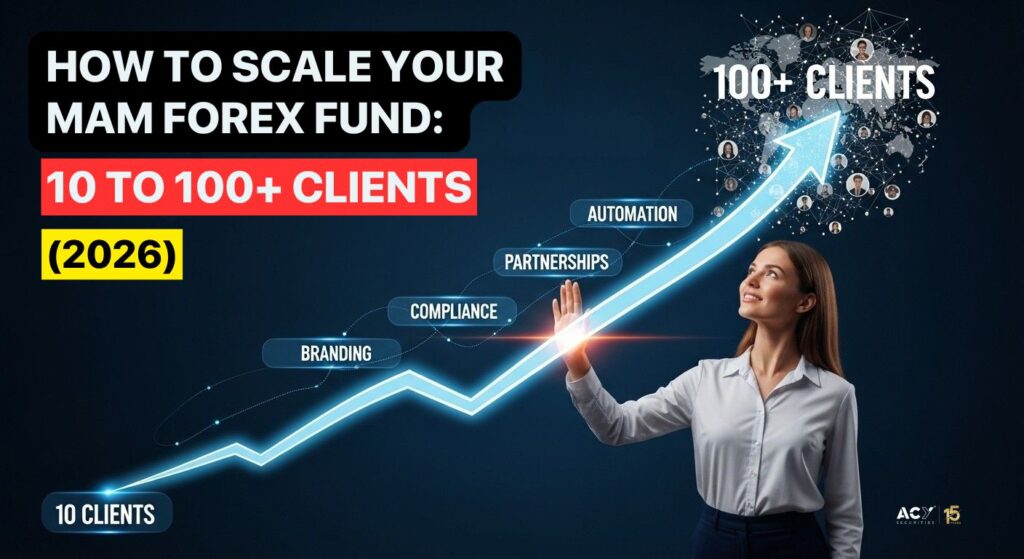
How to Scale Your MAM Fund from 10 to 100+ Clients (2026)
You’ve done the impossible: you’ve built a profitable trading strategy and convinced your first clients to trust you with their capital. But now you’re drowning. Drowning in paperwork, manual reports, and billing calculations. The hard truth is that the skills that got you to 10 clients will not get you to 100. To scale, you must evolve from being a great trader to being the architect of a great business. This article is your blueprint to scale your MAM fund by implementing the systems and automation that separate boutique managers from enterprise-level funds.
For those just starting out, The Complete Guide to Becoming a Forex Fund Manager provides a foundational overview. Once you’re ready, the real work begins with a strategic launch, as detailed in this Forex Fund Manager Program Launch Guide. Many professionals weigh being a Forex Affiliate or Fund Manager, but the unique benefits of Being a Forex Money Manager often win out for those with a profitable strategy. The challenge, as you know, is moving beyond how to get your first 5 Forex clients to building a truly scalable operation with multiple revenue streams.
TL;DR (Too Long; Didn’t Read)
-
Automate Onboarding: Replace manual paperwork with digital forms, e-signatures for LPOAs, and automated CRM sequences to make client intake seamless.
-
Automate Reporting: Leverage your MAM software’s built-in features to auto-generate and email professional monthly performance reports, saving you dozens of hours.
-
Automate Billing: The “high-water mark” feature in professional MAM platforms is your automated accountant, calculating and allocating performance fees without error.
-
Your Broker is Your Scaling Partner: At 100 clients, server stability, 24/7 technical support, and a dedicated account manager from your broker are non-negotiable.
-
Your Role Must Evolve: The scaled fund manager spends less time on execution and more time on high-level risk management, systems monitoring, and investor communication.
How to Automate Client Onboarding?
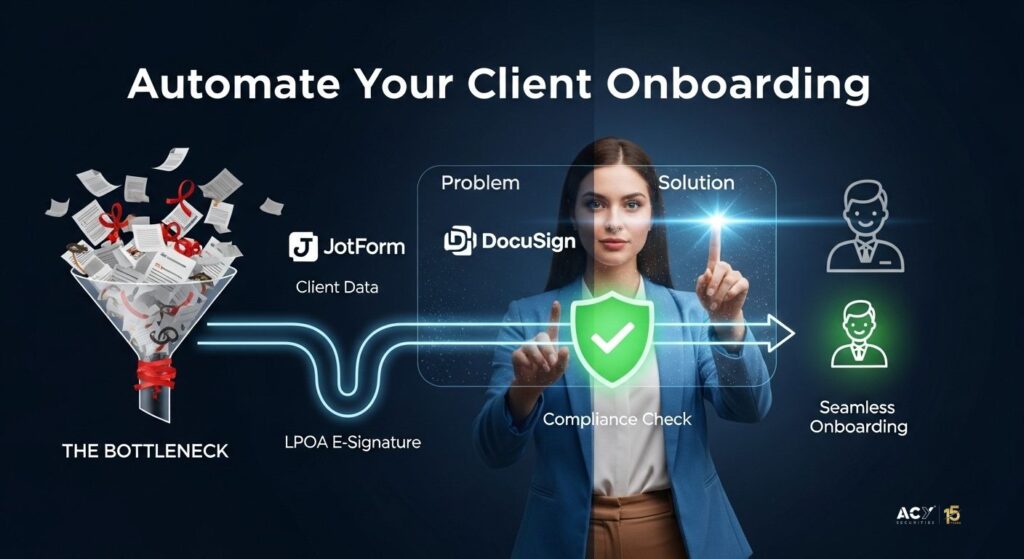
The single biggest bottleneck when scaling is client onboarding. To make this process seamless and compliant, you must automate. This involves using tools like JotForm for initial data, but more importantly, it means integrating e-signatures with DocuSign for LPOAs. As you automate, compliance becomes paramount. Your marketing and onboarding documents must adhere to a strict Forex affiliate regulation marketing guide to avoid legal pitfalls. A common question is, “Do you need a license to be a Forex fund manager?” The answer varies by jurisdiction, and your automated systems must be configured to handle these requirements. This ensures you know how to market Forex compliantly from the very first touchpoint.
How to Automate Your Client Reporting?
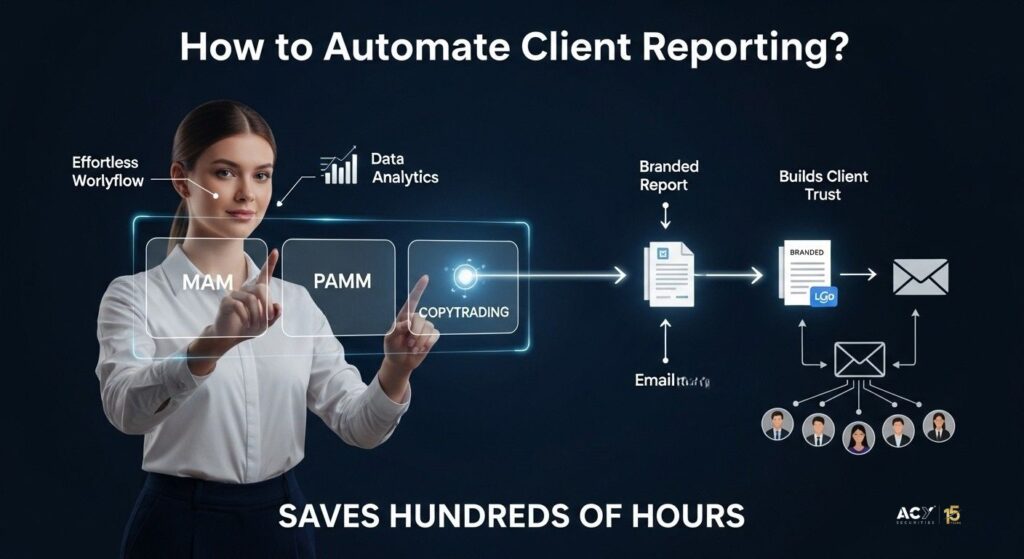
Manual reporting is a time-sink that becomes impossible as you grow. The solution lies in leveraging professional-grade software designed to manage multiple Forex accounts efficiently. The technology you choose is critical. You need to understand the nuances of what MAM accounts explained truly means for your operations. Your choice between MAM vs. PAMM accounts will define your back-office workflow. When evaluating your options, a broader comparison of MAM vs. Copytrading vs. PAMM can help you select the best fit for your strategy. The right software allows you to configure automated, branded monthly performance reports that are emailed to clients, building trust and saving you hundreds of hours per year.
How to Handle Performance Fees and Billing Automatically?

The “high-water mark” feature in professional MAM platforms is your automated accountant. It ensures performance fees are calculated accurately and allocated automatically, a critical function for maintaining client trust. This feature is a cornerstone of professional fund management and a key differentiator from amateur operations. It removes the risk of human error in a process where mistakes can be costly to both your revenue and your reputation.
Why Your Broker Partner is Your Most Important Scaling Partner?
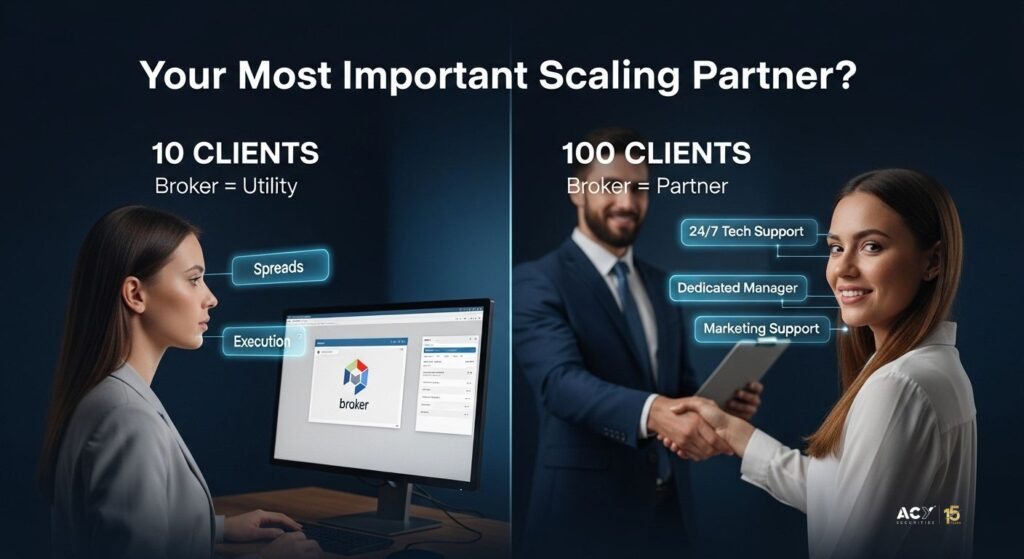
At 10 clients, your broker is a utility. At 100, they are a partner. The stability of their servers, the quality of their execution, and their support level directly impact your business. When scaling, you need to understand what MAM and PAMM managers really want from a broker partner. It’s not just about spreads; it’s about 24/7 technical support, a dedicated account manager, and even access to the best marketing support to help you grow. A true partner invests in your success.
A “Day in the Life” of a Scaled AI Fund Manager
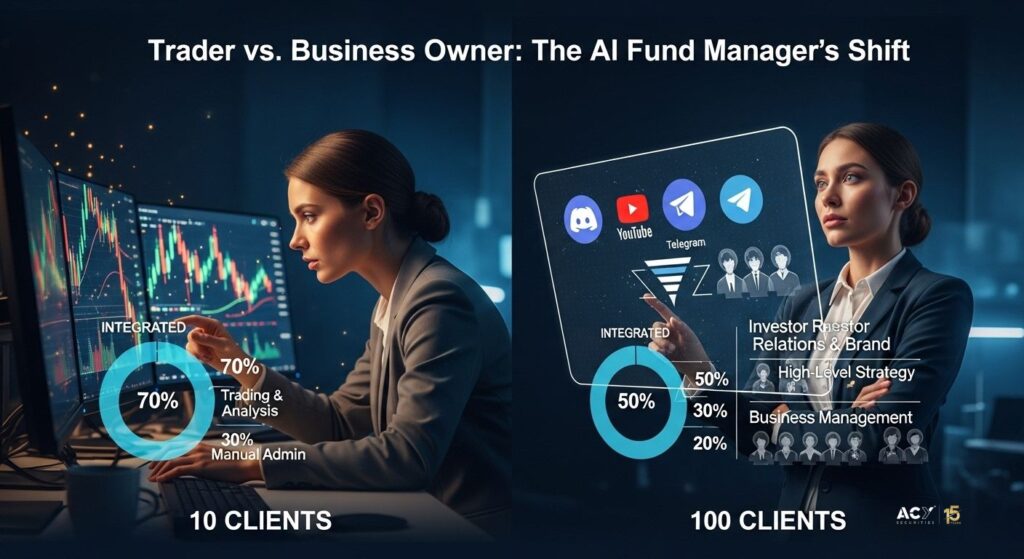
Your role must transform from trader to business owner.
At 10 Clients: 70% of your day is market analysis and trade execution, with 30% spent on manual admin.
At 100 Clients: Your day shifts dramatically. Only 30% is spent on high-level strategy and monitoring automated systems. A full 50% is now dedicated to investor relations and communication. This means you must learn how to build a loyal following for your brand. You’ll need to master platforms and learn how to use YouTube to attract high-value traders. This involves deploying effective social media strategies and knowing how to build a thriving Forex affiliate Discord/Telegram community. The final 20% is spent managing the business itself, which includes optimizing your Forex affiliate sales funnel and building a robust Forex affiliate email list that converts 24/7. A key part of managing the business is also understanding how to effectively convert Forex affiliate commissions into sustainable revenue.
How Warren Buffett Thinks About Scaling a Fund?
Buffett would focus on two things: the durability of the ‘moat’ and the scalability of the operation. Your trading ‘alpha’ is your moat. The automated systems are what make it scalable. He would argue that a manager who has to manually onboard and report for every client doesn’t have a business; they have a high-paying, but ultimately limited, job. The goal is to build a machine that allows one great decision-maker to manage an ever-increasing amount of capital with minimal additional effort. This involves building trust at scale, and you can learn how to grow your Forex affiliate followers by building trust and using AI to achieve this.
10 Lessons from “The Intelligent Investor” for Scaling a Fund
-
“Margin of Safety”: Your business’s margin of safety is its automated systems. They protect you from operational error. This includes robust risk management strategies for Gold (XAU/USD) copy trading if that’s your focus.
-
“Mr. Market”: Build a disciplined, automated system that runs independently of your mood or the daily noise of client requests.
-
“An investment operation is one which, upon thorough analysis, promises safety of principal and an adequate return.” Your business operation must do the same.
-
Invest for the Long-Term: Build systems designed to last, not just to solve today’s problem.
-
Diversify Your Operations: Avoid single points of failure in your technology stack and processes.
-
Know Your Competence: Focus on trading and strategy; automate or delegate the rest. You can even use tools like financial widgets for Forex affiliate websites to enhance client engagement without manual effort.
-
Never Stop Learning: Stay ahead of technological and regulatory curves.
-
Manage Business Risk: Your operational risk is just as important as your market risk.
-
Think Independently: Don’t just copy other managers’ operations. Build a system that fits your unique strategy.
-
Value Over Price: Invest in high-quality software and partnerships. Understanding the 5 psychological triggers to increase Forex affiliate conversions can help you communicate this value effectively.
Your Top Questions on Scaling a MAM Fund
-
What is the single biggest bottleneck when scaling from 10 to 100 clients?
(A: Client onboarding and reporting. These manual, repetitive tasks are what consume the most time and are most prone to error without automation.) -
At what point do I need a dedicated CRM?
(A: You can start with a simple spreadsheet, but once you cross 20-25 clients, a dedicated CRM becomes essential for managing communications and automating onboarding.) -
Does my MAM software choice really matter that much for scaling?
(A: Absolutely. Basic MAM software might work for a few clients, but professional-grade software with automated reporting and billing is a non-negotiable requirement for scaling.) -
How much of my trading should I automate with EAs or AI?
(A: This is a personal choice, but as you scale, many managers move towards a hybrid model where automated systems handle execution and they focus on high-level strategy and risk management.) -
How does my marketing need to change when I scale?
(A: You need to move from one-on-one networking to scalable “one-to-many” marketing, such as building a loyal following on YouTube or through a professional email list.)
Conclusion
Scaling your MAM fund from 10 to 100 clients is not about working 10x harder, it’s about building a business that is 10x smarter. By embracing automation, choosing the right partners, and evolving your own role from trader to CEO, you can achieve exponential growth without the operational chaos. To take the next step in structuring your business for success, explore this comprehensive Forex Fund Manager Program Launch Guide.
Your Path to a Smarter Trading Future Starts Now
The future of trading isn’t about replacing human intelligence but augmenting it. You now have a blueprint to take decades of trading wisdom, forge it into a powerful AI assistant, and use it to build your own trading and affiliate marketing empire.
Stop trading on emotion. Stop paying for inflexible tools. Start building your edge.
Ready to build your business and empower your clients? Join the ACY Partners Program today and start sharing your unique AI trading bot with the world.
Disclaimer:Trading Forex and CFDs involves significant risk and may not be suitable for all investors. The content of this article is for educational purposes only and should not be considered financial advice. The performance of any AI tool or trading strategy is not guaranteed. Always conduct your own research and consider your risk tolerance before trading with real capital. Ensure that when you share your app, you include this disclaimer and your ACY Partners affiliate link for any sign-ups.
For more detailed insights on developing daily trading routines, risk management, and effective position sizing strategies, explore additional articles on ACYPartners. Our experts at ACY and FinLogix are also great resources to guide your journey towards trading excellence.
Discover Our Best Gold Affiliate Program
At ACYPartners, you can browse through a selection of affiliate program and review offerings before you decide to start forex affiliate marketing.
Become An Introducing Broker
Share your expertise and become an introducing broker so you can help other traders about the benefits of joining ACY.
Stay tuned to our blog for more Forex Affiliate Marketing educational resources.
Trading involves risks.
Related Forex Affiliate Marketing blogs:
- Best Forex Affiliate Program 2025 | Top FX Affiliate Network
- Best Gold Affiliate Program: High Paying Affiliate Program for Traders
- How a Forex CPA Affiliate Program Works with a Forex Broker – What You Must Know
- How to Choose the Right Multi Account Manager Software on MetaTrader 4 (MT4)
- 10 Reasons to Use Free Financial Widgets on Your Forex Affiliate Website
- What is a MAM Account – Forex MAM and PAMM Managed Accounts
- Introducing Broker Program (IB) Business Model & How to Be Competitive
- Benefits of the ACY Forex White Label Offering
-
-
The Guide to Forex Affiliate Regulation and Marketing (2026)
Last Updated: October 23, 2025
This article is reviewed annually to reflect the latest market regulations and trends

The Guide to Forex Affiliate Regulation and Marketing 2026
For many forex affiliates, the word ‘regulation’ sounds intimidating, a complex maze of rules designed to limit your business. But the top 1% of affiliates see it differently. They understand that regulation is the framework for trust. It’s the moat that separates the professional players from the scammers. Mastering the principles of compliant marketing isn’t just about avoiding penalties; it’s about building a brand that the best clients are proud to be associated with.
This article is the definitive 2026 guide to forex affiliate regulation, designed to empower affiliates to build a more professional and profitable business. We will delve into the core principles of financial marketing regulation, providing you with a clear roadmap to navigate this complex landscape and build a sustainable, trustworthy business from the ground up.
TL;DR (Too Long; Didn’t Read
-
Regulation Protects Everyone: The goal of regulators like ASIC and FCA is to protect consumers, which in turn creates a more trustworthy market for legitimate businesses to thrive in.
-
Know Your Role (Marketer vs. Manager): Affiliates are marketers and must follow advertising rules. Money Managers handle client funds and typically require a license. Knowing the difference is critical.
-
The 4 Golden Rules: Your entire marketing strategy must be built on four principles: prominent risk warnings, no profit guarantees, no financial advice, and truthfulness.
-
The LPOA is Key for Managers: For those who manage funds, the Limited Power of Attorney (LPOA) is the essential document that ensures client security and defines your legal authority.
-
Partnering with a Regulated Broker is Your Shield: Aligning your brand with a top-tier regulated broker is the single fastest way to establish credibility and demonstrate your commitment to compliance.
Why Does Forex Marketing Regulation Exist (And Why Should You Care)?
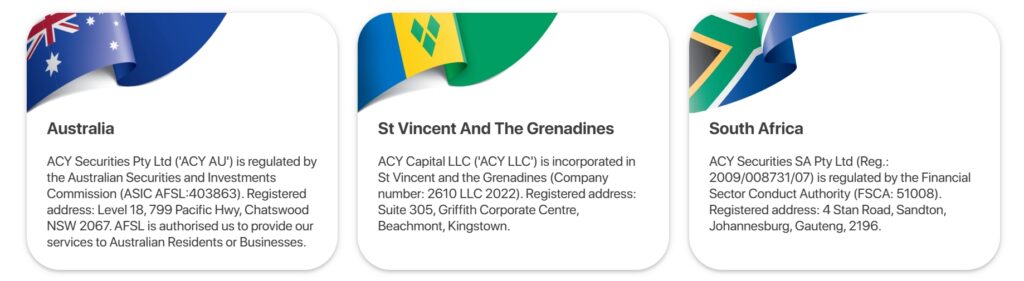
The primary mission of financial regulators is to protect consumers from fraud and manipulation. This is especially important in the forex market, which unfortunately attracts a high number of scams. Understanding the truth about forex affiliate marketing scams is the first step to appreciating why these rules exist. From sophisticated AI-driven Telegram scams to fake forex affiliate signal scams, the dangers are real.
For the serious affiliate, this regulatory framework is a competitive advantage. It provides a clear path on how to promote ethically, allowing you to build a brand that stands apart from the typical “Instagram forex faker.” By embracing compliance, you learn how to build a forex affiliate brand without looking like a scammer and can confidently choose a trusted partner while avoiding scam programs.
What is the Difference Between an Unlicensed Affiliate and a Licensed Money Manager?
Understanding your role is a cornerstone of forex affiliate regulation. It’s essential to draw a clear line between marketing and managing.
Role Description Unlicensed Affiliate/IB A marketer who promotes a broker’s services. Their job is to create content, build an audience, and refer clients. Affiliates cannot handle client funds or give financial advice. Their journey is about building a business, and for those just starting, finding one of the best forex affiliate programs for beginners is a crucial first step. Licensed Money Manager (MAM/PAMM) An asset manager licensed to manage client funds and execute trades. This role requires a higher level of regulatory approval and involves strategies like using AI for gold trading to attract high-value clients. For most reading this guide, the focus is on being a marketer. This involves a clear understanding of the fees and costs associated with the business and following the marketing rules.
What Are the “Golden Rules” of Compliant Forex Marketing?

Your entire marketing strategy must be built on these four principles:
-
Prominent Risk Warnings: Every piece of content must clearly state that trading involves significant risk. This is non-negotiable.
-
No Profit Guarantees: You cannot promise or imply guaranteed returns. This is a major red line for regulators.
-
No Financial Advice: You are a marketer, not an advisor. Your role is to provide information, not to tell people how or when to trade.
-
Truthfulness: All your marketing must be honest. This means setting realistic expectations and being transparent. It’s vital to understand the difference between forex affiliate marketing expectations vs. reality to communicate it effectively. Your content should honestly discuss both the risk and reward in forex affiliate marketing and debunk falsehoods, such as the hype vs. reality of AI gold trading.
These rules apply everywhere you promote, whether you are creating content for YouTube and TikTok or using social media strategies to promote your links.
How Does a Limited Power of Attorney (LPOA) Work for MAM Accounts?

For licensed Money Managers operating MAM/PAMM accounts, the Limited Power of Attorney (LPOA) is the critical legal document. It is the contract that grants the manager permission to trade on a client’s behalf without giving them ownership of the funds. The LPOA defines the manager’s authority, the fee structure, and the risk parameters, protecting both the client and the manager. It’s a foundational element of trust in the managed account space.
How Does Partnering with a Top-Tier Regulated Broker Protect You?
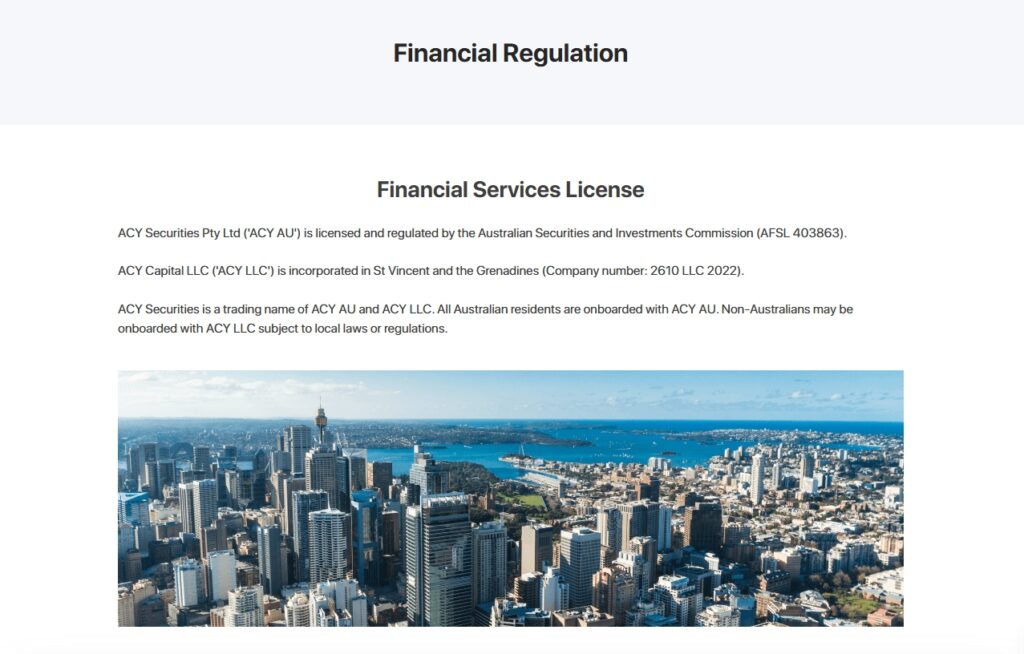
Aligning with a highly regulated broker is your single greatest compliance shield. A good partner provides you with approved marketing materials, clear risk disclosure text, and the credibility of their license. This partnership is the foundation for anyone looking to build a forex affiliate business from anywhere.
Advanced Mindsets for Building a Bulletproof Brand
How Barbara Corcoran Thinks About Forex Regulation?

“Your brand is your reputation. In the world of finance, that’s all you have. Are you building a skyscraper on a solid foundation of compliance, or a shack on the sand? The rules are your foundation. Following them isn’t optional; it’s the price of entry to play in the big leagues. The smart affiliates, the ones who make real money, don’t complain about the rules; they use them to make their competitors look like amateurs.”
Building Compliant Marketing Funnels
Compliance must be baked into your marketing systems. This means creating ethical and effective funnels that respect the rules. Your goal is to create a forex affiliate sales funnel that educates and informs, not one that hypes or misleads. A key part of this is to build a forex affiliate email list that converts by providing value and maintaining transparency. By focusing on compliant practices, you can effectively convert forex affiliate commissions for the long term. You can even use tools like financial widgets on your website to boost engagement without making misleading claims.
10 Lessons from “How to Win Friends and Influence People” for Compliant Affiliates
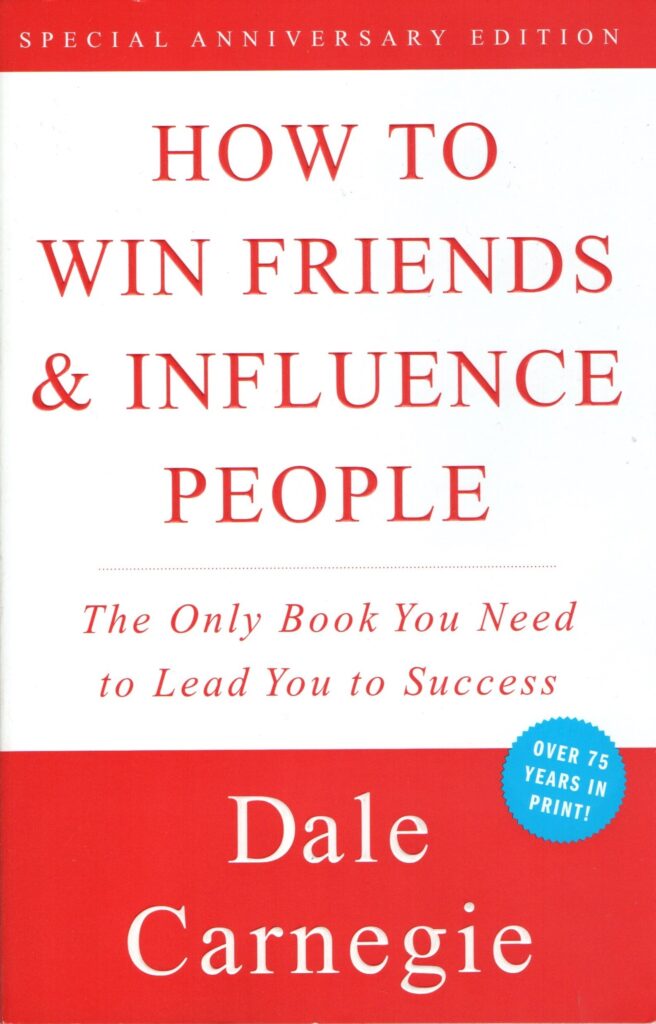
Dale Carnegie’s principles are more relevant than ever for ethical marketing.
-
“Give honest and sincere appreciation.” Appreciate your audience by being transparent. This is the core of how to grow your forex affiliate followers by building trust.
-
“Talk in terms of the other person’s interests.” Their primary interest is protecting their capital. Lead with risk management.
-
“If you are wrong, admit it quickly and emphatically.” Publicly correcting marketing mistakes builds immense trust.
-
“Begin in a friendly way.” Your content should be welcoming and educational, not aggressive.
-
“Let the other person do a great deal of the talking.” Use polls and questions to understand your audience’s concerns about risk.
-
“Try honestly to see things from the other person’s point of view.” You can create content that solves trader psychology problems by understanding their fears and goals.
-
“Be sympathetic with the other person’s ideas and desires.” Acknowledge their desire for success while gently guiding them toward realistic expectations.
-
“Appeal to the nobler motives.” Frame your brand around integrity, education, and responsible trading. This is how you build a loyal following that drives revenue.
-
“Dramatize your ideas.” Use case studies (with disclaimers) to illustrate the importance of risk management.
-
“Throw down a challenge.” Challenge your audience to become more educated and disciplined traders. This helps build a thriving forex affiliate community.
Your Top Questions on Forex Regulation and Marketing
Do these rules apply to my social media and YouTube channels?
Yes. All forms of public communication are considered marketing. The principles of forex affiliate regulation are just as important in your videos and posts. In fact, learning how to use YouTube to attract high-value traders depends on establishing yourself as a credible, compliant source of information.
What’s the easiest way to create a compliant risk warning?
Your regulated broker partner will almost always provide you with approved risk disclosure text that you can use on your website and in your content.
Can I get in trouble if a client loses money?
If you have marketed compliantly, avoided giving financial advice, and made no profit guarantees, you are generally protected. This is why understanding how to ethically get your first 5 forex clients is about setting the right expectations from day one.
How do I compliantly market specific products like Copy Trading or Gold?
You must be extra careful. When promoting a copy trading forex affiliate strategy, you must emphasize that past performance is not indicative of future results. The guide on how to market a copy trader provides a framework for this. Similarly, when discussing popular assets like gold, explain why Gold (XAU/USD) trading is so appealing while also providing crucial risk management strategies for gold copy trading.
How do I find out if a broker is well-regulated?
Look for their license numbers on their website and verify them directly on the official websites of top-tier regulators like ASIC (Australia) or the FCA (UK).
Is it harder to get clients if I’m always talking about risk?
No. You will attract higher-quality, more realistic clients who are looking for a trusted partner, not a get-rich-quick scheme. These clients are the best foundation for a long-term business, and you can use proven psychological triggers to increase conversions ethically by focusing on safety and trust.
Conclusion: Compliance is Your Blueprint for Success
Forex affiliate regulation is not a barrier; it is a blueprint for building a professional, trustworthy, and highly successful business. By embracing the principles of compliant marketing and partnering with a top-tier regulated broker, you can build a brand that stands out for its integrity and attracts the best clients in the market.
If you are ready to build a sustainable business based on trust and professionalism, explore our global partnerships to learn more.
Your Path to a Smarter Trading Future Starts Now
The future of trading isn’t about replacing human intelligence but augmenting it. You now have a blueprint to take decades of trading wisdom, forge it into a powerful AI assistant, and use it to build your own trading and affiliate marketing empire.
Stop trading on emotion. Stop paying for inflexible tools. Start building your edge.
Ready to build your business and empower your clients? Join the ACY Partners Program today and start sharing your unique AI trading bot with the world.
Disclaimer:Trading Forex and CFDs involves significant risk and may not be suitable for all investors. The content of this article is for educational purposes only and should not be considered financial advice. The performance of any AI tool or trading strategy is not guaranteed. Always conduct your own research and consider your risk tolerance before trading with real capital. Ensure that when you share your app, you include this disclaimer and your ACY Partners affiliate link for any sign-ups.
For more detailed insights on developing daily trading routines, risk management, and effective position sizing strategies, explore additional articles on ACYPartners. Our experts at ACY and FinLogix are also great resources to guide your journey towards trading excellence.
Discover Our Best Gold Affiliate Program
At ACYPartners, you can browse through a selection of affiliate program and review offerings before you decide to start forex affiliate marketing.
Become An Introducing Broker
Share your expertise and become an introducing broker so you can help other traders about the benefits of joining ACY.
Stay tuned to our blog for more Forex Affiliate Marketing educational resources.
Trading involves risks.
Related Forex Affiliate Marketing blogs:
- Best Forex Affiliate Program 2025 | Top FX Affiliate Network
- Best Gold Affiliate Program: High Paying Affiliate Program for Traders
- How a Forex CPA Affiliate Program Works with a Forex Broker – What You Must Know
- How to Choose the Right Multi Account Manager Software on MetaTrader 4 (MT4)
- 10 Reasons to Use Free Financial Widgets on Your Forex Affiliate Website
- What is a MAM Account – Forex MAM and PAMM Managed Accounts
- Introducing Broker Program (IB) Business Model & How to Be Competitive
- Benefits of the ACY Forex White Label Offering
-
-
How to Market Forex Compliantly Affiliate Guide: 7 Things You Can’t Say

Last Updated: October 23, 2025
This article is reviewed annually to reflect the latest market regulations and trends

The Definitive Guide to Compliant Forex Affiliate Marketing
In the world of forex affiliate marketing, the most dangerous phrases aren’t market jargon; they are the promises you make. Words like ‘guaranteed’ and ‘risk-free’ are the landmines that can destroy your reputation, get you banned from your partner program, and attract the attention of regulators. The most successful affiliates know that long-term profit isn’t built on hype; it’s built on trust. And trust is built with the right words. Many aspiring affiliates fall into the trap of unethical promotion, contributing to a landscape where potential traders are rightfully wary of forex affiliate marketing scams. They see flashy promises and don’t realize they are mimicking the tactics of a scam forex affiliate program.
This article is your definitive guide to navigating this complex environment. It’s a playbook for serious affiliates and Introducing Brokers (IBs) who want to build a sustainable, reputable brand. We will dissect the language of non-compliant marketing and show you how to market forex compliantly by mastering the art of ethical persuasion. By learning what not to say, you will discover the most powerful way to build a real business, attract high-quality clients, and create a brand that endures. This is how you learn how to build a forex affiliate brand without looking like another Instagram forex faker scammer and instead promote ethically and effectively from day one.
TL;DR (Too Long; Didn’t Read)
For those who need the essentials right away, here is your core checklist for how to market forex compliantly.
-
Facts Over Hype: Always use data-driven, historical facts instead of making future promises.
-
Emphasize Process, Not Prizes: Market a “disciplined strategy” and “methodology,” not a “get rich quick” system.
-
Education, Not Advice: Your role is to educate your audience on market concepts and tools, not to give them direct financial advice.
-
Transparency is Non-Negotiable: You must always disclose your affiliate relationship and provide clear, prominent risk disclaimers.
-
Compliance is a Competitive Advantage: Ethical marketing builds deep trust, attracting higher-quality, long-term clients who are the most valuable.
The 7 Forbidden Phrases of Forex Affiliate Marketing (And What to Say Instead)
The difference between a short-lived affiliate account and a long-term, profitable business often comes down to word choice. Regulators and broker compliance teams are specifically trained to spot dangerous, misleading language. Here are the seven phrases you must eliminate from your vocabulary and the powerful, compliant alternatives you should use instead.
1. Instead of “Guaranteed Profits”… Say: “Based on a historical track record…”

The Problem: The word “guaranteed” is the single most dangerous word in finance. Nothing in the financial markets is guaranteed. Using this word is a direct violation of advertising standards globally and the fastest way to get your affiliate account terminated. It sets a false expectation of certainty in an industry that is inherently probabilistic, which is a core tenet of understanding the risk and reward in forex affiliate marketing.
The Solution: Shift your language from future promises to past performance. Use historical data as a reference point, but always couple it with a disclaimer that past performance is not indicative of future results. This grounds your marketing in reality, aligning with the actual forex affiliate marketing expectations vs reality.
2. Instead of “A ‘Get Rich Quick’ System”… Say: “A disciplined approach to long-term strategy…”

The Problem: The allure of fast wealth is what attracts many people to forex, and it’s also what powers most scams. Promoting a “get rich quick” system preys on vulnerability and implies that success requires little effort or time. This is not only misleading but also attracts low-quality clients who are likely to over-leverage, lose their capital, and blame you.
The Solution: Frame trading as a skill and a business that requires discipline, strategy, and a long-term mindset. This positioning attracts serious individuals who are looking to learn and grow, not just gamble.
3. Instead of “You’ll Make $500 a Day”… Say: “This trader’s average winning trade was…”

The Problem: Stating specific, hypothetical income claims is a major red flag for regulators. Saying “you will make X amount” is a direct, unsubstantiated promise. It’s impossible to know what an individual will make, as results depend on capital, risk management, and market conditions.
The Solution: Use historical data to provide context, without projecting it onto the individual’s future. Focus on metrics and averages that educate the audience about a strategy’s past behavior. This data-driven approach is far more credible and helps you market forex compliantly.
4. Instead of “Risk-Free Trading”… Say: “All trading involves significant risk, which should be carefully considered…”
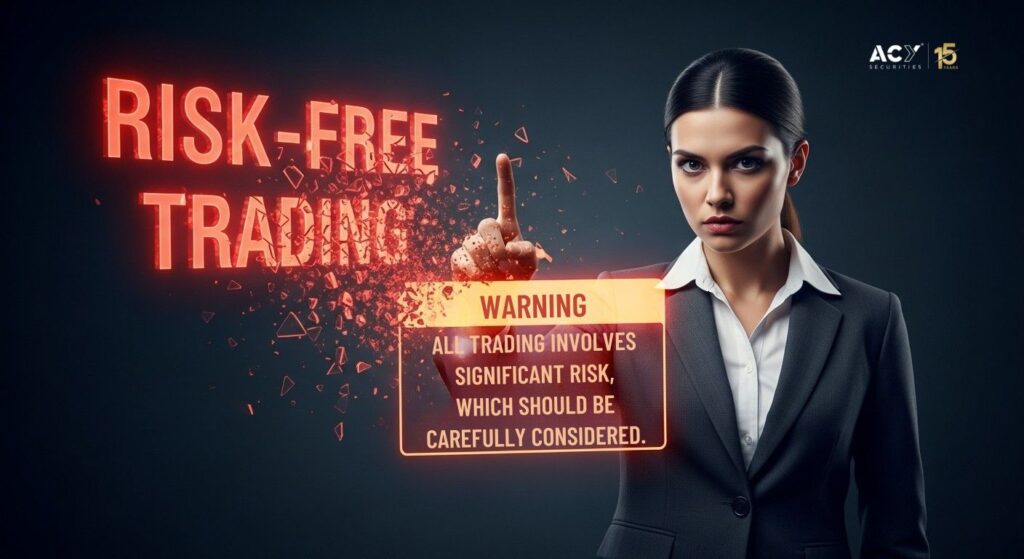
The Problem: There is no such thing as “risk-free” trading or “no-loss” systems. Every single trade carries the risk of loss. Downplaying or hiding this reality is deceptive and illegal in most jurisdictions. The hype around certain assets, like in the case of the AI gold trading hype vs reality, often dangerously omits the discussion of risk.
The Solution: Be upfront and transparent about risk. Acknowledge it directly and clearly in your marketing. This not only ensures compliance but also builds trust by demonstrating that you are a responsible and honest partner.
5. Instead of “A Secret, Unbeatable Algorithm”… Say: “A transparent, data-driven strategy…”

The Problem: The language of “secrets,” “loopholes,” and “unbeatable algorithms” is classic scam terminology. It creates a sense of mystique and exclusivity designed to short-circuit critical thinking. Sophisticated clients are repelled by this language because they know that in trading, there are no secrets, only strategies.
The Solution: Focus on transparency and methodology. Explain how a strategy works in simple terms. Highlighting the logic behind it is more powerful than hiding it in a “black box,” especially when discussing the psychological triggers that increase forex affiliate conversions ethically.
6. Instead of “100% Win Rate”… Say: “This trader has a historical win rate of X%, alongside a max drawdown of Y%…”

The Problem: Claiming a “100% win rate” or “no losses” is a verifiable lie. Every trading strategy experiences losses. Such claims are easily disproven and instantly destroy your credibility.
The Solution: Present a balanced picture of performance. The win rate is only one metric and is meaningless without context. Always pair it with risk metrics like maximum drawdown (the peak-to-trough decline of the investment).
7. Instead of “A Once-in-a-Lifetime Opportunity”… Say: “An approach that aims for consistent application…”

The Problem: High-pressure sales tactics that create false urgency (“once-in-a-lifetime,” “act now before it’s gone”) are a hallmark of low-quality marketing. They are designed to rush people into decisions without proper consideration. This is not how you build a long-term client base.
The Solution: Remove the hype and focus on the enduring value of the process. The opportunity isn’t a fleeting moment; it’s the chance to learn and apply a consistent, long-term approach to the markets.
How to Write a Risk Warning That Still Converts?

Many affiliates view the risk disclaimer as a necessary evil. This is a fundamental misunderstanding. A clear, prominent disclaimer is a trust builder. It signals to your audience that you are a professional who respects both them and the realities of the market. High-quality clients are not scared away by risk warnings; they are reassured by them. For specific scenarios, such as promoting copy trading for popular assets, you can provide even more value by linking to guides on 5 risk management strategies for Gold (XAU/USD) copy trading.
Risk Disclaimer Template:
Risk Warning: Trading foreign exchange on margin carries a high level of risk and may not be suitable for all investors. The high degree of leverage can work against you as well as for you. Before deciding to trade foreign exchange, you should carefully consider your investment objectives, level of experience, and risk appetite. The possibility exists that you could sustain a loss of some or all of your initial investment and therefore you should not invest money that you cannot afford to lose. Past performance is not indicative of future results.
What is the Difference Between “Education” (Safe) and “Advice” (Risky)?

This is one of the most critical distinctions to master. Giving financial advice without a license is illegal and exposes you to massive liability. Your role as an affiliate is to be an educator, not an advisor.
-
Education (Safe): “A moving average crossover occurs when a shorter-term moving average crosses above a longer-term one. Some traders interpret this as a potential bullish signal.”
-
Advice (Risky): “The 50-day moving average is crossing the 200-day. You should buy EUR/USD now!”
Always provide information and tools, but leave the final decision firmly in the hands of the trader. This is a foundational principle for anyone following a complete guide to building a forex affiliate business from anywhere.
Why You Must Disclose Your Affiliate Relationship?

Transparency is not optional. Regulatory bodies like the Federal Trade Commission (FTC) require the disclosure of material connections. A simple disclosure is all you need, and it should be placed near the affiliate link itself. Whether you are using social media, YouTube, or blogs, these rules apply. It’s a key part of leveraging different channels effectively, from a guide on forex affiliate marketing on YouTube & TikTok to broader 5 social media strategies to promote your forex affiliate links.
How a Non-Compliant Ad Can Destroy Your Business?

Let’s create a hypothetical case study. Meet Alex, a forex affiliate who was eager to learn how to get your first 5 forex clients. He found a copy trading platform and started a Telegram channel, posting messages like “Guaranteed 20% profits every month! Risk-free system.” The fallout from the inevitable losses was catastrophic. His followers accused him of running a forex affiliate signal scam on Telegram, the broker terminated his account, and his reputation was ruined. He learned the hard way about the dangers of forex affiliate Telegram scams with AI exposed, a lesson that could have been avoided by following ethical guidelines from the start.
How Barbara Corcoran Thinks About Compliant Marketing?
Business mogul Barbara Corcoran’s philosophy is directly applicable: “Your brand is your reputation… Compliant marketing isn’t about following rules; it’s about presenting yourself as a credible, high-value professional.” The high-quality clients you want are attracted to honesty and expertise, not empty promises.
10 Lessons from “How to Win Friends and Influence People” for Ethical Affiliates
Dale Carnegie’s classic book is a masterclass in building trust. Here’s how the principles apply to forex affiliates.
-
“Give honest and sincere appreciation.” Respect your audience’s intelligence by being upfront about risks. This is the first step in learning how to build a loyal following that drives forex affiliate revenue.
-
“Talk in terms of the other person’s interests.” Their real interest is responsible trading. Frame your content around helping them achieve that.
-
“The only way to influence people is to talk about what they want.” They want to make informed decisions. Give them balanced, data-driven information.
-
“Become genuinely interested in other people.” Understand their struggles. You can create content as a forex affiliate that solves trader psychology problems.
-
“If you are wrong, admit it quickly and emphatically.” Transparency during losing periods builds immense trust.
-
“Let the other person feel that the idea is his or hers.” Empower them with education, don’t dictate trades.
-
“Try honestly to see things from the other person’s point of view.” Address the fears and questions of a beginner, which is key to understanding why Gold (XAU/USD) trading is so appealing to many new traders.
-
“Ask questions instead of giving direct orders.” Guide your audience’s thinking process rather than telling them what to do.
-
“Dramatize your ideas.” Use clear examples and storytelling to illustrate points without hype. This is a powerful technique when you use YouTube to attract high-value forex traders.
-
“Appeal to the nobler motives.” Appeal to the desire for discipline and knowledge. This is how you grow your forex affiliate followers by building trust and build a thriving forex affiliate Discord or Telegram community.
FAQ Section: Your Top Questions on Forex Affiliate Compliance
-
Will I make less money by being compliant?
You will make far more in the long run. Compliant marketing builds trust, leading to higher conversion rates and better client retention. It also means you don’t have to worry about your business being shut down. Understanding the forex affiliate fees and costs involved in running your business makes the value of long-term clients even clearer. -
Where do I need to put my disclaimers?
On any webpage, video description, or social media post where you promote an affiliate link. Best practice is to have a site-wide risk warning in your footer as well. -
What if I see other big affiliates using hype?
They are taking a significant business risk. Building a sustainable business is about playing a more professional game. Focus on your own brand integrity and partner with the best forex affiliate programs for beginners, which enforce compliance to protect their partners. -
Does this apply to my social media posts too?
Yes, absolutely. Regulators view social media, YouTube, and blogs all as forms of advertising. -
Who is responsible if a client loses money?
While clients are responsible for their own decisions, an affiliate who used misleading marketing could face severe reputational and legal consequences.
Conclusion: Your Greatest Competitive Advantage
In the forex industry, compliance is not a limitation, it is your greatest competitive advantage. By mastering the language of ethical promotion, you move from being a risky marketer to a trusted authority, building a brand that attracts the best clients and stands the test of time.
Your Path to a Smarter Trading Future Starts Now
The future of trading isn’t about replacing human intelligence but augmenting it. You now have a blueprint to take decades of trading wisdom, forge it into a powerful AI assistant, and use it to build your own trading and affiliate marketing empire.
Stop trading on emotion. Stop paying for inflexible tools. Start building your edge.
Ready to build your business and empower your clients? Join the ACY Partners Program today and start sharing your unique AI trading bot with the world.
Disclaimer:Trading Forex and CFDs involves significant risk and may not be suitable for all investors. The content of this article is for educational purposes only and should not be considered financial advice. The performance of any AI tool or trading strategy is not guaranteed. Always conduct your own research and consider your risk tolerance before trading with real capital. Ensure that when you share your app, you include this disclaimer and your ACY Partners affiliate link for any sign-ups.
For more detailed insights on developing daily trading routines, risk management, and effective position sizing strategies, explore additional articles on ACYPartners. Our experts at ACY and FinLogix are also great resources to guide your journey towards trading excellence.
Discover Our Best Gold Affiliate Program
At ACYPartners, you can browse through a selection of affiliate program and review offerings before you decide to start forex affiliate marketing.
Become An Introducing Broker
Share your expertise and become an introducing broker so you can help other traders about the benefits of joining ACY.
Stay tuned to our blog for more Forex Affiliate Marketing educational resources.
Trading involves risks.
Related Forex Affiliate Marketing blogs:
- Best Forex Affiliate Program 2025 | Top FX Affiliate Network
- Best Gold Affiliate Program: High Paying Affiliate Program for Traders
- How a Forex CPA Affiliate Program Works with a Forex Broker – What You Must Know
- How to Choose the Right Multi Account Manager Software on MetaTrader 4 (MT4)
- 10 Reasons to Use Free Financial Widgets on Your Forex Affiliate Website
- What is a MAM Account – Forex MAM and PAMM Managed Accounts
- Introducing Broker Program (IB) Business Model & How to Be Competitive
- Benefits of the ACY Forex White Label Offering
-
-
Do You Need a License to Be a Forex Fund Manager? (Simple Guide)

Last Updated: October 22, 2025
This article is reviewed annually to reflect the latest market regulations and trends

Do You Need a License to Be a Forex Fund Manager? (Simple Guide)
It’s the single biggest question that stops talented traders from becoming professional fund managers: ‘Do I need a license?’ The fear of complex legal hurdles and massive startup costs can be paralyzing. But what if the answer isn’t a simple ‘yes’ or ‘no’? What if there are professional, compliant pathways that are far more accessible than you think? For many aspiring money managers, the journey to managing client funds can seem shrouded in regulatory fog. This guide is designed to be your beacon, demystifying the licensing question and providing a clear, actionable framework for launching a compliant managed account business. We’ll explore the different routes you can take, from starting with a close circle to partnering with established brokers. The reality is that a successful career in fund management is within reach, and understanding the compliance landscape is the first step. To learn more about the career path, consider reading about whether to become a forex affiliate or fund manager and what’s involved in being a forex money manager. For those ready to take the next step, our money manager program can provide the partnership you need.
TL;DR (Too Long; Didn’t Read)
Immediately after the intro, here are the key takeaways:
-
The Answer is “It Depends”: The need for a full financial license (like an AFSL in Australia) depends on your jurisdiction and how you structure your business.
-
The “Friends & Family” Exemption: Most jurisdictions have exemptions that allow you to manage funds for a small number of close contacts without a full license.
-
The Broker Partnership Model: The most accessible path for many is to partner with a regulated broker and operate under their regulatory umbrella as an authorized representative or Introducing Broker (IB).
-
The LPOA is Non-Negotiable: The Limited Power of Attorney (LPOA) is the essential legal document that gives you authority to trade a client’s account without holding their funds. It protects everyone.
-
Compliance is Your Foundation: A simple 3-step plan (Track Record, Regulated Partner, LPOA) is the foundation for a professional, long-lasting business.
What Does It Mean to Be “Licensed” as a Fund Manager?

When aspiring fund managers think of being “licensed,” they often picture a complex and costly process. This is because a full financial license, such as an Australian Financial Services Licence (AFSL), is the “gold standard” for large, public-facing funds. An AFSL, issued by the Australian Securities and Investments Commission (ASIC), is required for businesses that provide a range of financial services, including investment advice and operating a managed investment scheme. These are the kinds of structures you might see when comparing ETFs versus managed funds. Obtaining such a license involves a rigorous application process, demonstrating sufficient capital, professional competence, and robust risk management systems. While this level of regulation is essential for protecting investors in large-scale operations, it is not always the necessary first step for a trader looking to manage a smaller pool of capital.
When Can You Operate Without a License?

In many jurisdictions, there are exemptions that allow individuals to manage funds for a small number of “friends and family” without needing a full license. This is often seen as a starting point for talented traders to build a track record with a limited circle of trusted contacts. However, it is crucial to understand the specific regulations in your country, as these exemptions can vary significantly.
Another area that can have different regulatory requirements is operating as a “technology” or “signal provider.” In this model, you are not directly managing client funds but are instead providing trading signals that clients can choose to follow. This is often done through a copy trading platform, where your trades are automatically replicated in your clients’ accounts. While this may seem like a way to bypass licensing requirements, it is essential to seek legal advice to ensure you are operating within the bounds of the law.
What is the “Operate Under a Broker’s License” Model?

For many aspiring fund managers, the most practical and accessible path is to partner with a regulated broker. In this model, the broker holds the primary license, and the manager operates under their regulatory umbrella. This can be structured in a few different ways, such as becoming an Introducing Broker (IB) or an authorized representative. By partnering with a regulated broker, you can leverage their existing compliance infrastructure, which can save you a significant amount of time and money.
This partnership model is a win-win situation. The broker gains a new source of trading volume, and you get to focus on what you do best: trading. The broker will typically provide you with the necessary tools to manage multiple client accounts, such as a Multi-Account Manager (MAM) or Percentage Allocation Management Module (PAMM) platform. These platforms are essential, and it’s important to understand what MAM and PAMM managers really want from a broker partner. To learn more, you can explore resources that offer a detailed explanation of MAM accounts and compare MAM vs. PAMM accounts. For a deeper dive, consider articles that further explore the differences between MAM vs. PAMM, review the best multi-account manager software, and provide a clear answer to “what is a MAM account?“. You can also find a helpful comparison of MAM vs. copy trading vs. PAMM. When you’re ready to take the next step, our money manager program can provide the partnership you need.
What is a Limited Power of Attorney (LPOA) and Why is it Essential?
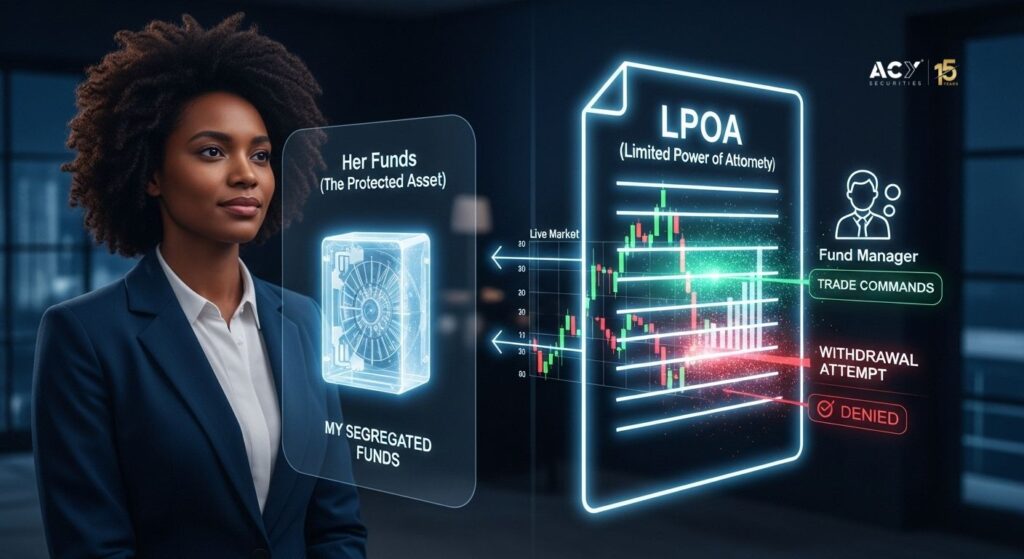
A Limited Power of Attorney (LPOA) is a legal document that is the cornerstone of the managed account model. It is an agreement between you and your client that gives you the authority to trade on their behalf. However, as the name suggests, the power is “limited.” This means that you can only perform the specific actions outlined in the document, which is typically limited to trading. You do not have the authority to deposit or withdraw funds from your client’s account. This is a crucial distinction, as it ensures that your clients’ funds remain in their own segregated accounts, providing a vital layer of security and transparency. The LPOA protects both you and your client. For the client, it provides peace of mind knowing that their funds are safe. For you, it provides the legal authority you need. The practical application of the LPOA and MAM technology is explained in this guide on how to manage multiple forex accounts.
A Simple 3-Step Plan for Aspiring Managers to Stay Compliant

For aspiring fund managers, the path to a compliant and successful business can be broken down into three simple steps:
-
Build a Verifiable Track Record: Before you can attract clients, you need to demonstrate a consistent and profitable trading history. This means having a clear, documented strategy that you can present to potential partners and clients. A unique approach, such as employing AI gold trading strategies, can be a powerful differentiator.
-
Partner with a Properly Regulated Broker: As we’ve discussed, partnering with a regulated broker is the most accessible path for many aspiring fund managers. When choosing a broker, it’s essential to do your due diligence and ensure that they are regulated by a reputable authority, such as the ASIC in Australia, the Financial Conduct Authority (FCA) in the UK, or the Cyprus Securities and Exchange Commission (CySEC) in Cyprus.
-
Ensure Every Client Relationship is Governed by a Clear LPOA: The LPOA is the legal foundation of your managed account business. It is essential to have a clear and comprehensive LPOA in place for every client, outlining the scope of your authority and the terms of your agreement.
For a comprehensive guide on launching your fund, you can refer to this forex fund manager program launch guide.
Advanced Mindsets for Building a Compliant Business
How Lori Greiner Thinks About Fund Manager Licensing

Lori Greiner, the “Queen of QVC,” has a knack for identifying winning products. Her approach is rooted in a deep understanding of product viability and legal protection. If she were to analyze the world of fund management, she would likely view a trader’s strategy as their “product.” The license and LPOA, in her eyes, would be the “patent” and legal structure that protects that product.
“Your trading strategy is your product,” she might say. “The license and LPOA are your ‘patent’ and your legal structure. Would I invest in a great product with no legal protection? Never. It’s not a real business. Getting your compliance in order isn’t a cost; it’s the single most important investment you make to turn your skill into a scalable, protectable, and valuable enterprise.” This mindset is crucial for aspiring fund managers. It reframes compliance from a burden to a strategic advantage.
10 Lessons from “The Disciplined Trader” for Fund Managers
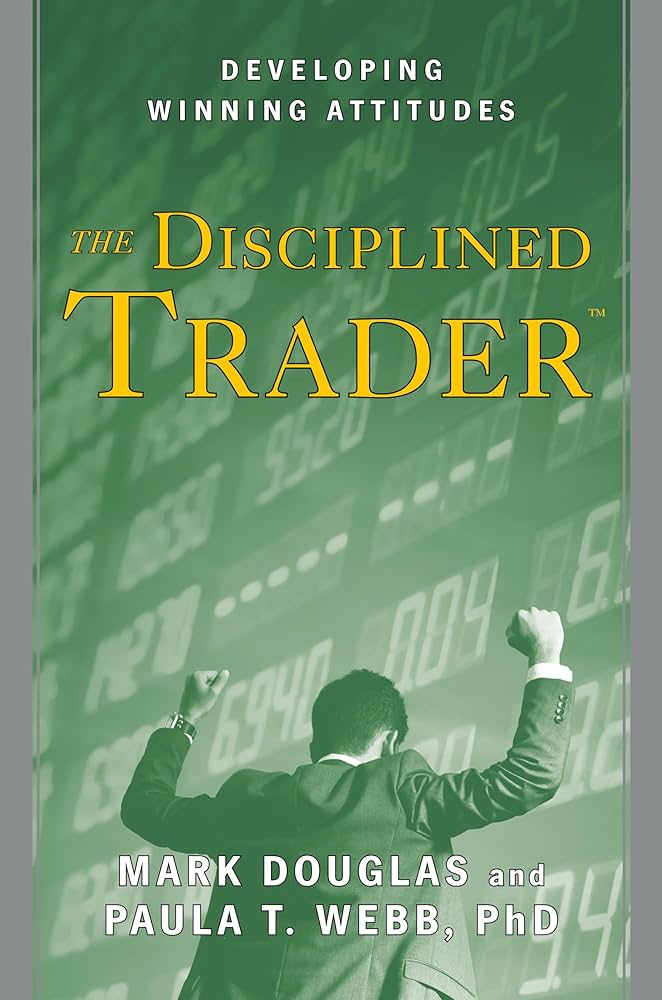
Mark Douglas’s “The Disciplined Trader” is a classic for a reason. Its wisdom on the psychology of trading can be applied to the business of fund management. Here are 10 lessons from the book and how they relate to building a compliant and successful business:
-
“Create a mental framework that neutralizes the threatening aspects of the market.” A solid legal and compliant framework does exactly this for your business, neutralizing threats.
-
“You must create a system of rules to govern your behavior.” Licensing and regulation are the ultimate system of rules for your business behavior.
-
“The market is always right.” The regulator is always right. You don’t argue with the rules; you learn to operate flawlessly within them.
-
“There is a random distribution between wins and losses for any given set of variables that define an edge.” Past performance is not indicative of future results. This is a key disclosure you must make to clients.
-
“An edge is nothing more than an indication of a higher probability of one thing happening over another.” Your track record is your edge. It’s what you use to attract clients.
-
“Every moment in the market is unique.” Every client is unique. You must have a clear understanding of their risk tolerance and investment objectives.
-
“You don’t need to know what’s going to happen next to make money.” You don’t need to predict the future of regulation, but you do need to be prepared to adapt to it.
-
“Anything can happen.” This is the mantra of risk management. A compliant business is a risk-managed business.
-
“You can’t control the market.” You can’t control the regulators, but you can control your own compliance.
-
“You are responsible for your own results.” As a fund manager, you are a fiduciary. You have a legal and ethical responsibility to act in your clients’ best interests.
Your Top Questions on Fund Manager Licensing
What happens if I manage money for the public without a license?
In most regulated jurisdictions, this is illegal and can result in severe financial penalties and legal action. It is not a risk worth taking.
Does an LPOA mean I have no liability?
No. An LPOA gives you the authority to trade, but you are still liable for acting in the client’s best interest and adhering to the agreed-upon strategy. It does not protect you from negligence.
How do I know if my broker is properly regulated?
Check their website for their license numbers and the regulatory bodies they are governed by (e.g., ASIC, FCA, CySEC). You can then verify this on the regulator’s official website.
Is it expensive to get a full financial license?
Yes, the process of obtaining a full license like an AFSL can be very expensive and time-consuming, which is why the broker partnership model is so popular for new and emerging managers.
Can I start by managing funds for my parents with just an LPOA?
In many jurisdictions, the “friends and family” exemption allows for this. However, it’s crucial to consult with a local legal professional to understand the specific rules in your country.
Conclusion
The question of licensing is not a barrier but a roadmap. By understanding the different pathways, from friends and family, to the powerful broker partnership model, and by making the LPOA the cornerstone of your business, you can launch a professional, compliant, and successful fund management career. The journey may seem daunting at first, but with the right knowledge and partners, you can turn your trading talent into a thriving business. To learn more about how to build multiple revenue streams as a forex fund manager, explore our resources and consider our money manager program to get started.
Your Path to a Smarter Trading Future Starts Now
The future of trading isn’t about replacing human intelligence but augmenting it. You now have a blueprint to take decades of trading wisdom, forge it into a powerful AI assistant, and use it to build your own trading and affiliate marketing empire.
Stop trading on emotion. Stop paying for inflexible tools. Start building your edge.
Ready to build your business and empower your clients? Join the ACY Partners Program today and start sharing your unique AI trading bot with the world.
Disclaimer:Trading Forex and CFDs involves significant risk and may not be suitable for all investors. The content of this article is for educational purposes only and should not be considered financial advice. The performance of any AI tool or trading strategy is not guaranteed. Always conduct your own research and consider your risk tolerance before trading with real capital. Ensure that when you share your app, you include this disclaimer and your ACY Partners affiliate link for any sign-ups.
For more detailed insights on developing daily trading routines, risk management, and effective position sizing strategies, explore additional articles on ACYPartners. Our experts at ACY and FinLogix are also great resources to guide your journey towards trading excellence.
Discover Our Best Gold Affiliate Program
At ACYPartners, you can browse through a selection of affiliate program and review offerings before you decide to start forex affiliate marketing.
Become An Introducing Broker
Share your expertise and become an introducing broker so you can help other traders about the benefits of joining ACY.
Stay tuned to our blog for more Forex Affiliate Marketing educational resources.
Trading involves risks.
Related Forex Affiliate Marketing blogs:
- Best Forex Affiliate Program 2025 | Top FX Affiliate Network
- Best Gold Affiliate Program: High Paying Affiliate Program for Traders
- How a Forex CPA Affiliate Program Works with a Forex Broker – What You Must Know
- How to Choose the Right Multi Account Manager Software on MetaTrader 4 (MT4)
- 10 Reasons to Use Free Financial Widgets on Your Forex Affiliate Website
- What is a MAM Account – Forex MAM and PAMM Managed Accounts
- Introducing Broker Program (IB) Business Model & How to Be Competitive
- Benefits of the ACY Forex White Label Offering
-
-
How to Promote Gold Copy Trading Ethically and Compliantly for Forex Affiliates?

Last Updated: October 22, 2025
This article is reviewed annually to reflect the latest market regulations and trends

How to Promote Gold Copy Trading Ethically and Compliantly?
The gold copy trading niche is one of the most profitable spaces for a forex affiliate. It’s also one of the riskiest, for your clients and your reputation. The affiliate who chases quick commissions with hype and cherry-picked stats is building a business on a foundation of sand, ready to be washed away by the first market downturn or regulatory change. The affiliate who builds a brand on transparency, education, and ethical promotion is building a fortress capable of withstanding market storms and earning client loyalty that lasts for years. The choice is yours.
This isn’t just another article about affiliate marketing. This is the definitive playbook for serious forex affiliates and Introducing Brokers who understand that in the high-stakes world of XAU/USD, trust is the ultimate currency. You will learn the exact framework to promote gold copy trading ethically, meet your compliance obligations, and build a resilient business that becomes a respected authority in the space. For those just starting, this guide acts as a foundational resource for the forex affiliate beginner: how to promote ethically in a high-risk industry. Choosing from the best forex affiliate programs for beginners is the first step; committing to this ethical framework is the second.
TL;DR (Too Long; Didn’t Read)
For those who need the framework now, here are the non-negotiable rules for building a compliant and trustworthy affiliate business in this niche.
-
Acknowledge the Risk First: Always begin by explaining why Gold (XAU/USD) is a high-volatility, high-risk asset. Leading with transparency doesn’t scare away serious clients; it attracts them and builds immediate trust.
-
Never Cherry-Pick Results: The cornerstone of ethical promotion is showing the full, unfiltered picture. This means highlighting maximum drawdown, losing streaks, and the overall risk profile with the same prominence as the ROI.
-
The Golden Rule of Compliance: Every single promotion, review, or analysis must include the disclaimer: “Past performance is not indicative of future results.” This is your most important shield against regulatory and reputational damage. It is non-negotiable.
-
Use a Balanced Review Template: Create compliant content by focusing on a trader’s process, discipline, and risk management, not just their impressive gains. A data-driven, balanced review serves your audience far better than a hype-fueled sales pitch.
-
Leverage Radical Transparency: The public, verifiable track record of a copy trader is your greatest asset for compliant marketing. You’re not selling a secret sauce; you’re analyzing public data. This reframes your role from salesperson to trusted analyst.
Why You Must First Explain that Gold (XAU/USD) is a High-Risk Asset?

Before you even mention a trader’s performance, your first duty as an ethical affiliate is to educate your audience on the nature of the instrument itself: Gold (XAU/USD). To promote gold copy trading ethically, you must start by framing the risks and opportunities correctly.
Gold is not a slow-moving stock. It is a highly volatile asset, influenced by a perfect storm of global factors:
-
Geopolitical Instability: Gold is a “safe-haven” asset. Wars, political tensions, and global crises can cause massive, rapid price swings.
-
Interest Rate Decisions: Decisions by central banks like the Federal Reserve have an inverse relationship with gold. Higher rates can strengthen the dollar and weaken gold, and vice-versa.
-
Inflation Data: As a traditional hedge against inflation, CPI and other economic reports can trigger significant volatility.
-
Leverage: Forex brokers offer substantial leverage on XAU/USD, which is a double-edged sword. It can amplify gains exponentially, but it can also magnify losses just as quickly, leading to catastrophic account drawdowns if not managed properly.
Your job is not to downplay this reality but to embrace it. By explaining these factors, you aren’t scaring potential clients away. You are qualifying them. You are attracting sophisticated investors who understand that risk is part of the game and are looking for a guide who respects their intelligence. A deep understanding of these dynamics is why our forex affiliate guide to 5 risk management strategies for gold (XAU/USD) copy trading is essential reading. When promoting high-value concepts like the Forex AI Gold affiliate program, discussing the future of AI gold trading, or explaining the Gold Trader Advantage, you must ground the conversation in these fundamental risks to help your audience gain a gold trading edge responsibly.
How to Promote a Signal Provider Without “Cherry-Picking”?

The single fastest way to destroy your reputation is by cherry-picking a trader’s best month and presenting it as the norm. It’s a deceptive practice that sets clients up for failure and guarantees they will blame you when reality strikes. Ethical promotion demands a full, transparent, and data-driven picture.
Instead of focusing solely on the “Total Gain %,” a professional affiliate directs their audience to the metrics that truly define a trader’s skill and risk appetite.
Metrics That Matter More Than ROI:
-
Maximum Drawdown (MDD): This is arguably the most important metric. It shows the largest peak-to-trough decline an account has suffered. A trader with a 500% gain but an 80% MDD is running a high-risk, boom-and-bust strategy. Your audience must know this.
-
Sharpe Ratio: This measures risk-adjusted return. A higher Sharpe Ratio indicates that a trader is generating better returns for the amount of risk they are taking on. It separates skilled risk managers from lucky gamblers.
-
Average Win & Average Loss: If a trader’s average loss is significantly larger than their average win, it could indicate they are holding onto losing trades for too long, a major red flag.
-
Profit Factor: This is the gross profit divided by the gross loss. A number above 2.0 is considered very good, while a number below 1.5 suggests the strategy may not be robust enough to withstand a losing streak.
When you learn to analyze and explain these metrics, you stop selling a dream and start providing a professional risk assessment. This is the core of forex affiliate compliance and the key to building a business that lasts beyond the next market cycle.
The Non-Negotiable Disclaimer: “Past Performance Is Not Indicative of Future Results”

If you remember only one thing from this guide, let it be this. This 8-word disclaimer is the bedrock of financial promotion compliance worldwide. It must become a reflex.
“Past performance is not indicative of future results.”
This isn’t just legal boilerplate; it’s a statement of profound market truth. No matter how brilliant a trader’s track record is, the future is always uncertain. A strategy that worked for the last two years may fail in the next six months. By consistently and prominently displaying this disclaimer, you are doing three critical things:
-
Meeting Regulatory Standards: Financial regulators like the FCA, ASIC, and CySEC require this or similar warnings on all promotional materials related to speculative products.
-
Protecting Your Business: It legally and ethically protects you from claims that you “guaranteed” or “promised” returns.
-
Managing Client Expectations: It constantly reminds your audience that trading involves inherent risk and that they are responsible for their own decisions. This fosters a more mature and realistic client base.
Where must this disclaimer be placed?
-
On your website: In the footer of every page and prominently displayed on any page that reviews or links to a trader.
-
In your YouTube videos: Mention it verbally and include it in the first few lines of your video description. Learning how to use YouTube to attract high-value traders compliantly is key.
-
On social media: Include it in the body of your post or as a pinned first comment. This applies to all your 5 social media strategies to promote your affiliate links.
-
In your community channels: It should be a pinned message in your thriving Forex affiliate Discord or Telegram community.
This isn’t optional. It’s the cost of entry for professionally promoting high-risk financial products.
How to Create a Compliant “Top Gold Traders” Review Page?
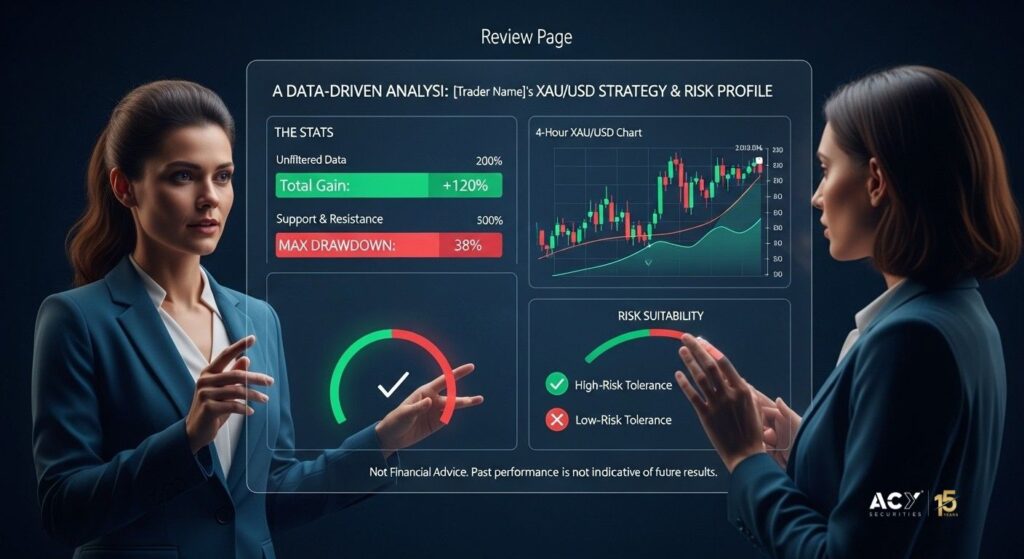
Stop writing sales pages. Start creating analytical deep dives. A compliant review page is an educational asset that empowers the user to make an informed decision. This approach not only meets compliance standards but also positions you as a credible, trustworthy analyst.
Here is a blueprint you can use to promote gold copy trading ethically:
Headline: A Data-Driven Analysis of [Trader Name]’s XAU/USD Strategy & Risk Profile
Introduction: Briefly introduce the trader, their overall performance statistics, and state the purpose of the review: to provide a balanced and objective analysis of their strategy, risk management, and suitability for different types of investors. Note: This is an analysis for educational purposes and is not financial advice. Past performance is not indicative of future results.
Section 1: The Key Performance Statistics (The Unfiltered Data)
-
Total Gain %: The headline number.
-
Monthly Average Gain %: Provides a more tempered view.
-
Maximum Drawdown %: The most critical risk metric. Explain what this number means in real terms (e.g., “A 45% drawdown means that at one point, the account was down by 45% from its peak.”)
-
Sharpe Ratio: Explain their risk-adjusted return.
-
Total Trades & Win Rate %: Shows their activity level and consistency.
-
Average Trade Duration: Are they a scalper, day trader, or swing trader?
Use clear tables or infographics to present this data. Leverage the powerful reporting available in your ACY Forex affiliate tools for gold copy trading conversions to source this information accurately.
Section 2: The Strategy (A Probable Hypothesis)
Based on their trade history (trade duration, instruments traded, timing), form a hypothesis about their trading strategy.
-
Example: “Observing the trade history, [Trader Name] appears to employ a swing trading strategy on XAU/USD, often entering positions around key support and resistance levels on the 4-hour chart. The majority of trades last between 8-24 hours, suggesting they are targeting larger price movements rather than short-term scalps.”
This demonstrates your expertise and provides value beyond just showing a profit graph.
Section 3: The Risk Profile (The Most Important Section)
This is where you earn your audience’s trust. Be brutally honest.
-
Example: “With a Maximum Drawdown of 38%, this strategy is not for the faint of heart. It is suitable for investors with a high-risk tolerance who are comfortable with significant fluctuations in their account equity. Investors with a low-risk tolerance or those using capital they cannot afford to lose should not consider this strategy. The key to success with this trader is likely a long-term outlook and the discipline to withstand periods of drawdown.”
This frank discussion is the core of a truly ethical copy trading forex affiliate strategy.
Section 4: The Verdict (A Balanced Summary)
Summarize your findings. Who is this trader good for? Who should avoid them?
-
Example: “In summary, [Trader Name] has demonstrated an impressive ability to generate high returns. However, these returns come with correspondingly high risk, as evidenced by the significant drawdown. This strategy may be suitable for experienced investors with a diversified portfolio and a high-risk appetite. It is crucial for anyone considering this trader to understand the risks involved and allocate capital accordingly.”
This approach of learning how to market a copy trader by focusing on risk is what separates the pros from the amateurs who are just chasing a quick commission.
Your Greatest Asset: How Copy Trading’s Transparency Makes Compliance Easier?

Here is the most powerful mindset shift for an ethical affiliate: You are not selling a “black box” system.
Unlike selling a secret EA or a “guru” course, copy trading platforms are inherently transparent. The trader’s entire performance history, every win, every loss, every moment of drawdown, is publicly available and verifiable.
This is a massive advantage for compliant marketing. Your role shifts from a “salesperson” trying to convince someone, to a “curator” or “analyst” who is simply interpreting publicly available data for your audience.
You can say:
-
“Don’t just take my word for it. Here is the link to their public profile. Go through their trade history yourself.”
-
“As you can see from their verified track record, they experienced a 25% drawdown in May. Let’s analyze why that happened.”
-
“My goal is to help you understand the data so you can decide if this trader’s risk profile aligns with your own.”
This approach is powerful because it’s built on verifiable proof, not on hype. It’s the secret to climbing the copy trading leaderboard as an affiliate, not by being the loudest, but by being the most trusted.
Advanced Mindsets for Building a Trusted Affiliate Brand
Once you’ve mastered the tactical framework, you need to adopt the mindsets of world-class business builders and traders. This is what elevates you from an affiliate to a brand.
How Lori Greiner, the “Queen of QVC,” Would Promote a Copy Trader
Lori Greiner built a billion-dollar empire by understanding one thing: how to present a product honestly to a customer. If she were a forex affiliate, here’s how she would think:
“A copy trader is a product. Is it a ‘hero’ or a ‘zero’? The customer needs to know everything, the features (ROI, win rate), the benefits (potential for passive growth), and the potential flaws (the risk and drawdown). You demonstrate it, you show them the results, good and bad, and you let them decide. A happy customer who understands the product comes back. An unhappy customer who was surprised by a ‘flaw’ you didn’t mention will tell everyone. Transparency isn’t just good ethics; it’s the best business strategy.“
Apply this to your next review. Present the drawdown with the same matter-of-fact tone you use for the win rate. Frame risk not as a dirty secret, but as a “product feature” that the right customer needs to be aware of. This builds unshakable trust.
10 Lessons from Mark Douglas’s “The Disciplined Trader” for Ethical Affiliates
Mark Douglas’s work is a masterclass in trading psychology. His principles are not just for traders; they are essential for affiliates who want to communicate about trading responsibly. Your marketing content must reflect a professional trading mindset.
Here’s how to apply his wisdom to your affiliate messaging:
-
“Anything can happen.” Your marketing must reflect this reality. Never use words like “guaranteed,” “certain,” or “can’t-miss.” Instead, use probabilistic language: “This strategy has historically shown an edge,” or “This approach is designed to capitalize on specific market conditions.”
-
“There is a random distribution between wins and losses.” Teach your audience not to get euphoric during a winning streak or despondent during a losing one. Your content should prepare them for both. A trader can do everything right and still have five losing trades in a row.
-
“An edge is just a higher probability of one thing happening over another.” You are not marketing a magic bullet. You are marketing a trader who has demonstrated a statistical edge over a large sample size of trades. Frame it this way to manage expectations.
-
“Every moment in the market is unique.” This is the philosophical core of “past performance is not indicative of future results.” A setup that worked 100 times before might fail on the 101st. Your content should never imply that past success will be replicated exactly.
-
“Your mind is your greatest asset and liability.” This is why it’s so powerful to create content as a forex affiliate that solves trader psychology problems. By focusing on discipline, patience, and risk management, you serve your audience on a much deeper level than just showing them a leaderboard.
-
“The market is always right.” An ethical affiliate never blames the market or makes excuses for a trader’s losses. Instead, they analyze the drawdown as part of the strategy’s cost of doing business. This objective, non-emotional analysis builds credibility.
-
“Pre-define your risk.” Just as a trader must define their stop-loss, you must define the risks of a strategy to your audience before they invest. Your compliant review template is your way of helping your audience pre-define their risk.
-
“You don’t need to know what’s going to happen next to make money.” A trader just needs their edge to play out over time. Similarly, your marketing shouldn’t be about predicting the next big move. It should be about analyzing the long-term viability and risk parameters of a trader’s process.
-
“Accept the risk completely.” Encourage your audience to only follow traders whose risk profile they can fully accept. If a 40% drawdown would cause them to panic and close their account, they should not be following a trader with a 40% MDD, no matter the potential returns.
-
“Focus on process, not outcomes.” The best traders focus on executing their strategy flawlessly, not on the results of any single trade. Your content should mirror this. Highlight the trader’s consistent process and disciplined risk management, as these are more indicative of long-term success than a single month’s spectacular ROI. This is how you build a sustainable forex affiliate sales funnel based on education, not hype.
Your Top Questions on Ethical and Compliant Marketing
Can I still make money if I’m always talking about risk?
Yes, and you’ll likely make more in the long run. Constantly highlighting risk does two things: 1) It builds immense trust, making your recommendations more powerful. 2) It filters out get-rich-quick gamblers and attracts serious, long-term clients. These are the clients with more capital who stick around for years, making them far more profitable for a rebate-based affiliate. It is the foundation for how to build a loyal following that drives forex affiliate revenue.
Where should I put my risk disclaimers?
Everywhere. A good rule of thumb is: if you are reviewing, mentioning, or linking to a copy trader, a risk disclaimer needs to be clearly visible. This includes on the webpage itself, in the description box of your YouTube videos, as a pinned comment on social media posts, and in the footer of your emails.
Am I giving “financial advice” if I review a trader?
You must make it explicitly clear that you are not. Your role is that of an analyst or commentator, not an advisor. Use language like:
-
“This is my analysis for educational and informational purposes only.”
-
“This is not financial advice. Please do your own research and consult with a qualified financial advisor.”
-
“My goal is to present the publicly available data in an easy-to-understand format.”
Your job is to present data and context, not to give personal directives.
What happens if I don’t follow these forex affiliate compliance rules?
The consequences can be severe and multi-faceted. You risk losing your partnership with your broker, as they are under immense regulatory pressure to ensure their partners act responsibly. You will irrevocably damage your reputation with your audience, losing their trust and future business. In some jurisdictions, making unsubstantiated financial claims can even lead to legal and financial penalties. It’s simply not worth the risk.
Is it easier to be compliant with a Rebate or a CPA commission model?
The Rebate (or Revenue Share) model naturally aligns better with ethical, long-term promotion. With a rebate model, you earn commissions based on the trading volume of your clients over time. This incentivizes you to find high-quality clients who understand the risks, stick with a strategy, and trade for the long haul. A CPA (Cost Per Acquisition) model, which pays a one-time fee for a signup, can sometimes tempt affiliates to use hype to get quick conversions, even if those clients aren’t a good fit and quit after a month. Understanding the difference between forex commission structures like CPA, Rebates, and Hybrid models is crucial. Focusing on high rebate forex affiliate programs often leads to a more sustainable and ethical business.
Conclusion: Your Reputation is Your Only True Asset
The gold copy trading market is filled with noise, hype, and promises of instant wealth. In this environment, the affiliate who chooses the path of radical transparency, rigorous analysis, and responsible education doesn’t just stand out, they become a lighthouse.
To promote gold copy trading ethically is not a limitation; it is your single greatest competitive advantage. It’s a commitment that transforms your work from the stressful forex affiliate program grind into the rewarding process of building a respected brand. By leveraging the best marketing support for serious forex affiliates and focusing on this ethical framework, you build a fortress of trust.
This fortress will attract the highest-quality clients, foster long-term loyalty, and ensure your business not only survives but thrives for years to come. In the high-stakes world of forex, the trust you build is the only asset that truly matters.
Your Path to a Smarter Trading Future Starts Now
The future of trading isn’t about replacing human intelligence but augmenting it. You now have a blueprint to take decades of trading wisdom, forge it into a powerful AI assistant, and use it to build your own trading and affiliate marketing empire.
Stop trading on emotion. Stop paying for inflexible tools. Start building your edge.
Ready to build your business and empower your clients? Join the ACY Partners Program today and start sharing your unique AI trading bot with the world.
Disclaimer:Trading Forex and CFDs involves significant risk and may not be suitable for all investors. The content of this article is for educational purposes only and should not be considered financial advice. The performance of any AI tool or trading strategy is not guaranteed. Always conduct your own research and consider your risk tolerance before trading with real capital. Ensure that when you share your app, you include this disclaimer and your ACY Partners affiliate link for any sign-ups.
For more detailed insights on developing daily trading routines, risk management, and effective position sizing strategies, explore additional articles on ACYPartners. Our experts at ACY and FinLogix are also great resources to guide your journey towards trading excellence.
Discover Our Best Gold Affiliate Program
At ACYPartners, you can browse through a selection of affiliate program and review offerings before you decide to start forex affiliate marketing.
Become An Introducing Broker
Share your expertise and become an introducing broker so you can help other traders about the benefits of joining ACY.
Stay tuned to our blog for more Forex Affiliate Marketing educational resources.
Trading involves risks.
Related Forex Affiliate Marketing blogs:
- Best Forex Affiliate Program 2025 | Top FX Affiliate Network
- Best Gold Affiliate Program: High Paying Affiliate Program for Traders
- How a Forex CPA Affiliate Program Works with a Forex Broker – What You Must Know
- How to Choose the Right Multi Account Manager Software on MetaTrader 4 (MT4)
- 10 Reasons to Use Free Financial Widgets on Your Forex Affiliate Website
- What is a MAM Account – Forex MAM and PAMM Managed Accounts
- Introducing Broker Program (IB) Business Model & How to Be Competitive
- Benefits of the ACY Forex White Label Offering
-
-
How to Build a Loyal Following That Drives Forex Affiliate Revenue?

Last Updated: October 21, 2025
This article is reviewed annually to reflect the latest market regulations and trends

How to Build a Loyal Following That Drives Forex Affiliate Revenue?
Traffic is fleeting. Conversions are transactional. But loyalty is a fortress. The most successful businesses in the world don’t just sell products; they build tribes. For a forex affiliate, your greatest competitive advantage isn’t a better ad; it’s a loyal following that trusts your every recommendation. This is the difference between an income stream that disappears with the next algorithm change and one that drives rock-solid, residual revenue for years. Many affiliates grapple with the gap between their forex affiliate marketing expectations vs reality, but a community-centric approach is the ultimate forex affiliate marketing strategy. This is the best-kept secret in the online business world: a loyal community is the most valuable asset you can own, turning your venture into more than just an AI side hustle.
This article is the ultimate strategic guide to build a loyal following that drives forex affiliate revenue by transforming your audience into a high-trust community. We will explore the foundational principles of community building, providing a complete blueprint for transitioning from a transactional affiliate model to a relational, community-driven enterprise. For those ready to build a thriving hub for their followers, this guide on how to build a thriving forex affiliate Discord or Telegram community will show you how to start.
TL;DR (Too Long; Didn’t Read)
-
Own Your Audience: Shift from “rented” traffic (social/search) to an “owned” audience (community/email list) to build a defensible business moat.
-
The 5 Cs of Content: Structure your community content around Case Studies, Curation, Conversation, Collaboration, and Critiques to maximize engagement.
-
Video is the Trust Accelerator: Use video (YouTube, TikTok) and live streams to build a personal, unshakeable connection faster than any text-based content.
-
Monetize Ethically: Position your partner broker as the “Official Community Broker,” ensuring your monetization is a natural extension of the value you provide.
-
The Best Defense is Value: A loyal community is the only business asset that competitors cannot easily replicate or buy.
Why a Community is Your Most Defensible Asset?

In the world of affiliate marketing, traffic is often seen as the lifeblood of the business. However, relying solely on rented traffic from sources like social media and search engines is a precarious strategy. Algorithm changes, increasing ad costs, and competitor saturation can decimate your traffic overnight. This is where the concept of an “owned” audience comes into play. An owned audience, in the form of a dedicated community and an email list, is a defensible asset, a business moat that protects you from market volatility and competitor attacks. Many wonder, do you need to be a trading pro to be the best forex affiliate?. The answer is no; you need to be a pro at building trust, and community is the ultimate tool for that.
A strong community fosters a sense of belonging and trust that cannot be replicated. It transforms your followers from passive consumers of your content into active participants in a shared journey. This deep-seated loyalty means they are more likely to heed your recommendations, engage with your content, and remain with you for the long term. This is the cornerstone of a complete guide to building a forex affiliate business from anywhere.
How Do You Choose the Right Platform for Your Trading Community?

Selecting the right platform is a critical first step in building your community. The ideal choice will depend on your content style, audience demographics, and long-term goals. Your platform choice should also align with the broker you represent, as the goal is to create a seamless experience for your members when they sign up. Partnering with one of the best forex affiliate programs for beginners can provide the support and tools needed to integrate your community effectively.
-
Discord:
-
Pros: Highly customizable with roles, channels, and bots. Excellent for real-time chat, voice channels, and screen sharing, making it ideal for live trading sessions. Fosters a strong sense of community and exclusivity.
-
Cons: Can have a steeper learning curve for new users. The real-time nature can be overwhelming if not managed properly.
-
-
Telegram:
-
Pros: Simple and intuitive user interface. Excellent for broadcasting messages to a large audience through channels. Mobile-first design makes it accessible to a global audience.
-
Cons: Less feature-rich than Discord for community management. Can be prone to spam if not properly moderated.
-
-
Facebook Groups:
-
Pros: Leverages a massive existing user base, making it easy for people to join. Familiar interface for most users. Integrated with other Facebook features like live streaming.
-
Cons: Subject to Facebook’s algorithms and policies, meaning you don’t truly own the platform. Can be distracting with notifications from the broader Facebook ecosystem.
-
Ultimately, the best platform is the one that allows you to provide the most value to your members and fosters the type of interaction you want to encourage.
The “5 Cs” of High-Value Community Content

A thriving community is built on a foundation of consistent, high-value content. The “5 Cs” framework provides a structured approach to creating content that maximizes engagement and reinforces your authority:
-
Case Studies: Deep dives into successful trading strategies, top copy traders, or your own trading performance build credibility and provide actionable insights. This is where you can showcase the real-world application of the strategies you advocate, including a full tutorial on how to start forex affiliate marketing with AI.
-
Curation: The forex market is noisy. By curating the most important news, analysis, and market-moving events, you become a trusted filter for your community. Share articles that tackle complex topics like the AI gold trading hype vs reality or provide a gold trading AI part-time trader guide. This is how you help members gain a gold trading edge and even show them how AI gold trading solves the problem of trading while working full-time.
-
Conversation: Spark daily discussions with open-ended questions like, “What are you trading today?” or “What’s your biggest trading challenge this week?” These prompts encourage members to share their own experiences and learn from one another. This is a prime opportunity to create content that solves trader psychology problems.
-
Collaboration: Involve your community in the content creation process. Host live analysis sessions where members can contribute their own trade ideas. This collaborative approach makes your members feel like they are part of something bigger than themselves.
-
Critiques: Offer to review members’ trades in a constructive and educational manner. This not only provides immense value to the individual but also teaches the entire community valuable lessons about forex affiliate marketing risk and reward. This is a moment to reinforce how to promote ethically in a high-risk industry. Framing feedback using the 5 psychological triggers to increase forex affiliate conversions can make it even more effective.
How to Use Video and Live Streams to Build Personal Trust?
In a digital world, trust is the ultimate currency. While text-based content is valuable, video is the most powerful tool for building a personal, unshakeable connection with your audience. When your followers can see your face, hear your voice, and witness your expertise in real-time, it creates a level of trust that is impossible to replicate with text alone. This is how to grow your forex affiliate followers by building trust and using AI.
Here are some video content ideas to accelerate trust:
-
Weekly Market Outlooks: Share your analysis of the upcoming trading week, highlighting key currency pairs and potential trade setups.
-
Live Q&As: Host regular live sessions where you answer your community’s most pressing questions.
-
“Watch Me Analyze the Chart” Sessions: Take your audience behind the scenes of your trading process.
-
Promote Your Community: Use the ultimate guide to forex affiliate marketing on YouTube & TikTok to share snippets of your community’s success stories. These platforms are not just for content; they are powerful funnels into your owned community, and you should employ effective social media strategies to promote your forex affiliate links that lead back to your group.
How Do You Monetize a Community Without Selling Out?
Monetizing a community requires a delicate balance. The key is to adopt a “value-first” approach, where your monetization strategies are a natural extension of the value you provide. This begins with understanding how to promote ethically.
-
The “Official Community Broker”: Instead of aggressively pushing your affiliate link, position your partner broker as the “Official Community Broker.” Frame it as a tool that the community uses to execute the strategies you discuss. Choosing one of the best forex affiliate programs for beginners ensures you have a quality product to recommend.
-
Premium Tiers: Once your free community is thriving, you can introduce a premium tier for exclusive content, such as advanced analysis or one-on-one coaching.
-
Integrated Affiliate Links for Tools: Recommend valuable trading tools. A powerful method is to use a copy trading forex affiliate strategy, where you can show members how to use ACY forex affiliate tools for gold copy trading conversions.
Advanced Mindsets for Building a Loyalty Brand
How Daymond John Thinks About Building a Loyal Following

Daymond John, the founder of FUBU, is a master of building brand loyalty through community. From his perspective, a community is the ultimate expression of a brand. He would argue that you’re not selling a broker; you’re selling the identity of belonging to a smart, supportive community. The goal is to make the client feel like they are part of a movement, “For Us, By Us”, and that leaving the broker means leaving the tribe. This sense of belonging is a powerful motivator that transcends transactional relationships.
10 Lessons from “This is Marketing” by Seth Godin

Seth Godin’s “This is Marketing” is a masterclass in modern marketing. Here are 10 key lessons that can be applied to building a loyal forex affiliate community:
-
“Marketing is the generous act of helping someone.” Your community is the ultimate act of generosity.
-
“The smallest viable audience.” Your community is where you delight your core, loyal audience.
-
“People don’t buy what you do; they buy why you do it.” The community reinforces your “Why” daily.
-
“Stories, connections, and experiences.” A community thrives on shared stories and experiences.
-
“Empathy is the heartbeat of modern marketing.” Understand your members’ needs to serve them better.
-
“Confidence comes from taking action.” Encourage small, consistent actions to build member confidence.
-
“Remarkable isn’t about being loud – It’s about being worth talking about.” A valuable community markets itself through word-of-mouth.
-
“Direction first, then speed.” Establish a clear, value-driven direction before focusing on growth.
-
“Sales is just helping the right people solve their problem.” Position your broker as a solution within the community.
-
“Fix the funnel.” A community builds trust upfront, fixing the leaky affiliate funnel.
Your Top Questions on Building a Loyal Following
-
What is the ideal size for a community?
-
A: Quality over quantity. A highly engaged group of 100-500 members is far more valuable than a silent group of 5,000. Focus on engagement rates.
-
-
Should I charge a fee for my community?
-
A: Start free to build critical mass. Once you have a high-value content engine, you can introduce a premium tier for exclusive analysis or access.
-
-
How do I handle negative market talk in the community?
-
A: Be transparent and positive. Use downturns as a chance to teach risk management and reinforce long-term strategy, which builds immense trust.
-
-
Is a community better than an email list?
-
A: No, they are complementary. The community builds loyalty and conversation. The email list is your reliable, owned broadcast channel. The two work together, so it’s crucial to build a forex affiliate email list that converts 24/7.
-
-
How do I get my first 5 clients from the community?
-
A: By creating a dedicated, easy-to-follow #getting-started channel that clearly outlines the benefits of using the community’s preferred platform. This is a practical guide on how to get your first 5 forex clients as an introducing broker.
-
Conclusion
Building a loyal following is the ultimate defense against competition and the most effective engine for long-term revenue. By prioritizing community, trust, and ethical monetization, you can build a sustainable business that is immune to the volatility of the market and the whims of the algorithm. This approach is the foundation for learning how to scale your forex affiliate marketing venture and learning how to create a forex affiliate sales funnel that works. When you have a loyal community, you are not just looking to convert forex affiliate commissions; you are building a legacy. With the best marketing support for serious forex affiliate traders, you can turn your affiliate business into a thriving, community-driven enterprise.
Your Path to a Smarter Trading Future Starts Now
The future of trading isn’t about replacing human intelligence but augmenting it. You now have a blueprint to take decades of trading wisdom, forge it into a powerful AI assistant, and use it to build your own trading and affiliate marketing empire.
Stop trading on emotion. Stop paying for inflexible tools. Start building your edge.
Ready to build your business and empower your clients? Join the ACY Partners Program today and start sharing your unique AI trading bot with the world.
Disclaimer:Trading Forex and CFDs involves significant risk and may not be suitable for all investors. The content of this article is for educational purposes only and should not be considered financial advice. The performance of any AI tool or trading strategy is not guaranteed. Always conduct your own research and consider your risk tolerance before trading with real capital. Ensure that when you share your app, you include this disclaimer and your ACY Partners affiliate link for any sign-ups.
For more detailed insights on developing daily trading routines, risk management, and effective position sizing strategies, explore additional articles on ACYPartners. Our experts at ACY and FinLogix are also great resources to guide your journey towards trading excellence.
Discover Our Best Gold Affiliate Program
At ACYPartners, you can browse through a selection of affiliate program and review offerings before you decide to start forex affiliate marketing.
Become An Introducing Broker
Share your expertise and become an introducing broker so you can help other traders about the benefits of joining ACY.
Stay tuned to our blog for more Forex Affiliate Marketing educational resources.
Trading involves risks.
Related Forex Affiliate Marketing blogs:
- Best Forex Affiliate Program 2025 | Top FX Affiliate Network
- Best Gold Affiliate Program: High Paying Affiliate Program for Traders
- How a Forex CPA Affiliate Program Works with a Forex Broker – What You Must Know
- How to Choose the Right Multi Account Manager Software on MetaTrader 4 (MT4)
- 10 Reasons to Use Free Financial Widgets on Your Forex Affiliate Website
- What is a MAM Account – Forex MAM and PAMM Managed Accounts
- Introducing Broker Program (IB) Business Model & How to Be Competitive
- Benefits of the ACY Forex White Label Offering
-
-
How to Use YouTube to Attract High-Value Forex Traders for Forex Affiliate?

Last Updated: October 21, 2025
This article is reviewed annually to reflect the latest market regulations and trends

How to Use YouTube to Attract High-Value Forex Traders (2025): The Forex Affiliate Guide
YouTube is saturated with forex content promising Lamborghinis and overnight riches. But high-value traders aren’t searching for hype; they’re searching for expertise. While most affiliates are creating noise, a select few are building authority, trust, and a seven-figure business. The difference? They understand that YouTube is not a lottery ticket; it’s a television network, and they are the star. They know how to use YouTube to attract forex traders who are serious about the markets, have significant capital, and are looking for a trusted partner, not a guru.
This is not another guide on keyword stuffing your descriptions or creating clickbait thumbnails. This is the definitive playbook for building a real, sustainable brand that attracts and converts high-value forex traders. It’s a strategy that moves beyond short-term tactics and focuses on the long-term asset that matters most: your reputation. We will deconstruct the exact content frameworks, conversion engines, and advanced branding mindsets you need to build a media empire, one video at a time. This is the foundation upon which a successful affiliate business is built, and it starts with understanding the complete landscape of video marketing. For a comprehensive overview, explore the ultimate guide to forex affiliate marketing on YouTube & TikTok.
TL;DR (Too Long; Didn’t Read)
-
Content is King: High-value traders watch in-depth analysis, strategy backtests, and professional tutorials, not “get rich quick” videos.
-
The “Hero, Hub, Help” Model: Structure your channel with big “Hero” videos for reach, weekly “Hub” shows for retention, and searchable “Help” tutorials for new discovery.
-
Master the Review: A detailed, honest video review of a top Gold Copy Trader is one of the highest-converting video formats you can create.
-
Strategic Link Placement: Your affiliate links belong in the first three lines of your description, in a pinned comment, and mentioned verbally, not spammed everywhere.
-
Funnel to Community: The ultimate goal of your YouTube channel is to funnel your most engaged viewers into a private Discord or Telegram community you control.
What Do Serious Traders Actually Watch?

The fundamental mistake most forex affiliates make on YouTube is creating content for beginners who want to get rich quick. While this audience is large, it’s also fickle, has low conversion value, and is quick to blame others for their losses. High-value traders, those with experience, capital, and a professional mindset, are an entirely different audience with different needs. To effectively use YouTube to attract forex traders of this caliber, your content must reflect their values: data, strategy, and professionalism.
Forget the hype. Your goal is to create content that a full-time trader, a prop firm analyst, or a small fund manager would find genuinely valuable. This means shifting your focus from promising outcomes to demonstrating process. Serious affiliates understand that this level of quality requires dedication, and they often seek out the best marketing support to ensure their content meets professional standards.
What High-Value Traders Value:
-
In-Depth Market Analysis: Weekly outlooks, trade recaps, and macroeconomic breakdowns that offer a unique perspective they can’t get from a standard economic calendar. They want to understand the “why” behind market movements, not just the “what.”
-
Historical Strategy Backtesting: This is one of the most powerful content formats. Take a popular trading strategy (e.g., London Breakout, Silver Bullet) and rigorously backtest it over 100, 200, or even 500 trades. Show the results, the equity curve, the max drawdown, and the win rate. This data-driven approach builds immense credibility.
-
Professional Platform & Tool Tutorials: Go beyond the basics of “how to place a trade.” Create detailed tutorials on advanced features within MT5, TradingView, or other platforms. For example, a video on how to properly use the Fibonacci tool, how to set up custom indicators, or how to analyze a broker’s tick data for slippage.
-
Risk Management Frameworks: High-value traders are obsessed with risk management. Content that explores position sizing models, understanding correlation, or managing drawdown is far more valuable than another video on a “99% win rate” indicator.
By creating content that respects the intelligence of your audience, you automatically filter out the noise and begin to cultivate a following of serious traders who see your channel as a professional resource, not just entertainment.
The “Hero, Hub, Help” Model: Your YouTube Channel Framework

The “Hero, Hub, Help” model is a content strategy framework used by major brands like Google and GoPro, and it applies perfectly to building a forex affiliate YouTube channel. It ensures you have a balanced content mix that attracts new viewers, retains your existing audience, and serves the needs of traders actively searching for solutions.
“Hero” Content (for Maximum Reach)
Hero content is your big, ambitious, “go-viral” project. These videos are designed to be shared widely and attract a large number of new subscribers to your channel. They often require more time, effort, and resources to create, but a single successful Hero video can transform your channel’s growth trajectory. You might only produce these 2-4 times per year.
-
Forex Affiliate Example: “I Backtested 100 Days of the London Breakout Strategy on Gold: Here’s What I Learned.” This type of data-driven project is immensely valuable and shareable. You could also explore more advanced topics, like creating a video testing 5 AI Gold Trading Strategies to Attract High-Value Clients.
“Hub” Content (for Audience Retention)
Hub content is your regularly scheduled programming, the reason subscribers stick around. This is your weekly or bi-weekly show that your core audience comes to expect. It’s designed to build community and keep your channel top-of-mind. Consistency is the key to success with Hub content.
-
Forex Affiliate Example: “This Week in Forex: Top 3 Setups for EUR/USD and Gold” or “Reviewing the Top 3 Copy Traders of the Month.” This format establishes you as a consistent source of valuable, timely analysis. It’s also the perfect place to discuss deeper topics, such as the crucial 5 Risk Management Strategies for Gold (XAU/USD) Copy Trading.
“Help” Content (for New Discovery)
Help content is the foundation of your channel’s organic growth. These are evergreen, searchable videos that answer specific questions your target audience is typing into Google and YouTube. This content works for you 24/7, constantly bringing new, highly-motivated viewers to your channel.
-
Forex Affiliate Example: “How to Use the Fibonacci Tool on MT5,” or “What is Max Drawdown? A 5-Minute Guide.” These videos solve specific problems and are critical for long-term discovery. An excellent topic for this format would be answering the common question, “Does anybody trade while working full-time?,” and explaining how certain strategies or tools can help. The key is to create content that solves trader psychology problems, as this builds a deep connection with the audience.
By balancing these three types of content, you create a powerful engine. Help content brings in new viewers, Hub content turns them into a loyal community, and Hero content periodically injects massive growth into the entire system.
How to Create a Compelling Gold Copy Trader Review?
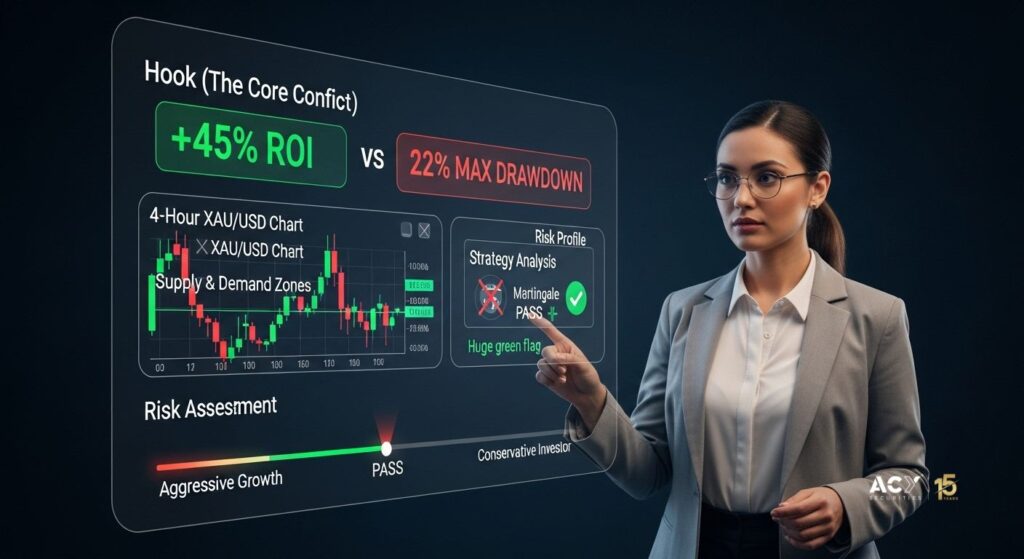
One of the highest-converting video formats you can create as a forex affiliate is an in-depth, unbiased review of a specific trader or strategy on a copy trading platform. High-value individuals are often too busy to trade themselves but have the capital to invest, making copy trading an attractive option. Your job is to be their trusted research analyst.
This is especially effective when focusing on a popular instrument like Gold (XAU/USD). A detailed Copy Trading Forex Affiliate Strategy centered on these reviews can become a cornerstone of your business.
Here is a step-by-step video script template:
-
The Hook (0-30 seconds): Start with a direct, compelling question. Don’t waste time.
-
“Is [Trader’s Name] the best Gold trader you can copy in 2025? They boast a 45% return in the last 6 months, but their drawdown is hitting 20%. Let’s break down the data and see if they are worth your capital.”
-
-
The Stats Analysis (1-3 minutes): This is the core of the video. Open a screen recording of the trader’s profile and statistics. Walk the viewer through the numbers that matter.
-
ROI & Profit Factor: “First, let’s look at the return on investment. It’s impressive, but is it consistent? The profit factor of 1.8 tells us they are making more than they are losing on average, which is a strong sign.”
-
Drawdown (Max & Average): “Now, the most important metric: drawdown. Their max drawdown hit 22%. You need to ask yourself if you are comfortable with a potential 22% drop in your account equity. This is a critical risk assessment.”
-
Average Trade Duration & Frequency: “They hold trades for an average of 8 hours, so this is a swing trader, not a scalper. They place about 5-7 trades per week. This tells us they are selective.”
-
-
The Strategy Deep Dive (2-4 minutes): Go beyond the stats. Look at their open and closed trades. Try to reverse-engineer their strategy.
-
“Looking at their past trades on XAU/USD, I see a clear pattern. They tend to sell at key supply zones and buy at demand levels, often using the 4-hour chart. They are not using a martingale strategy, which is a huge green flag. They seem to be a pure price action trader.”
-
-
The Risk Assessment (1-2 minutes): Be honest and transparent. This builds immense trust. Who is this trader good for, and who should avoid them?
-
“So, who is this trader suitable for? If you have a high-risk tolerance and are looking for aggressive growth, this could be a fit. However, if you are a conservative investor or nearing retirement, the 22% drawdown might be too volatile for your portfolio. This is not a ‘set and forget’ copy trader; you need to be aware of the risks involved.”
-
-
The Call to Action (30 seconds): Guide the viewer to the next step clearly and professionally.
-
“I’ve done the initial research for you, but you need to do your own due diligence. If you want to check out their full stats and see every trade for yourself, I’ve put the official, direct link right at the top of the description below.”
-
This transparent, data-driven format positions you as a trusted advisor, making it one of the most effective ways to use YouTube to attract forex traders and drive high-quality conversions.
Where to Place Your Affiliate Links for Max Clicks?
How you present your affiliate links is just as important as the content itself. The goal is to be helpful and transparent, not spammy. High-value traders are repelled by aggressive, desperate marketing. Your link placement should be strategic, professional, and easy to find. This also extends to the type of program you choose; for a sustainable brand, exploring high-rebate forex affiliate programs is often superior, as ongoing rebates align with the long-term value you provide to your clients.
Your Best-Practices Checklist:
-
? The Description’s “Golden Triangle”: The first three lines of your YouTube description are critical. This is the text that appears above the “Show more” button. Your most important link, along with a clear call to action, must be here.
-
? The Pinned Comment: Immediately after publishing your video, post a comment with your primary link and a compelling, value-driven reason to click. Then, pin it. The pinned comment often gets more engagement than the description itself.
-
? On-Screen Graphics: Use subtle, professional lower-thirds or end-screen graphics that display a shortened, branded link. This is a non-intrusive way to keep your call to action visible.
-
? The Verbal Call to Action (CTA): People listen more than they read. You must say your call to action out loud in the video. It reinforces the message and guides the viewer’s next step.
By following this checklist, you make it easy for motivated viewers to take action without alienating the sophisticated audience you’re working to attract.
How to Turn Viewers into Community Members?

Here is a secret that the most successful media brands understand: the goal of your content is not just to get a click. The ultimate goal is to move your audience from a platform you don’t control (YouTube) to an asset you own.
While your “Help” and “Hero” videos might focus on a direct affiliate CTA, your weekly “Hub” content should have a different primary objective: funneling your most engaged viewers into a private Discord or Telegram community. This is the top of your marketing funnel. From there, you can nurture your audience and guide them through a well-designed forex affiliate sales funnel that provides increasing value at each step.
Why is this so powerful?
-
Ownership: The YouTube algorithm can change. Your channel could be unfairly flagged. But your community is yours. It’s a direct line of communication to your most loyal fans.
-
Deeper Connection: This is the ideal environment to build a relationship that goes beyond video. It’s the perfect platform to nurture leads for your forex affiliate email list that converts 24/7.
-
Higher Conversion: Members of your private community have raised their hands and identified themselves as highly interested. This allows you to implement more targeted social media strategies to promote your forex affiliate links with an audience that is already warm to your message.
This strategy transforms you from an affiliate who rents YouTube’s audience into a business owner who owns a dedicated community.
Advanced Mindsets for Building a Media Brand
To truly succeed, you must stop thinking like a simple “forex affiliate” and start thinking like a media executive. Your YouTube channel is not just a collection of videos; it’s a brand. Two brilliant minds offer the perfect frameworks for this mindset shift: Daymond John and Seth Godin.
How Daymond John Thinks About a Forex YouTube Channel
Daymond John, the founder of FUBU, built an empire with his “power of broke” philosophy. He had hustle, a clear message, and an obsession with his community. Here’s how he would approach your channel:
-
Your Brand is Everything: “Your YouTube channel is your brand. Every video, every thumbnail, every comment you reply to builds or erodes that brand. You don’t need a big budget; you need hustle and a clear message.” This is the essence of how to grow your forex affiliate followers by building trust and using AI.
-
For Us, By Us (FUBU): Your channel should adopt the same mindset: “For Traders, By a Trader.” Own that identity. Your content should speak the language of real traders, addressing their real pains and problems.
-
Leverage Modern Tools: Daymond John would be obsessed with efficiency. He would provide a full tutorial on how to start forex affiliate marketing with AI to streamline content creation and data analysis. He would see technology not as a replacement for authenticity, but as a tool to amplify it, especially when you need to market AI trading in XAU/USD to your leads.
10 Lessons from “This is Marketing” by Seth Godin
Seth Godin’s philosophy is the antidote to the spammy tactics that plague the financial niche. His core idea is that marketing should be a generous act of helping others.
-
“Serve the smallest viable audience.” Don’t make videos for “everyone.” Make them for “full-time traders who need to understand gold.” Your focus will attract the right people.
-
“Marketing is the generous act of helping someone solve a problem.” Your channel should be an act of generosity. When you help them, you earn their trust, and eventually, their business.
-
“People don’t buy what you do; they buy why you do it.” They don’t just watch your analysis; they watch because they trust your process and your “Why.”
-
“Create tension, then relieve it.” A good video hook creates tension. The rest of the video relieves it by explaining why and offering a better solution.
-
“Show up, regularly, with a consistent message.” Your weekly “Hub” video is the consistent, reliable presence that builds trust over time. This consistency is the foundation of understanding how forex traders earn through affiliate marketing.
-
“Earn attention, don’t steal it.” Clickbait steals attention. In-depth, valuable analysis earns it.
-
“Marketing is about making change happen.” Your goal is to change your audience’s perspective from confused beginners into confident traders.
-
“Everyone is a marketer.” Create content so good that your audience feels proud to share it.
-
“The story is the strategy.” Your channel needs a narrative. Are you the data-driven analyst? The experienced mentor? This story makes your brand memorable.
-
“Trust is as scarce as attention.” In the financial world, trust is the single most valuable asset. Build it with honesty, transparency, and a genuine desire to help.
Your Top Questions on YouTube for Forex Affiliates
How long should my forex videos be?
The length should match the value. “Help” videos can be 5-10 minutes. “Hub” videos are often 15-20 minutes. “Hero” videos can be 30+ minutes, especially for detailed backtesting projects.
Do I need expensive camera gear to start?
No. A high-quality microphone and good screen recording software are far more important. High-value traders care about the quality of your information, not your camera.
How do I get my first 1000 subscribers?
By consistently creating searchable “Help” content that solves specific problems. This is how new people discover you. It’s the first step in learning how to get your first 5 forex clients as an Introducing Broker.
What exactly is an Introducing Broker?
An Introducing Broker (IB) is a person or company that refers clients to a forex broker. To learn more about the role, especially in the context of popular strategies, you can read this guide on what is an Introducing Broker with a XAU/USD strategy.
Can I get in trouble for giving financial advice?
Absolutely. It is critical that you include a clear disclaimer in all of your content stating that it is for educational purposes only and is not financial advice. This is non-negotiable.
Conclusion: From Affiliate to Authority
Ultimately, learning how to use YouTube to attract forex traders is not about chasing viral trends. It’s about building a professional, trusted media brand, brick by brick. By rejecting hype and delivering immense value, you build a moat around your business that competitors cannot cross.
When you adopt the Hero, Hub, Help model, master the data-driven review, and funnel your audience into a community you own, you are no longer just an affiliate. You are an authority. This is the core of the ultimate forex affiliate marketing strategy: ACY-powered blueprint, and it is the roadmap for creating a sustainable business. With this approach, you have a complete guide to building a forex affiliate business from anywhere.
The path to attracting high-value clients is paved with generosity, expertise, and consistency. Start building your media empire today.
Your Path to a Smarter Trading Future Starts Now
The future of trading isn’t about replacing human intelligence but augmenting it. You now have a blueprint to take decades of trading wisdom, forge it into a powerful AI assistant, and use it to build your own trading and affiliate marketing empire.
Stop trading on emotion. Stop paying for inflexible tools. Start building your edge.
Ready to build your business and empower your clients? Join the ACY Partners Program today and start sharing your unique AI trading bot with the world.
Disclaimer:Trading Forex and CFDs involves significant risk and may not be suitable for all investors. The content of this article is for educational purposes only and should not be considered financial advice. The performance of any AI tool or trading strategy is not guaranteed. Always conduct your own research and consider your risk tolerance before trading with real capital. Ensure that when you share your app, you include this disclaimer and your ACY Partners affiliate link for any sign-ups.
For more detailed insights on developing daily trading routines, risk management, and effective position sizing strategies, explore additional articles on ACYPartners. Our experts at ACY and FinLogix are also great resources to guide your journey towards trading excellence.
Discover Our Best Gold Affiliate Program
At ACYPartners, you can browse through a selection of affiliate program and review offerings before you decide to start forex affiliate marketing.
Become An Introducing Broker
Share your expertise and become an introducing broker so you can help other traders about the benefits of joining ACY.
Stay tuned to our blog for more Forex Affiliate Marketing educational resources.
Trading involves risks.
Related Forex Affiliate Marketing blogs:
- Best Forex Affiliate Program 2025 | Top FX Affiliate Network
- Best Gold Affiliate Program: High Paying Affiliate Program for Traders
- How a Forex CPA Affiliate Program Works with a Forex Broker – What You Must Know
- How to Choose the Right Multi Account Manager Software on MetaTrader 4 (MT4)
- 10 Reasons to Use Free Financial Widgets on Your Forex Affiliate Website
- What is a MAM Account – Forex MAM and PAMM Managed Accounts
- Introducing Broker Program (IB) Business Model & How to Be Competitive
- Benefits of the ACY Forex White Label Offering
-
-
5 Social Media Strategies to Promote Your Forex Affiliate Links

Last Updated: October 20, 2025
This article is reviewed annually to reflect the latest market regulations and trends

5 Social Media Strategies to Promote Your Forex Affiliate Links (Without Being Spammy)
Scroll through any financial hashtag on social media, and you’ll see it: a wasteland of spammy, desperate posts screaming “SIGN UP NOW!” with a raw affiliate link. This isn’t marketing; it’s noise. The top 1% of affiliates understand a secret that the rest don’t: social media is not a billboard; it’s a relationship-building tool. You don’t earn the click by shouting the loudest; you earn it by becoming the most trusted voice in the room. This is not just another list of social media tips; it is a strategic guide to help you promote your forex affiliate links by building a valuable brand, not by being a spammer. In this comprehensive playbook, we will delve into the mindset of marketing masters and provide actionable strategies to transform your social media presence from a spammy afterthought into a lead-generating machine. For a deeper dive into the foundational elements of this approach, consider exploring The Ultimate Forex Affiliate Marketing Strategy and A Complete Guide to Building a Forex Affiliate Business From Anywhere.
TL;DR (Too Long; Didn’t Read)
-
The 90/10 Value-First Rule: Your content must be 90% pure value and education. Only then can you earn the right to make a 10% “ask” with your affiliate link.
-
Use X (Twitter) for Real-Time Authority: Build a following by becoming the go-to source for quick, insightful market commentary and news.
-
Use Instagram/TikTok for Engagement: Leverage short-form video to create highly engaging, bite-sized analysis that captures attention.
-
Use LinkedIn for High-Value Leads: Attract professional clients and potential money managers with sophisticated content on the business of trading.
-
Optimize Your “Link in Bio”: Your bio link is your most valuable real estate. Use a tool to turn that one link into a high-converting micro-landing page.
The “Value-First” Rule (Give 90% Before You Ask for 10%)
The cornerstone of any successful forex affiliate social media strategy is the “Value-First” or 90/10 rule. Before you can ever hope to successfully promote your forex affiliate links, you must earn the trust and attention of your audience. This is achieved by dedicating 90% of your content to providing pure, unadulterated value. This can include market analysis, educational threads, psychological tips for traders, and insights into your own trading journey. Only after consistently delivering this value can you earn the right to the remaining 10% of your content, which is your “ask” – the promotion of your affiliate links. This approach is not just about being generous; it is about building a loyal following that sees you as a credible and indispensable resource. To truly master this, it is essential to understand how to grow your forex affiliate followers by building trust. The psychology behind this is simple: people are more likely to respond to a recommendation from a source they trust. For a deeper understanding of the content that builds this trust, explore how you can create content that solves trader psychology problems and the 5 psychological triggers to increase forex affiliate conversions.
The 5 Core Social Media Strategies
Strategy #1: How to Use X (Twitter) for Real-Time Market Commentary?

X (formerly Twitter) is the pulse of the financial world, making it an unparalleled platform for forex affiliates to establish authority. Its fast-paced, real-time nature is perfectly suited for the dynamic forex market.
-
Content Plan:
-
Morning Thoughts: Start each day with a concise analysis of a major pair like XAU/USD or EUR/USD.
-
Live-Tweeting: During significant economic events such as FOMC meetings or NFP releases, provide live commentary and analysis.
-
Chart Insights: Share charts with a single, powerful insight highlighted. Avoid clutter and focus on clarity.
-
News Curation: Retweet and comment on relevant news from reputable financial sources, adding your own expert take.
-
Strategy #2: How to Use Instagram/TikTok Reels for Short, Engaging Analysis?

The world of short-form video on platforms like Instagram Reels and TikTok is booming. These platforms are not just for dancing and memes; they are a powerful tool for making complex forex concepts digestible and engaging.
-
Video Ideas:
-
“One Key Level to Watch”: A 30-second video highlighting a critical support or resistance level on a popular asset like Gold or a major currency pair.
-
“Copy Trader Review”: A quick, honest review of a popular copy trader’s recent performance.
-
“Psychology Tip of the Day”: A 15-second video sharing a crucial mindset tip for traders.
-
Behind-the-Scenes: Show your trading setup or a glimpse into your daily routine to build a personal connection with your audience.
-
For those looking to master this format, the Ultimate Guide to Forex Affiliate Marketing on YouTube & TikTok is an invaluable resource.
Strategy #3: How to Use LinkedIn to Attract Professional Clients?

LinkedIn is the premier platform for connecting with a professional audience. For forex affiliates, this is where you can attract high-value leads, such as professional clients and money managers.
-
Content Ideas:
-
“The Business Case for MAM Accounts”: A detailed post on the benefits of Multi-Account Manager (MAM) systems.
-
“How IBs Can Build Residual Income”: An article outlining strategies for Introducing Brokers to create a sustainable income stream.
-
Market Outlooks: Share well-researched, in-depth analyses of market trends and economic forecasts.
-
Professional Networking: Engage in meaningful conversations in relevant groups and with other financial professionals.
-
Strategy #4: How to Optimize Your “Link in Bio” for Conversions?

Your “link in bio” is the most valuable piece of real estate on your social media profiles. Instead of a single, static affiliate link, use a tool like Linktree or Beacons to create a micro-landing page.
-
Structuring Your Links:
-
Top Link: “Open a Trading Account” – Your primary affiliate link.
-
Second Link: “See My Top Copy Trader” – A link to a specific copy trading portfolio you recommend.
-
Third Link: “Download My Free Guide” – A lead magnet to build your email list.
-
This approach allows you to cater to different audience needs and track which links are most effective. For those looking to enhance their landing pages, consider how you can use financial widgets, as they can be a secret weapon for forex affiliate conversions. The ultimate goal is to move your followers from social media into your sales funnel, a process detailed in guides on how to build a forex affiliate email list that converts 24/7, how to convert forex affiliate commissions, and how to create a forex affiliate sales funnel.
Strategy #5: How to Foster Community and the “Bandwagon Effect”?

Humans are social creatures, and the “bandwagon effect” is a powerful psychological trigger. By showcasing the size and engagement of your community, you can create a sense of belonging and momentum that encourages others to join.
-
Implementation:
-
In Your Bio: “Join over 2,000 traders who follow our weekly analysis.”
-
In Your Posts: “The response to yesterday’s analysis was incredible. Here’s what our community is saying…”
-
Community-Focused Content: Run polls, ask questions, and feature user-generated content to foster a sense of shared experience.
-
Advanced Mindsets for Social Media Mastery
How Robert Herjavec Thinks About Social Media Marketing

Shark Tank investor and cybersecurity mogul Robert Herjavec’s perspective on social media is rooted in sales and security. He would view every post as a sales call, where you are either building or eroding trust. There is no middle ground. He would also be obsessed with the security of the customer relationship, arguing that the ultimate goal of social media is to migrate your followers from a public platform you don’t control to a private email list you do. This aligns with the principle of building an email list, a core tenet of sustainable affiliate marketing. Herjavec would also likely advocate for leveraging AI and automation, not to replace human interaction, but to make it more efficient. You can explore this further by learning how to start forex affiliate marketing with AI and how to build a 24/7 forex affiliate business with AI.
10 Lessons from “This is Marketing” by Seth Godin
Seth Godin’s “This is Marketing” is a masterclass in modern marketing philosophy. Here are 10 key lessons and how they apply to forex affiliates:
-
“The smallest viable audience.” Don’t try to be a generic “forex guru.” Instead, become the #1 trusted voice for a specific niche, such as “gold traders who work full-time.”
-
“Marketing is the generous act of helping someone.” Your social media feed should be an act of generosity, genuinely helping people understand the markets better.
-
“Earn permission.” Every follower grants you permission to communicate with them. Do not abuse this privilege by spamming them with affiliate links.
-
“People like us do things like this.” Understand the culture and worldview of your target audience. Traders have a unique language and mindset; speak their language to build a strong connection.
-
“Marketing is about creating stories.” Effective marketing tells a story that resonates with your audience’s values and aspirations. Share your own trading journey, the struggles, and the triumphs.
-
“Empathy is essential.” Deeply understand the needs, fears, and goals of your audience. This will enable you to create content that truly speaks to them.
-
“Trust and attention are scarce resources.” Build trust through authenticity, reliability, and consistency. Earn and respect your audience’s attention.
-
“Market to people’s emotions.” People make decisions based on feelings and then rationalize with logic. Create content that inspires, motivates, and builds confidence.
-
“Be remarkable.” In a sea of forex affiliates, you must stand out by offering exceptional value and a unique perspective.
-
“Create a movement.” Inspire your audience to join you in a shared mission, whether it’s achieving financial independence or mastering a specific trading strategy.
Your Top Questions on Forex Affiliate Social Media
How often should I post my affiliate link?
Follow the 90/10 rule. For every 10 posts, only one should be a direct promotion. The rest should be pure value.
Do I need a huge following to make money?
No. A small, highly engaged audience of 1,000 true fans is far more valuable than 100,000 unengaged followers. For those just starting, it’s helpful to know that you don’t need to be a trading pro to be the best forex affiliate.
Which platform is best to start with?
Start with the one you are most comfortable using and where your target audience spends their time. X (Twitter) is often the best for active traders.
Can I automate my social media posts?
You can schedule posts, but true engagement requires real, human interaction. Use automation to be efficient, not absent. For those interested in this, understanding what a forex affiliate with AI side hustle is can be a great starting point. For broader assistance, consider exploring the best marketing support for serious forex affiliate traders.
What’s the biggest mistake affiliates make on social media?
Making it all about themselves and their links. The focus must always be on the audience and the value you can provide them.
Conclusion
Social media is the most powerful tool for modern forex affiliates, but only when used correctly. Stop thinking like a spammer and start acting like a trusted brand. Provide massive value, build a genuine community, and you will earn the right to promote your affiliate links to an audience that is eager to listen. As you move forward, consider your next steps, such as learning how to scale your forex affiliate marketing venture and how to get your first 5 forex clients, to continue building your business.
Your Path to a Smarter Trading Future Starts Now
The future of trading isn’t about replacing human intelligence but augmenting it. You now have a blueprint to take decades of trading wisdom, forge it into a powerful AI assistant, and use it to build your own trading and affiliate marketing empire.
Stop trading on emotion. Stop paying for inflexible tools. Start building your edge.
Ready to build your business and empower your clients? Join the ACY Partners Program today and start sharing your unique AI trading bot with the world.
Disclaimer:Trading Forex and CFDs involves significant risk and may not be suitable for all investors. The content of this article is for educational purposes only and should not be considered financial advice. The performance of any AI tool or trading strategy is not guaranteed. Always conduct your own research and consider your risk tolerance before trading with real capital. Ensure that when you share your app, you include this disclaimer and your ACY Partners affiliate link for any sign-ups.
For more detailed insights on developing daily trading routines, risk management, and effective position sizing strategies, explore additional articles on ACYPartners. Our experts at ACY and FinLogix are also great resources to guide your journey towards trading excellence.
Discover Our Best Gold Affiliate Program
At ACYPartners, you can browse through a selection of affiliate program and review offerings before you decide to start forex affiliate marketing.
Become An Introducing Broker
Share your expertise and become an introducing broker so you can help other traders about the benefits of joining ACY.
Stay tuned to our blog for more Forex Affiliate Marketing educational resources.
Trading involves risks.
Related Forex Affiliate Marketing blogs:
- Best Forex Affiliate Program 2025 | Top FX Affiliate Network
- Best Gold Affiliate Program: High Paying Affiliate Program for Traders
- How a Forex CPA Affiliate Program Works with a Forex Broker – What You Must Know
- How to Choose the Right Multi Account Manager Software on MetaTrader 4 (MT4)
- 10 Reasons to Use Free Financial Widgets on Your Forex Affiliate Website
- What is a MAM Account – Forex MAM and PAMM Managed Accounts
- Introducing Broker Program (IB) Business Model & How to Be Competitive
- Benefits of the ACY Forex White Label Offering
-
-
How to Build a Thriving Forex Affiliate Discord/Telegram Community?

Last Updated: October 20, 2025
This article is reviewed annually to reflect the latest market regulations and trends

How to Build a Thriving Forex Affiliate Discord/Telegram Community?
You have a blog, a social media following, maybe even an email list. But your audience is scattered, and the conversation is one-way. What if you could bring your most engaged followers together under one roof? A place where they can learn from you, and each other, every single day. This is the power of building a private community on Discord or Telegram. It’s the ultimate business moat. In an industry where trust is the most valuable currency, a community is your vault. It’s the shift from shouting into the void of social media to fostering a dynamic, many-to-many conversation that builds unshakable loyalty and drives conversions. This is more than just another marketing channel; it’s the best-kept secret online business model for serious affiliates.
This article is your definitive blueprint for building and managing a thriving forex affiliate Discord/Telegram community. We’ll go beyond the basics of setting up a server and delve into the nuanced strategies of community management, value creation, and ethical monetization. Whether you’re starting from scratch or looking to revitalize an existing group, you’ll find actionable steps to transform your audience into a loyal, profitable community. We’ll explore some of the best forex affiliate programs for beginners that are well-suited for this model and how to position yourself as a leader in this space.
TL;DR (Too Long; Didn’t Read)
-
Architect for Value: The foundation of a great community is its structure. Essential channels for analysis, copy trading, and tools are non-negotiable.
-
Automate with Bots: Use bots as your 24/7 assistant to post economic news, alert members to market moves, and provide value without your constant presence.
-
The Human Touch is Key: A successful community requires a dedicated manager to spark conversation, answer questions, and foster a positive, spam-free environment.
-
Create Exclusive Experiences: Use “members-only” live analysis webinars and Q&As to provide immense value and make your community the place to be.
-
Convert Through Curation: Don’t “sell” your broker. Position it as the “preferred platform” of the community in a dedicated #getting-started channel, making the signup a natural next step.
Building Your Community from the Ground Up
Step 1: The Architecture – Essential Channels Every Forex Server Needs

Your community’s structure is the backbone of its success. A well-organized Discord or Telegram group will guide new members, facilitate conversation, and make it easy for everyone to find the information they need. A chaotic server is a dead server. Think of yourself as an architect designing a space for collaboration and learning. Here’s a template for the essential channels to include:
-
#introductions: This is the welcome mat. New members can introduce themselves, share their trading experience, and what they hope to learn. It’s your first opportunity to make a personal connection.
-
#market-analysis: This is the heart of your community, the main stage. Share your own market analysis, charts, and trade ideas here. Encourage other experienced traders to contribute as well. This is the perfect place to share high-value content like insights on 5 AI gold trading strategies and compare AI gold trading strategies vs. manual trading. You can also discuss how to build confidence as a trader after a losing streak, a common pain point for many.
-
#gold-xauusd-chat: Gold is an incredibly popular instrument. Having a dedicated channel for it can create a focused, high-energy discussion and prevent it from overwhelming the main analysis channel.
-
#copy-trading-picks: If you offer copy trading or discuss MAM/PAMM services, this is where you can post your picks, share results, and discuss them with your members.
-
#tools-and-widgets: A resource hub. Share useful trading tools, indicators, calculators, and widgets here. This becomes a go-to channel for members looking to upgrade their trading setup.
-
#education: This channel is for evergreen educational content, such as articles, videos, and tutorials. You can also host Q&A sessions here and address common questions like “Does anybody trade while working full-time?” and explain how certain strategies can help.
Step 2: The Automation – Using Bots to Add 24/7 Value

Bots are your 24/7 community assistants. They can automate repetitive tasks, provide valuable information, and keep your community engaged even when you’re not around. Think of them as your leverage, allowing you to be in multiple places at once. Here are some specific, high-impact ideas for using bots in your forex affiliate community:
-
Economic Calendar Bot: This is non-negotiable. A bot that automatically posts the daily economic calendar, complete with impact levels, ensures your members are always aware of upcoming news and high-volatility events.
-
Copy Trader Alert Bot: If you have a top copy trader in your community or a signal service you promote, you can set up a bot to announce their significant trades, creating real-time value and excitement.
-
News Feed Bot: This bot can pull in headlines from various financial news sources (like Reuters, Bloomberg, or ForexFactory) to keep your community informed and provide conversation starters.
-
Welcome Bot: Automate a warm welcome message for new members, directing them to the #introductions and #rules channels. This simple touch makes a big difference in user experience.
Step 3: The Human Element – The Daily Tasks of a Community Manager

While bots are great for automation, they can’t replace the human touch. A dedicated community manager is the lifeblood of the group, the one who fosters a positive and engaging environment. Here’s a “day in the life” look at the essential daily tasks:
-
Morning Kickstart: Spark conversation in the morning with a “good morning” message, a poll (“What are you watching today?”), or a brief overview of market-moving news.
-
High-Value Analysis Post: Share at least one high-quality piece of analysis each day. This demonstrates your expertise, provides immense value, and anchors the community’s purpose.
-
Active Engagement: Be available to answer questions from your members in a timely and helpful manner. Don’t just answer; ask follow-up questions to encourage discussion.
-
Moderation and Curation: Keep a vigilant eye out for spam, off-topic conversations, and any toxic behavior. A clean, professional environment is crucial for retaining high-value members.
-
Personal Welcome: Go beyond the welcome bot. Personally welcome new members in the #introductions channel and encourage them to participate. This personal touch is how you begin to grow your forex affiliate followers by building trust.
The role of a community manager is not just about posting content; it’s about building relationships. This is where you can apply the 5 psychological triggers to increase forex affiliate conversions in an ethical, value-driven way. Remember, the goal is to create content as a forex affiliate that solves trader psychology problems. The life of a community manager can feel like a grind, but it’s a rewarding one. For more on the realities of this role, see our article on the forex affiliate program grind. It’s also crucial to lead with integrity, a topic we cover in-depth in our guide for the forex affiliate beginner: how to promote ethically.
Step 4: The Exclusive Value – Hosting “Members-Only” Live Events

Exclusive events are a powerful way to provide immense value to your community and make it a place where people need to be. This creates scarcity and reinforces the benefit of being an active member. Discord Stages and private Zoom webinars are excellent platforms for hosting these events. Here are some ideas:
-
Weekly Live Analysis Webinar: Host a weekly webinar where you analyze the markets in real-time, break down your favorite setups, and answer questions from your members. This is your premium, high-touch content.
-
Q&A with a Pro Trader: Invite a professional trader, a fund manager, or another expert to do an exclusive Q&A session with your community. This brings in outside expertise and adds variety.
-
Trading Psychology Workshop: Host a workshop on a specific trading psychology topic, such as managing emotions, overcoming the fear of missing out (FOMO), or developing a disciplined mindset.
Step 5: The Conversion Engine – Promoting Your Partner Broker

The “soft sell” is the most effective and ethical way to promote your partner broker in a community setting. Aggressive, constant pushing of your affiliate link will repel members. Instead, create a #getting-started channel that guides new members through the process of opening an account with your “community’s preferred platform.” Frame it as the best way to follow along with your analysis, use the same charting tools, and get the best execution for the strategies you discuss. This makes the signup a natural, logical next step for members who are already bought into the value you provide.
Advanced Mindsets for Community Leadership
How Robert Herjavec Thinks About a Forex Affiliate Community
From a “Shark Tank” investor’s perspective, a forex affiliate community is the ultimate business asset. As Robert Herjavec might say, “A website is a brochure, but a community is a relationship. This is your ultimate sales team.” He would emphasize that you’re not just acquiring customers; you’re building a network of advocates. This community provides real-time feedback, allowing you to understand your members’ biggest problems and serve them directly. The affiliate who owns the community owns the market. This is the moat that protects your business from competitors and algorithm changes.
10 Lessons from “How to Win Friends and Influence People” for Community Managers
Dale Carnegie’s timeless principles are a goldmine for anyone managing a community. Here are 10 of his key lessons, applied directly to managing a Discord or Telegram group:
-
“Become genuinely interested in other people.” Don’t just welcome them; ask new members about their trading journey, their goals, and their struggles in the #introductions channel.
-
“Be a good listener.” Pay close attention to the questions being asked repeatedly. They are your best source of content ideas and reveal the true needs of your audience.
-
“Make the other person feel important.” Shout out members who share great analysis, help others, or ask thoughtful questions. A simple “@[username], great point!” goes a long way.
-
“Don’t criticize, condemn, or complain.” Your job is to be a positive, guiding force. Even when the market is down or a trade goes wrong, maintain a constructive and optimistic tone.
-
“Give honest and sincere appreciation.” Acknowledge and thank members who contribute positively to the community. This encourages more of the same behavior.
-
“Smile.” While they can’t see you, your positive and friendly tone in your messages will shine through. Use emojis appropriately to convey warmth.
-
“Remember that a person’s name is to that person the sweetest and most important sound in any language.” Use members’ usernames when you reply to them. It shows you see them as an individual.
-
“Talk in terms of the other person’s interests.” If you notice a member is particularly interested in a certain currency pair or trading style, engage them in a conversation about it.
-
“If you are wrong, admit it quickly and emphatically.” If you make a bad call or share incorrect information, own it immediately. This builds immense trust and shows humility.
-
“Try honestly to see things from the other person’s point of view.” Before you moderate a comment or a member, try to understand their perspective. Empathy is a community manager’s superpower.
FAQ Section: Your Top Questions on Building a Trading Community
-
Which is better for a trading community: Discord or Telegram?
-
Discord is generally better for building a highly organized, multi-faceted community with numerous channels, roles, and voice/video chat capabilities. Telegram is simpler and excellent for broadcast-style alerts and more linear, chat-based discussions.
-
-
How do I get my first 100 members?
-
Promote the community to your most engaged followers on your other platforms (email list, social media). Offer it as an exclusive “next step” for your best audience members. For more on this, check out our guide on how to get your first 5 forex clients. You can also leverage other platforms to drive traffic to your community, a strategy we discuss in the ultimate guide to forex affiliate marketing on YouTube & TikTok.
-
-
How much time does it take to manage a community?
-
Expect to spend at least 1-2 hours per day in the beginning to foster conversation and build momentum. As it grows and leaders emerge, you can rely more on moderators and automation, but daily check-ins are still crucial.
-
-
How do you handle spammers or toxic members?
-
Have clear, concise rules pinned in a #rules channel from day one and enforce a zero-tolerance policy. A healthy community requires active moderation to protect its members from negativity and spam. Act swiftly and decisively.
-
-
Can you make significant income from a free community?
-
Absolutely. The community builds immense trust and loyalty, making the members far more likely to sign up with your preferred broker, which is where your affiliate income is generated. It’s a value-first, monetization-second approach.
-
Conclusion: Your Community is Your Moat
Building a private community is the ultimate strategy for turning a transactional affiliate hustle into a relational, long-term business. It’s your defensible moat, your direct line to your audience, and the most powerful conversion engine you can build. This is a key asset for any serious affiliate business, and for some, it can even be a stepping stone toward becoming a forex affiliate or fund manager. The strategies outlined here will help you understand the core forex strategy: how forex traders earn through affiliate marketing in a sustainable and ethical way.
Remember to teach your members about risk management, a crucial topic we cover in our forex affiliate guide: 5 risk management strategies. Your community can also be a powerful tool to build a forex affiliate email list that converts 24/7. Ultimately, your community is the most important part of your sales funnel, a concept we explore in-depth in our guide on how to create a forex affiliate sales funnel.
Now go build.
Your Path to a Smarter Trading Future Starts Now
The future of trading isn’t about replacing human intelligence but augmenting it. You now have a blueprint to take decades of trading wisdom, forge it into a powerful AI assistant, and use it to build your own trading and affiliate marketing empire.
Stop trading on emotion. Stop paying for inflexible tools. Start building your edge.
Ready to build your business and empower your clients? Join the ACY Partners Program today and start sharing your unique AI trading bot with the world.
Disclaimer:Trading Forex and CFDs involves significant risk and may not be suitable for all investors. The content of this article is for educational purposes only and should not be considered financial advice. The performance of any AI tool or trading strategy is not guaranteed. Always conduct your own research and consider your risk tolerance before trading with real capital. Ensure that when you share your app, you include this disclaimer and your ACY Partners affiliate link for any sign-ups.
For more detailed insights on developing daily trading routines, risk management, and effective position sizing strategies, explore additional articles on ACYPartners. Our experts at ACY and FinLogix are also great resources to guide your journey towards trading excellence.
Discover Our Best Gold Affiliate Program
At ACYPartners, you can browse through a selection of affiliate program and review offerings before you decide to start forex affiliate marketing.
Become An Introducing Broker
Share your expertise and become an introducing broker so you can help other traders about the benefits of joining ACY.
Stay tuned to our blog for more Forex Affiliate Marketing educational resources.
Trading involves risks.
Related Forex Affiliate Marketing blogs:
- Best Forex Affiliate Program 2025 | Top FX Affiliate Network
- Best Gold Affiliate Program: High Paying Affiliate Program for Traders
- How a Forex CPA Affiliate Program Works with a Forex Broker – What You Must Know
- How to Choose the Right Multi Account Manager Software on MetaTrader 4 (MT4)
- 10 Reasons to Use Free Financial Widgets on Your Forex Affiliate Website
- What is a MAM Account – Forex MAM and PAMM Managed Accounts
- Introducing Broker Program (IB) Business Model & How to Be Competitive
- Benefits of the ACY Forex White Label Offering
-